Biography
Caillín of Fenagh
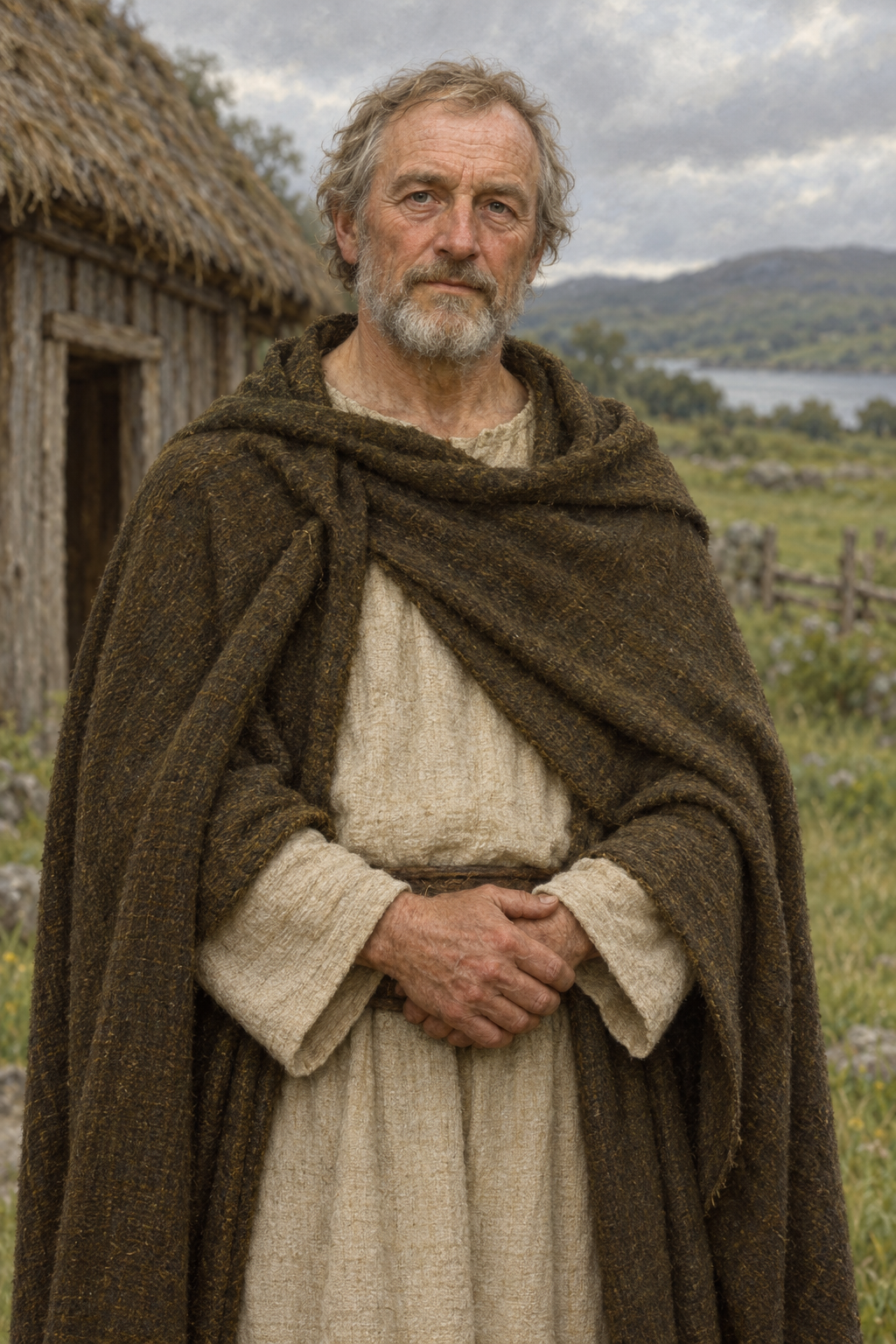
About Caillín of Fenagh
Caillín is remembered as the founder and patron saint of Fenagh in County Leitrim. Aidan Breen places his activity in the late sixth or early seventh century, while warning that the surviving accounts were written much later and contain little dependable personal history. The tradition preserves a religious founder whose community endured; it does not give secure dates for his birth or death.
The Martyrology of Donegal calls him a bishop of Fenagh and supplies a family genealogy. Breen treats these details as part of the later tradition. The same body of storytelling gives Caillín an impossibly long life and places him among figures separated by difficult chronological gaps. Such narratives express the importance attached to him without providing a reliable sequence of events.
Much of that memory survives in the Book of Fenagh. The Royal Irish Academy’s catalogue identifies the manuscript as the work of Muirgius mac Paidín Uí Maelchonairi, made in 1516 for Tadhg Ó Rodaighe, who held the office of Caillín’s successor at Fenagh. It incorporated poetry from an older book and expanded the material into a Life in prose and verse. The surviving volume is therefore evidence of a later community’s remembrance, not a book known to have been written by Caillín himself.
Historian Brendan Scott explains why that distinction matters. The book was commissioned when Fenagh’s established religious families faced growing political pressure. Its stories affirmed the rights of the community and the standing of its hereditary successor. Devotion and institutional interests worked together: episodes about rulers honouring Caillín could also remind later rulers of obligations claimed by his successors. Reading the work in that setting helps explain its elaborate assertions without accepting them as contemporary records of the saint.
The place itself preserves another layer of history. The Office of Public Works identifies Fenagh’s churches as standing on the monastic site associated with Caillín, but dates the surviving church buildings much later, probably to the fifteenth century. The enclosure, earthworks and later buildings record a long religious history. They should not be presented as structures personally built by the founder.
Catholic tradition commemorates him on 13 November. His remembrance remains closely tied to Fenagh and to the community that preserved his name through manuscripts and worship. A responsible account of his life is brief: the connection with that religious foundation is clearer than the stories of distant travel, miraculous conflicts or exceptional longevity.
Wondering how to weigh the stories and sources? Learn how to read a saint biography.