Biography
Cainnech of Aghaboe
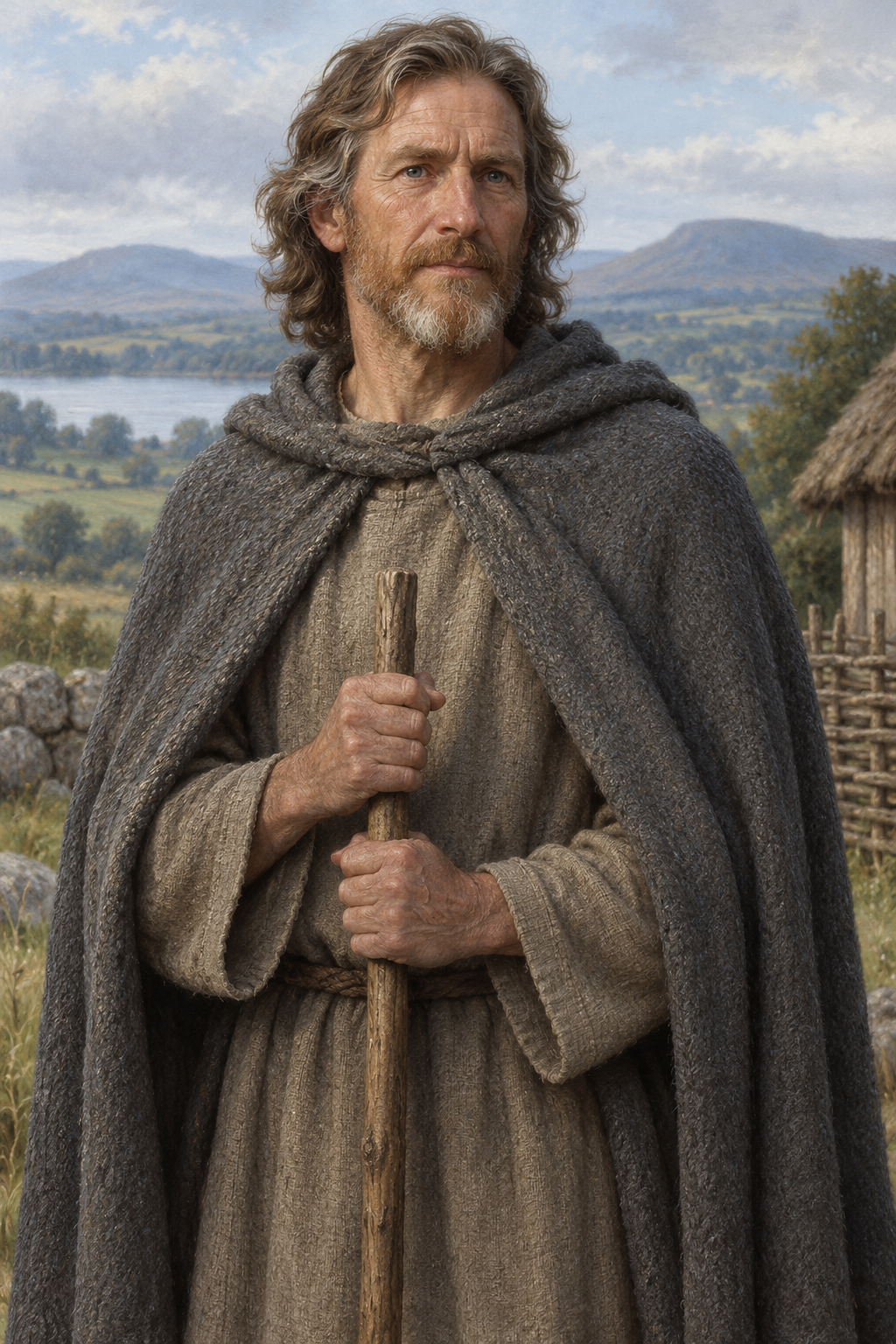
About Cainnech of Aghaboe
Cainnech of Aghaboe, also known as Canice and Kenneth, was an Irish abbot remembered across Ireland and Scotland. His principal association is with Aghaboe, while churches and place-names preserve a wider devotion. The University of Glasgow’s scholarly survey identifies him as a sixth-century saint but also records uncertainties in the genealogies attached to him. His religious identity is clearer than every detail of his family background.
Later tradition describes a long preparation for religious life. Michael O’Kane’s account places him among the pupils of Finnian at Clonard and Mobhi at Glasnevin, and associates his ordination with Llancarfan in Wales. It also describes a journey to Rome. These are elements of his received Life, rather than a contemporary record of schooling and travel; their precise dates should not be treated as securely established.
A more substantial early witness to his reputation is Adomnán’s Life of Columba. The work places Cainnech among the religious leaders who visited Columba and presents the two abbots as closely connected through prayer. In one episode, Columba prepares to welcome him to Iona even while a storm makes the crossing seem impossible. Cainnech arrives safely, and the story attributes the calm around his boat to divine protection.
Another story locates Cainnech at Aghaboe while Columba is endangered at sea. He leaves his meal in such haste that he goes to pray wearing only one shoe. The storm then subsides. The small remembered detail gives the story its human immediacy, while its central claim is religious: the abbots’ concern and prayer reach across distance. It should be read as Adomnán’s account of a miracle, not as an independently verified weather report.
The date and purpose of that source matter. The Oxford Cult of Saints project places the composition of Adomnán’s work around the end of the seventh century. It explains that the author arranged stories by prophecy, miracle and vision, drawing on traditions of the Columban community. The book was not designed as a chronological biography. It is strong evidence for how Cainnech was remembered within that religious world, while leaving many ordinary details of his life unrecorded.
His Scottish associations also require care. Glasgow’s survey lists several dedications and distinguishes certain identifications from probable or possible ones. A place bearing a related name can preserve devotion without proving that Cainnech personally founded a church there. The survey also records rival genealogical interpretations. These uncertainties make a precise itinerary or an unqualified family tree inappropriate.
Aghaboe remained important long after his lifetime. The Diocese of Ossory’s history describes the monastery he founded as a community that eventually became the seat of a bishop. It identifies Canice as the patron of Kilkenny City. That later institutional history helps explain the endurance of his name, but it should not be compressed into a claim that he personally governed the medieval diocese in its later form.
The annal entries collected by the Glasgow project place his death around 600, without establishing one uncontested year. In the Irish Catholic National Proper, he is commemorated as an abbot on 11 October. His remembrance joins monastic leadership with the image of a friend quick to answer another person’s need for prayer.
Wondering how to weigh the stories and sources? Learn how to read a saint biography.