Biography
Callistus I of Constantinople
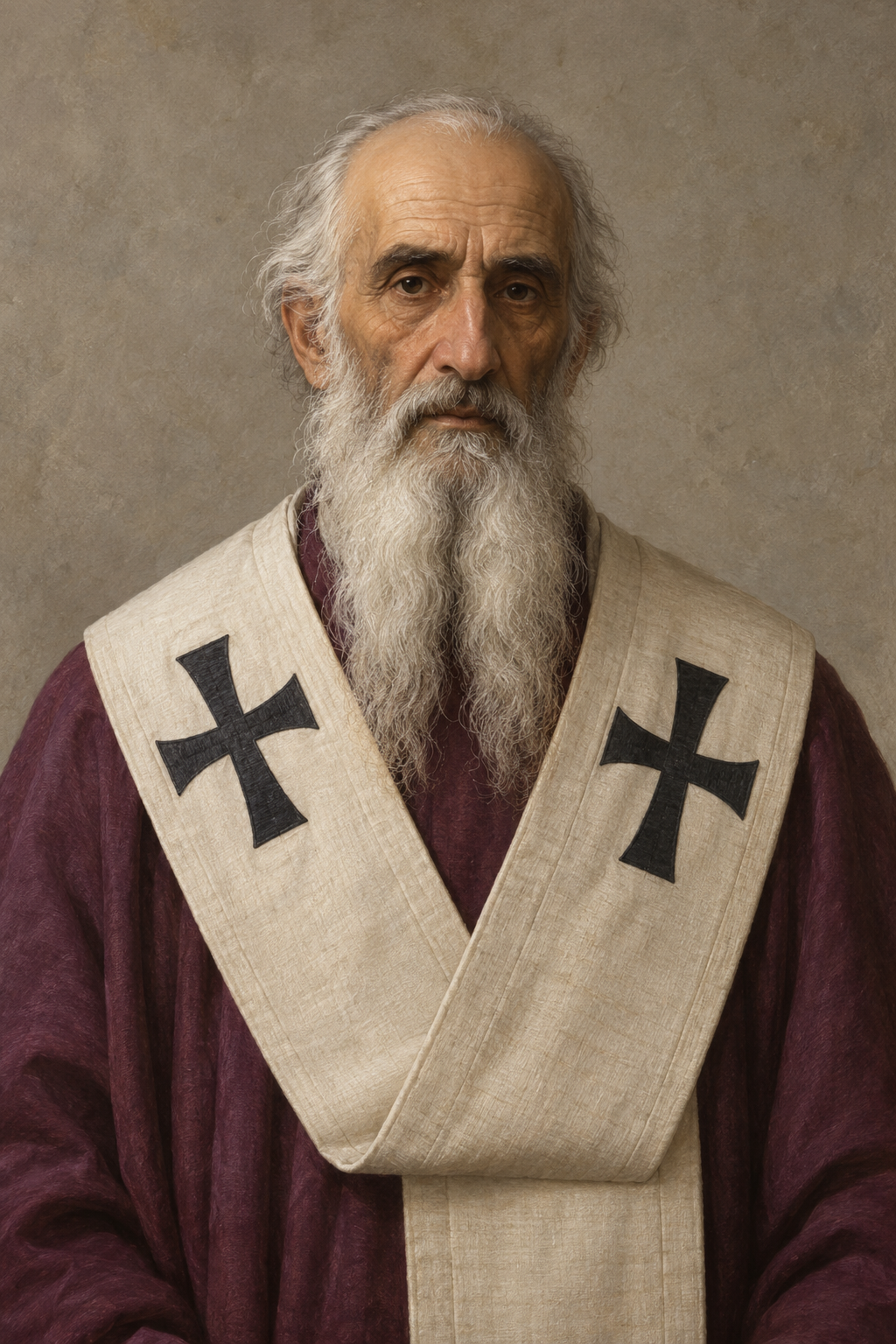
About Callistus I of Constantinople
Callistus I is remembered in the Orthodox Church as a patriarch of Constantinople and a spiritual writer. His feast falls on June 20. He belonged to the world of Byzantine monasteries and imperial politics in the fourteenth century, when the responsibilities of a church leader could draw a monk far from the quiet of his community.
Before becoming patriarch, Callistus lived on Mount Athos. He was a disciple of Gregory of Sinai and belonged to the monastic community at Magula, later associated with Iviron. His formation was shaped by the movement known as hesychasm. He supported Gregory Palamas and took part in the theological controversies surrounding that movement. In 1342, he joined an Athonite delegation that tried to reconcile John Cantacuzenus with the court of Anne of Savoy.
His monastic years also included conflict and captivity. He supported the expulsion of people identified as Bogomils from Athos. In 1345, pirates captured him with other monks. The Athonite community arranged their ransom through the sale of an abandoned monastery. These episodes place him within a community capable of mutual assistance but also involved in enforcing boundaries against religious opponents.
Callistus became patriarch on June 10, 1350. The following year, he presided over a council at the Blachernae palace that affirmed the teaching of Palamas. His administration also addressed parish life: he placed clergy under the supervision of appointed exarchs. The work of the patriarchate combined doctrinal decisions with oversight of the people responsible for worship and pastoral care.
Within Constantinople, his concerns extended to the integrity of confession. He entrusted that ministry to selected priests and urged them to resist gifts or inducements. He also made arrangements for bishops driven from their dioceses, assigning them other responsibilities or monasteries in which to live. Such measures addressed practical disruptions in the church as well as the conduct of its ministers.
His relationship with imperial authority soon broke down. John Cantacuzenus had supported his election, but Callistus sided with John V Palaiologos in the renewed struggle between the ruling families. In 1353, he refused to crown Cantacuzenus’s son Matthew. He also refused both to return to his office and to submit a resignation. The synod deposed him and chose Philotheos in his place. Callistus withdrew to Tenedos, where John V was also in exile.
John V’s return to Constantinople changed the balance of power. Callistus sought restoration, while bishops associated with Philotheos resisted his claim. His return was therefore not a simple, unanimous reconciliation. Albert Failler’s study describes the difficulty of obtaining a synod large enough to reverse the earlier judgment canonically. With imperial support, Callistus nevertheless recovered his position and remained patriarch until his death.
His dealings with neighboring churches were similarly contested. He excommunicated Stefan Dušan and the Serbian hierarchy over the establishment of a Serbian patriarchate. Later, he traveled to Serres on a diplomatic mission seeking peace and military assistance. He died there, in either 1363 or 1364. The precise cause is uncertain. His burial in the city and subsequent commemoration are better established than the rumors surrounding his death.
Callistus also left a literary record. He wrote a life of his teacher Gregory of Sinai, along with sermons and other works intended to communicate the spiritual teaching he upheld. Biography became one way of carrying that teaching beyond the circle of those who had personally known Gregory.
His writing was rooted in earlier monastic literature. Antonio Rigo’s study identifies a particular affinity with John Climacus and a continuing debt to Gregory of Sinai. Yet Callistus did more than repeat a teacher’s instructions: he enlarged some themes and rearranged others. Rigo notes that prayer techniques central to Gregory’s teaching receive a different, sometimes apparently absent, treatment in Callistus’s work. His surviving texts thus preserve an individual response to a shared spiritual inheritance.
A sermon for the Sunday of Orthodoxy, dated March 6, 1351, survives among his writings in a manuscript at Patmos. It draws on earlier accounts of religious error while addressing contemporary opponents. Its connections with Photios’s letter to Michael of Bulgaria show how an older theological text could be brought into the disputes of Callistus’s own time.
Another sermon, studied by Constantine Paidas, addresses a particular group of nuns, probably in Constantinople. Callistus sharply criticizes conduct that he regards as incompatible with their profession, including attention to outward appearance and sexual misconduct. These are a preacher’s accusations, not independent proof that every charge was true. Nor should they be applied to Byzantine nuns as a whole. The sermon nevertheless shows the demanding, sometimes severe manner in which he exercised pastoral authority.
The church’s annual remembrance brings this complicated life into its calendar of saints. Callistus is remembered as a monk who became a patriarch and continued to write about spiritual life while bearing the responsibilities and conflicts of that office.
Wondering how to weigh the stories and sources? Learn how to read a saint biography.