Biography
Carmen Sallés y Barangueras
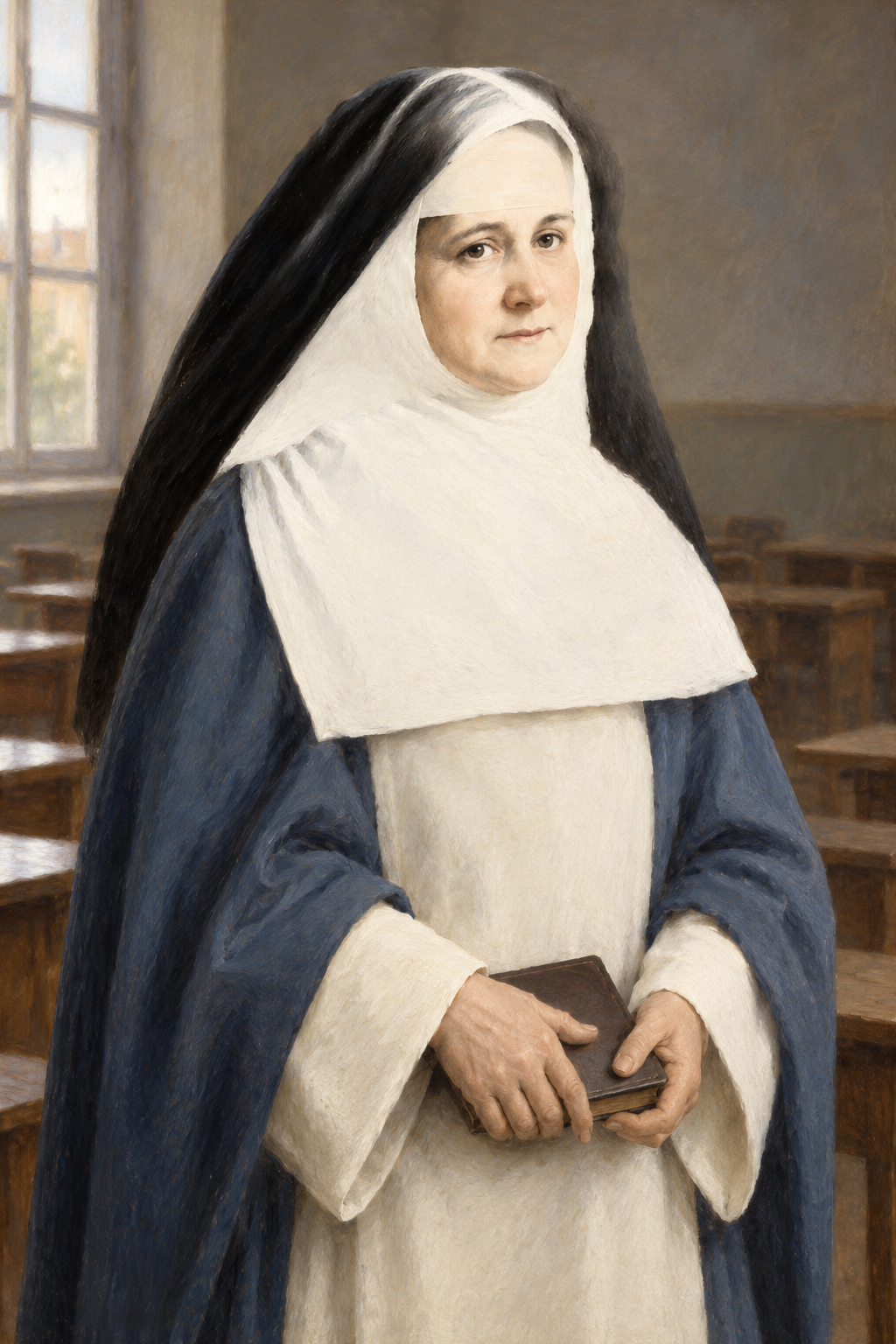
About Carmen Sallés y Barangueras
Carmen Sallés y Barangueras founded a religious congregation devoted to education, especially the education of girls. She was born at Vic on 9 April 1848 and grew up in a Christian family. Her schooling with the Company of Mary at Manresa helped shape a devotion to Mary that would remain central to her work. The account in her beatification decree connects her religious vocation with a pilgrimage to Montserrat, where she understood her life as a gift to Christ.
Her path into religious life involved more than one community. In 1869 she entered the novitiate of the Adorers of the Blessed Sacrament at Gràcia. She left the following year and, on the advice of her spiritual director, joined the Dominican teaching congregation in 1871. The decree describes her later work as a teacher, school director and superior in Barcelona. These years gave her experience of the practical demands of running a school as well as the shared responsibilities of religious life.
The congregation’s own history explains her educational purpose through an earlier encounter with women whose opportunities had been severely limited. She came to see education in childhood as a way to prevent later suffering. Her work among the Dominicans included children of working women and evening instruction for women employed during the day. She wanted girls to learn more than elementary reading and domestic skills, and regarded serious religious formation and a wider education as complementary.
The transition to a new foundation was difficult. The institutional history records disagreements over her educational work and describes her wish to develop it within the Dominican family. That solution did not prevail. In 1892 she and her companions went to Burgos, where Archbishop Manuel Gómez Salazar supported their project. The first school and community received diocesan authorization in December. Carmen also gave attention to the preparation of the sisters themselves, encouraging study for teaching qualifications, music and French. The new schools required trained teachers, not goodwill alone.
Her letters show how she understood that preparation. In October 1908 she urged the sisters to fill themselves through study and prayer before sharing what they had received. Learning and spiritual life belonged together in a vocation directed toward children. A later letter, in May 1909, pictured the pupils as entrusted to the sisters’ care and called for watchfulness on their behalf. Her affectionate language does not remove the seriousness of that responsibility: the adults were accountable for the young people placed in their hands.
The correspondence also preserves concerns within the community. A letter of December 1897 expresses grief at the death of Remedios, one of the early sisters. Elsewhere Carmen calls for unity and offers forgiveness, describing her affection for the women she led. These passages make her a recognizable correspondent rather than only the subject of later praise. They show an institutional founder writing to particular people about loss, religious commitment and the effort to live together.
María Asunción Valls Salip’s study draws on testimony collected for Carmen’s cause. It describes her concern that differences between choir sisters and those assigned supporting work should not divide the community. The author also emphasizes her sustained interest in Scripture, including the Old Testament, and the reading and explanation of the Sunday Gospel. This is testimony preserved through the process of recognition, rather than an independent diary of every day. It nevertheless gives a fuller picture of the religious culture she hoped to sustain among her companions.
The schools multiplied during her lifetime. The Spanish biography prepared for her canonization records thirteen communities and schools, and plans for work beyond Spain in Italy and Brazil. Carmen died in Madrid on 25 July 1911. The later international reach of her congregation should therefore be distinguished from the institutions she personally established and the projects she lived to prepare. Her work continued through the sisters who followed her.
Valls Salip cites a younger sister who cared for Carmen during her last illness and remembered her wish for foundations abroad. She asked her successors to carry that desire forward if she could not accomplish it herself. The testimony places this ambition within an unfinished task entrusted to others.
At her beatification on 15 March 1998, John Paul II highlighted both the protection of children through education and the preparation of women to take a dignified place in society. He connected her courage in undertaking difficult projects with prayer and careful consultation. That interpretation preserves a practical aspect of her vocation: religious education was also meant to equip women with knowledge and abilities they could use beyond the classroom.
Benedict XVI canonized Carmen on 21 October 2012. In his homily he remembered her hope through trials and the educational work continued by her congregation. Her lasting remembrance joins the life of a religious founder to the patient work of teaching, preparing teachers and widening the possibilities available to young people.
Wondering how to weigh the stories and sources? Learn how to read a saint biography.