Biography
Cassian of Imola
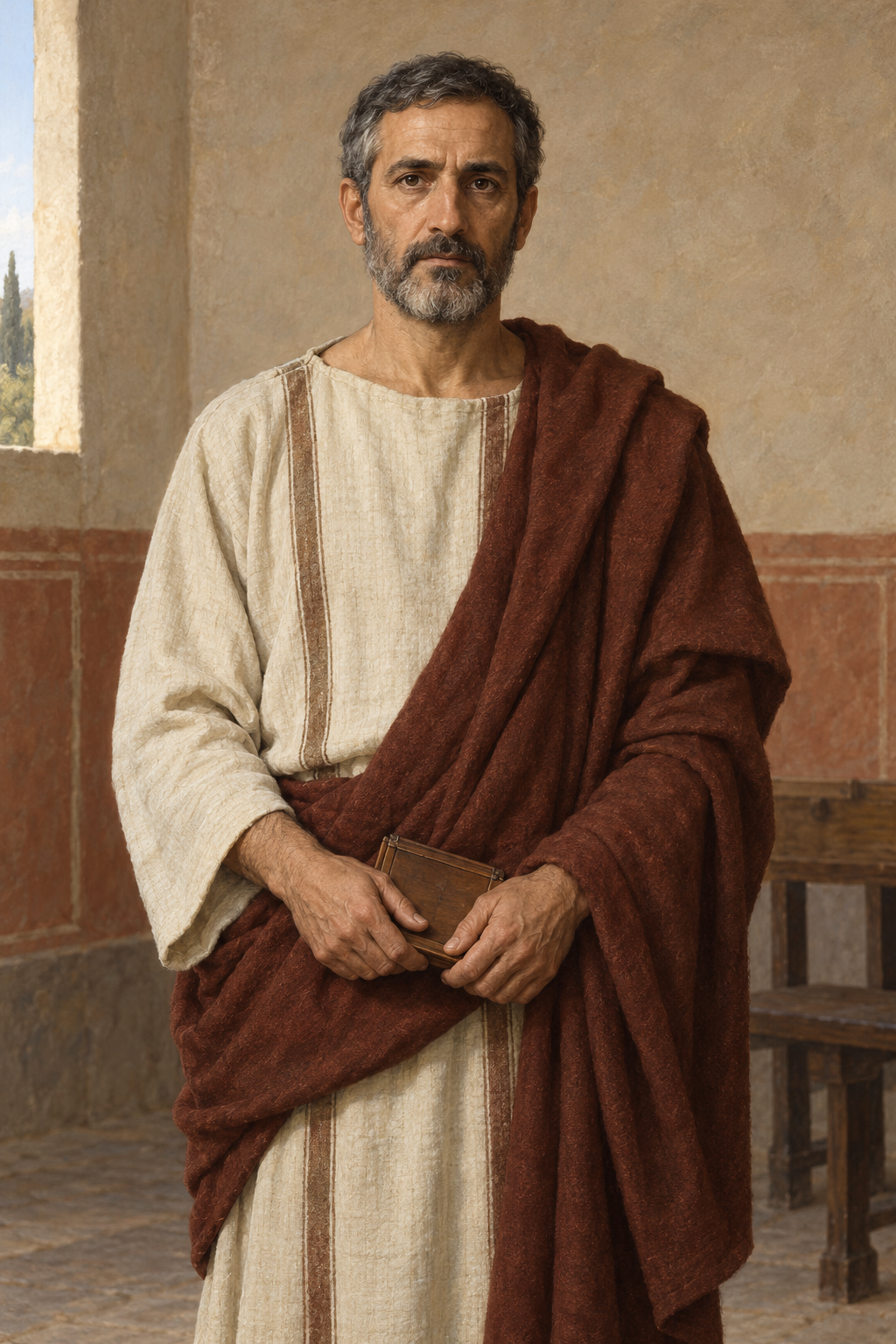
About Cassian of Imola
Cassian of Imola is remembered as a Christian teacher and martyr. His story survives above all in a poem by Prudentius, who describes visiting his tomb at Forum Cornelii, the Roman town associated with Imola. A painting at the shrine prompted an account of Cassian’s death. In that account, his refusal to worship at pagan altars led to condemnation, and his own pupils killed him with the tools they used for writing.
The poem is evidence of devotion around the year 400, rather than an eyewitness record of the execution. Historian Julia Barrow emphasizes that Cassian’s death cannot be dated securely: both Diocletian’s and Julian’s reigns have been proposed. His occupation is central to the story, but it does not supply a complete biography. His family, early education and the course of his teaching career remain outside the surviving account.
Barrow also draws attention to an uncomfortable feature of the narrative. Cassian is presented as a severe teacher whom his pupils resented, not simply as an admired master betrayed without explanation. The poem turns the ordinary instruments of the classroom into instruments of violence. Its later reception in medieval schools shows how powerfully that image stayed with readers. Barrow traces changes in the story’s treatment as relationships between teachers and pupils, and the materials used for writing, changed over time.
At Imola, his tomb became a centre of religious life. The diocesan history describes an early shrine followed by a basilica, around which the bishop’s residence, canons’ housing and other buildings developed. The settlement associated with Saint Cassian suffered destruction in the twelfth century. A new cathedral was then built closer to the city, on land formally granted in 1187. These later buildings belong to the history of his community’s remembrance; they are not surviving classrooms from his own lifetime.
The present diocesan liturgy celebrates Cassian on 13 August as the principal patron of the city and diocese. Its introduction identifies the cathedral crypt as the place where his remains are venerated. It also records Pius XII’s declaration in 1952 making him patron of stenographers. His association with shorthand and writing thus continues in both local worship and the remembrance of people whose work depends on recording words accurately.
Prudentius closes his poem with prayer at the tomb and gratitude after his journey. Cassian’s remembrance had already become a source of hope for a visitor carrying personal anxieties.
Wondering how to weigh the stories and sources? Learn how to read a saint biography.