Biography
Cassian of Nantes
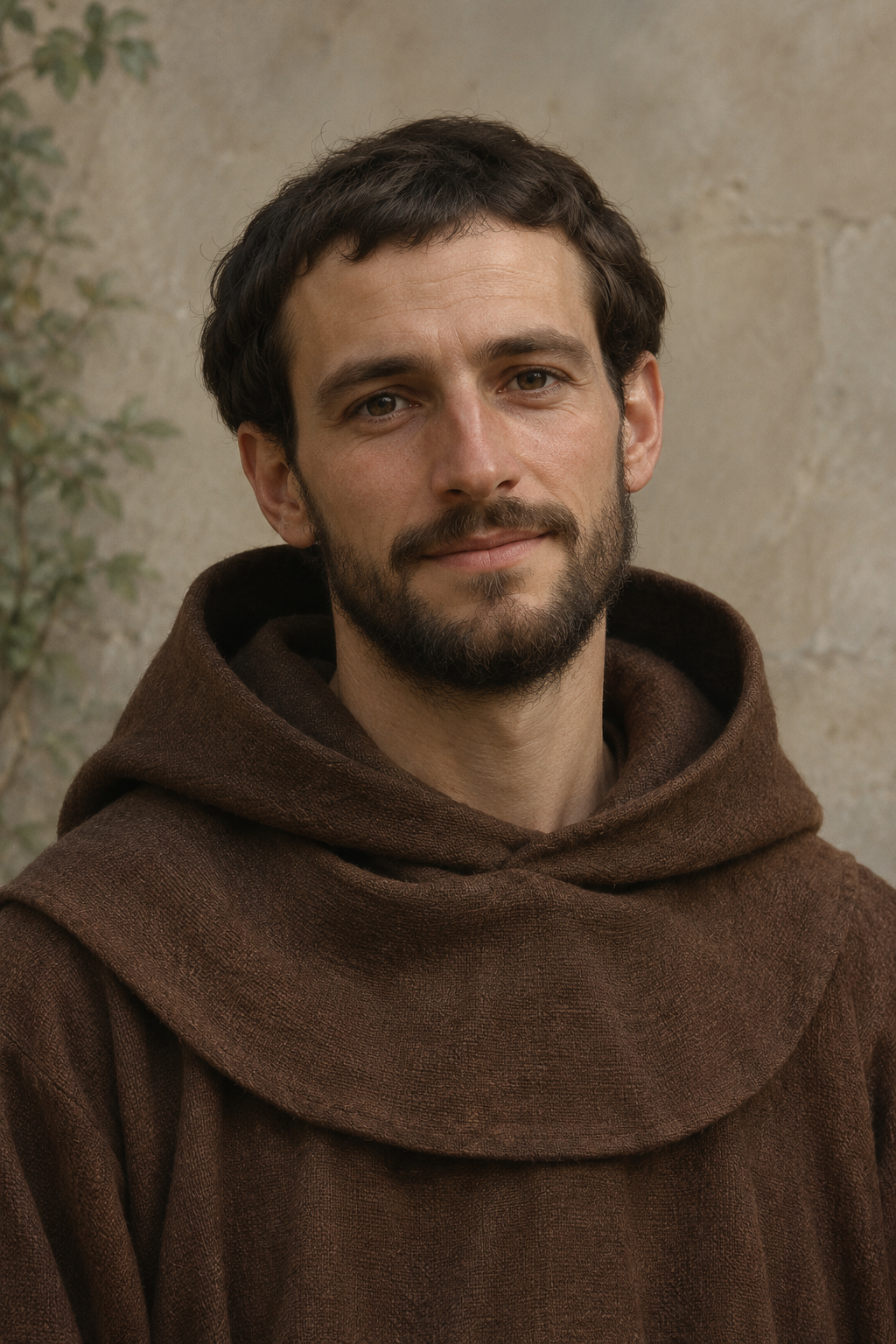
About Cassian of Nantes
Cassian of Nantes was born Gonzalve Vaz Lopez Netto in Nantes, France, on 15 January 1607. He entered the Capuchins at Angers and received the religious name Cassian. His theological formation took place at Rennes, where he studied under a teacher who had also instructed Agathange de Vendôme. Their early lives followed separate paths within the same order before their work brought them together in Egypt.
His family was Portuguese and engaged in commerce. Early contact with the Capuchins encouraged his choice of their way of life. The younger friar prepared for priesthood through the order’s course of study. His family background and later language learning connect his biography with the movement of people and knowledge across borders. The future missionary was born in a French port to parents whose own lives already crossed a national boundary.
After his ordination in 1631, Cassian helped care for people suffering during the plague at Rennes. The Capuchins were involved in that service, and he joined the work while still a young priest. He himself became ill and recovered. The later mission therefore followed an earlier experience of caring for people in danger from disease. It was a different setting from the journey to Africa, but one in which religious service already carried a personal cost.
He was subsequently sent to Egypt, where Agathange was serving as superior of the mission in Cairo. Cassian arrived during the first half of the 1630s and became his close collaborator. The older friar brought experience from Aleppo and Lebanon; Cassian brought his own preparation and linguistic gifts. Their common objective was to draw Eastern Christians into communion with Rome. They pursued it through contacts with clergy and monastic communities, whose life and influence they sought to understand.
Their work also included scholarly tasks for Peiresc. Suciu’s study names both Agathange and Cassian among the scholar’s principal contacts in Egypt. The requests included observations connected with astronomy, questions about weights and measures, and the search for Coptic and Arabic manuscripts. These activities placed Cassian within a wider exchange of learning. They help explain why command of languages and close acquaintance with local books mattered to the friars alongside their directly religious duties.
The scientific requests were concrete: the friars were asked to determine Cairo’s latitude and observe a lunar eclipse. Their contacts connected instruments, calculations and manuscript searches with correspondence across the Mediterranean. Cassian’s participation in this network gives substance to the account of his linguistic and intellectual preparation.
The two visited Coptic monasteries in connection with their ministry and their search for manuscripts. Their approach could involve cooperation that was more flexible than some instructions from Rome allowed. Yet the same missionaries were sharply opposed to Protestant efforts in the region. Trontelj therefore treats their openness with qualifications. They could build respectful relations with Copts while remaining part of the confessional competition of seventeenth-century Europe. Cassian’s mission belonged to that complicated religious world.
Cassian studied languages needed for work in the East, including Arabic and Greek, and prepared with Agathange for a mission to Ethiopia. Such study was practical preparation for speaking with the people they hoped to reach. It also meant entering a Christian environment with its own long history and forms of worship. The friars were not bringing Christianity to a people without it; their aim was communion with the Roman Church.
The Franciscan mission authorized in 1636 was organized in small travelling groups. Cassian and Agathange formed one pair. They left Cairo near the end of 1637 and travelled toward Ethiopia, adopting Coptic monastic dress for the journey. The plan depended on their preparation, contacts and ability to move through unfamiliar territory. It failed when they were recognized and detained. Instead of beginning a settled ministry, they were taken through a period of captivity to Gondar.
There they faced examination and pressure to abandon their Catholic allegiance. The Church’s account of the trial remembers their refusal. They were condemned to hanging and died on 7 August 1638. Cassian’s final profession of faith is preserved in the martyrdom tradition, but its exact words should be distinguished from a modern transcript. The central Catholic remembrance is that the two remained faithful under pressure, rather than obtaining safety by repudiating their religious commitment.
Pius X authorized their veneration by a brief dated 23 October 1904; the solemn beatification followed on 1 January 1905. Cassian is honoured with Agathange as a blessed priest and martyr. Their memory is shared, but his biography retains particular features: Portuguese family roots in Nantes, service during plague, linguistic study and collaboration in Egyptian scholarly networks. Those years of preparation and work give substance to the younger friar’s life before the final journey on which the two companions died.
The beatification brief permitted public liturgical veneration within specified settings, including Capuchin churches and the apostolic vicariate of Abyssinia. That authorization gave their remembrance a defined place in Catholic worship.
Wondering how to weigh the stories and sources? Learn how to read a saint biography.