Biography
Cassius of Narni
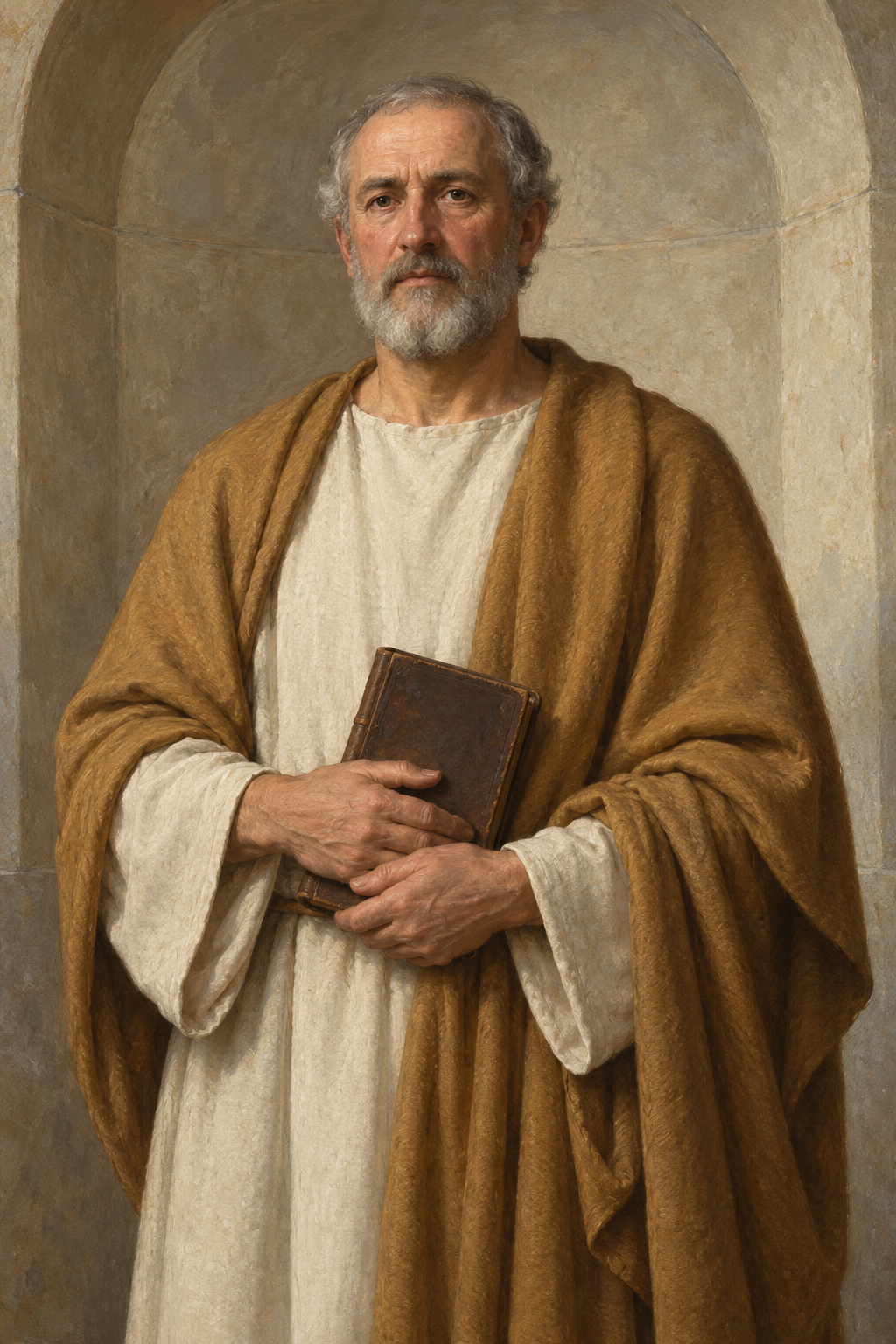
About Cassius of Narni
Cassius was a sixth-century bishop of Narni whose memory survives in both an inscription and the writings of Gregory the Great. His epitaph calls him a bishop by Christ’s gift and speaks of returning his body to the earth. It also remembers Fausta, his beloved companion in life, who died before him and was buried nearby. The closing appeal asks visitors to remember them in prayer. This personal voice is a valuable part of the evidence for a man otherwise known chiefly through religious narratives.
The inscription is dated to 558 and records a bishopric lasting more than twenty-one years. It offers a firmer chronological anchor than the varying dates repeated in later summaries. It does not provide his birth date or a full history of his family. Its reference to Fausta should be retained rather than omitted to make his life resemble a later expectation of episcopal biography.
Gregory tells of Cassius meeting the Gothic king Totila at Narni. The king mistakes the bishop’s ruddy complexion for evidence of drunkenness and initially treats him with contempt. In Gregory’s account, Cassius then heals a member of the king’s guard through prayer, overturning that judgment. The story presents a contrast between an appearance hastily judged and holiness disclosed through action. It is a religious narrative reported by Gregory, not an independent description of a medical event.
Another passage in the Dialogues remembers Cassius celebrating the Eucharist daily, with tears. Gregory relates a message brought by one of his priests, telling him to continue his work and promising his reward on the feast of the apostles. The account ends with his death after Mass and communion. Its emphasis falls on perseverance in worship and service; its miraculous prediction belongs to the devotional account as Gregory transmits it.
The cathedral at Narni preserves the setting of his later remembrance. The diocesan history connects Cassius with worship at the tomb of his predecessor Juvenal. It distinguishes the return of Juvenal’s relics from those associated with Cassius and Fausta, which remained at San Frediano in Lucca until 1679. The same account explains that the present cathedral developed through much later construction. Its visible form should not be mistaken for the building Cassius knew.
The chapel has also attracted archaeological study. E. Wüscher-Becchi examined its marble divisions, inscriptions and later additions in 1905, challenging the idea that all its sculpture belonged to early Christian times. That distinction helps preserve both parts of Cassius’s remembrance: the early evidence of his life and burial, and the changes made by communities who continued to honour him.
Wondering how to weigh the stories and sources? Learn how to read a saint biography.