Biography
Cecilia
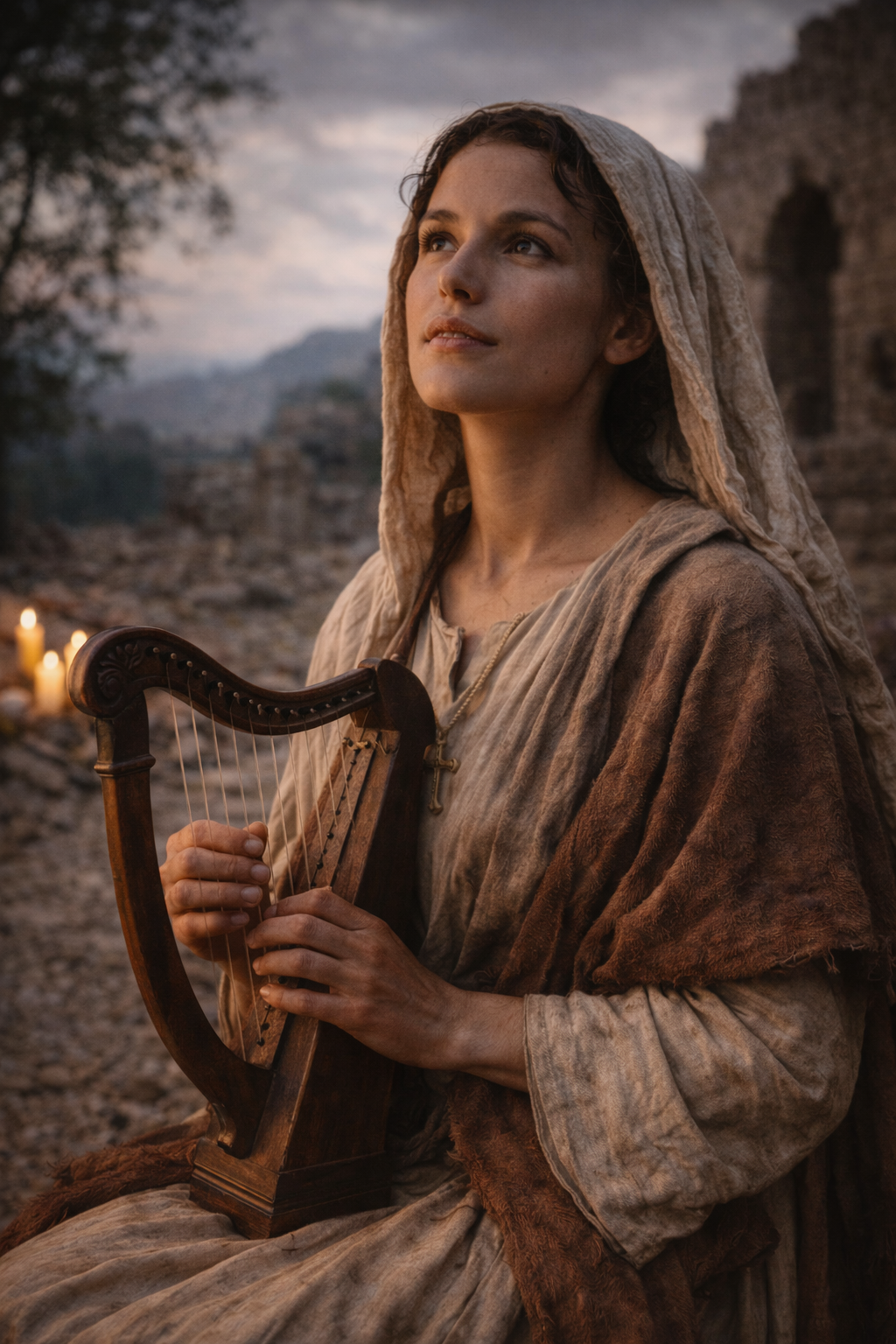
About Cecilia
Cecilia is remembered as a Christian woman of ancient Rome, yet the evidence for her life is unusually difficult to separate from the story that later communities loved. Her name is securely rooted in Roman worship. An early martyrology associates a Cecilia with the Via Appia, and a church bearing her name existed in Trastevere by the fifth century. These witnesses establish an old cult and a Roman setting, but they do not supply a contemporary biography. No surviving third-century record identifies her parents, education, marriage, trial, or precise dates. Even her status as a martyr, central to liturgical memory, is not described by an early eyewitness account. The familiar life comes principally from a martyr narrative composed centuries after the period in which she was traditionally placed.
The late Passion presents Cecilia as a young woman from a noble Roman family who had privately dedicated her virginity to Christ. According to that narrative, her family arranged her marriage to Valerian. During the wedding celebration, while instruments sounded, she sang inwardly to God and prayed to preserve her commitment. She then told Valerian that an angel guarded her. Valerian asked to see the angel, and Cecilia directed him to Pope Urban for instruction and baptism. These episodes shaped art, preaching, and devotion, but the surviving evidence does not establish them as events from Cecilia's lifetime. They should be read as the theological storytelling of a later Christian community, not as a transcript of a Roman household conversation.
The Passion continues by joining Cecilia's story to those of Valerian and his brother Tiburtius. It says that the brothers cared for the bodies of executed Christians, were arrested, refused sacrifice, and were killed. A guard named Maximus, moved by their witness, was converted and then executed as well. Cecilia is said to have buried the three men and to have used her property in service of poor Christians. The narrative thus places practical care for the dead and vulnerable at the center of her household's faith. Valerian, Tiburtius, and Maximus remain Cecilia's traditional companions in both Western and Eastern commemoration. Their exact relationships and the sequence of events, however, cannot be confirmed from contemporary records.
In the final movement of the Passion, a Roman official called Almachius questions Cecilia about her religion and property. The text gives her long, forceful speeches and portrays her refusing to surrender her Christian identity. It then describes an attempt to kill her by heat in the bath of her home. When she survives, an executioner strikes her neck three times but fails to sever her head. The story says she lives for three further days, gives assistance to poor people, and asks that her house become a church. Every dramatic detail belongs to the later Passion. The narrative communicates steadfastness and generosity as its authors understood them, but it cannot justify the legacy database's exact death date or a confident third-century chronology.
Cecilia's burial and churches preserve a different kind of history. The ancient Roman tradition located her commemoration at the cemetery of Callistus on the Via Appia. A church dedicated to her in Trastevere appears in records of the Roman council of 499. In the ninth century, Pope Paschal I rebuilt the church and transferred remains honored as Cecilia's there. These facts document the development of her cult, not the identity of every relic or the claim that the Trastevere building occupies her former home. They show how Rome remembered a saint through cemetery practice, liturgy, architecture, and repeated rebuilding. For mapping, the Via Appia cemetery and Trastevere can be represented only as broad historical associations, not as verified coordinates for episodes in her life.
Her connection with music developed through reception of one line in the Passion. The account says that, during her wedding, Cecilia sang in her heart to God while instruments played. It does not describe her performing music or holding a musical office. Over time, images showed her with an organ or other instruments, musicians' institutions adopted her name, and popular devotion treated her as their patron. Treccani notes that the musical association arose from interpretation of the wedding passage rather than evidence that Cecilia was a musician. John Paul II likewise described musical patronage as a presentation of popular piety. The distinction matters: patronage is a genuine part of her later significance, but it should not be rewritten as a fact about her occupation.
Christian traditions continue to commemorate Cecilia on November 22. The modern Roman Martyrology remembers her at Rome, in the cemetery of Callistus, as a virgin and martyr according to tradition, and notes the ancient church in Trastevere bearing her name. The Orthodox Church in America also commemorates her with Valerian, Tiburtius, and Maximus on that date. These observances share a day and important elements, but they belong to distinct jurisdictions and should be recorded separately. The title virgin expresses the received narrative of her consecration; martyr expresses the church's ancient veneration. Neither title supplies missing civil documentation or permits the database to retain invented birth and death dates.
Cecilia remains significant because her reception reveals both the strength of communal memory and the need for historical care. The evidence supports an ancient Roman cult, a cemetery association, an early titular church, and centuries of commemoration. The Passion gave later readers a vivid model of inner prayer, fidelity, care for companions, generosity, and courage, although its episodes cannot be treated as contemporary reporting. Her musical patronage became culturally influential even though it does not prove that she played an instrument. A careful account can honor what churches have received without hiding what historians do not know. Cecilia's story then becomes not a falsely precise third-century biography, but an honest history of a Roman saint remembered through liturgy, place, narrative, visual art, and music.
Wondering how to weigh the stories and sources? Learn how to read a saint biography.