Biography
Cellach of Armagh
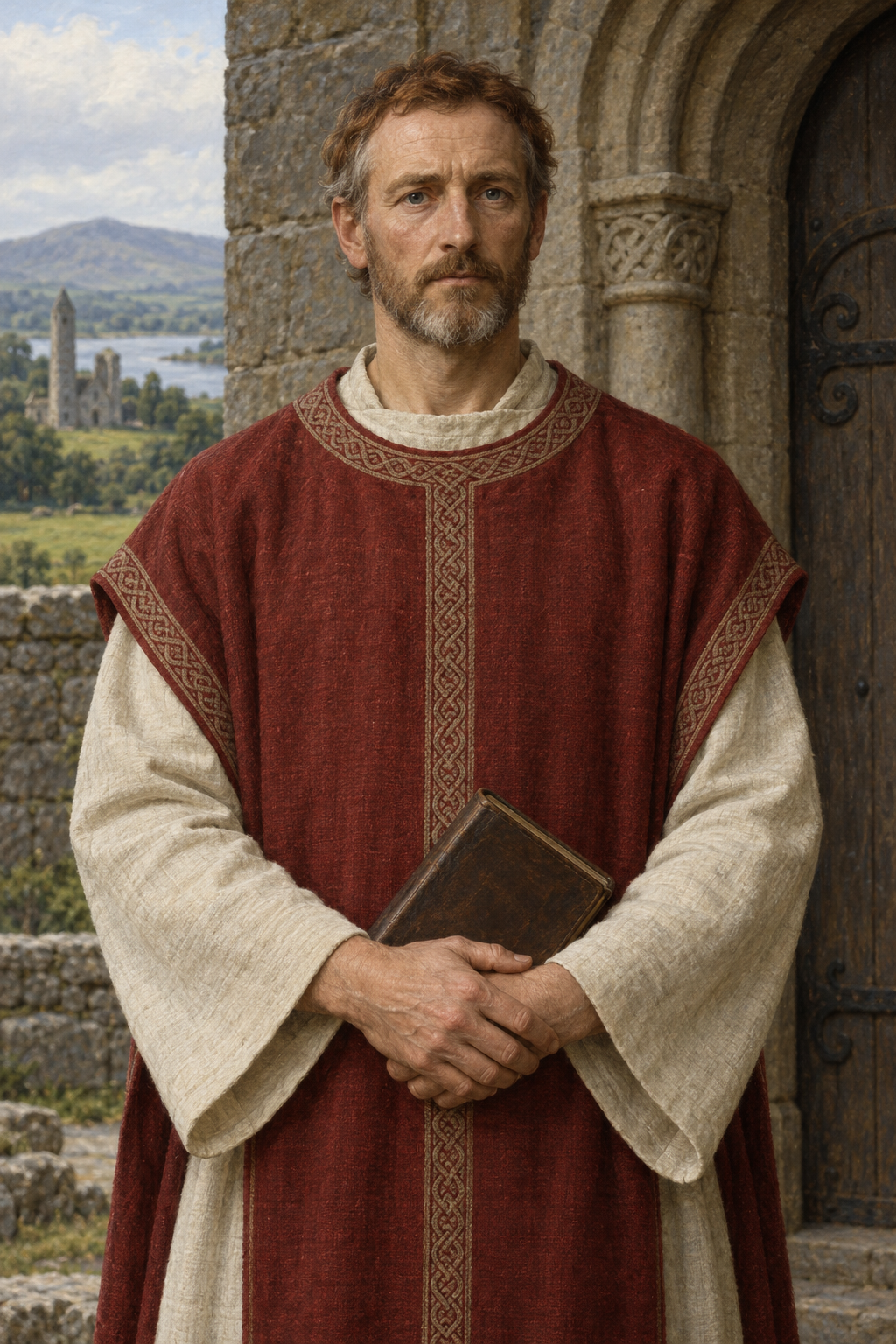
About Cellach of Armagh
Cellach of Armagh, also called Ceallach or Celsus, helped reshape the leadership of the Irish Church in the early twelfth century. He became abbot of Armagh in 1105 and took holy orders. The Irish bishops’ account places his birth around 1080 and connects his reforming outlook with the movement already developing in Munster. It also remembers his part in the Synod of Rathbreasail in 1111.
He came from the family that held hereditary rights to Armagh’s leadership. Historian Máire Herbert describes him as a figure of transition: he inherited a place within older structures, but received episcopal ordination in 1106. His career therefore joined continuity with change. Reform at Armagh did not begin with a stranger arriving to replace everything that existed; one of its important leaders emerged from the very family whose privileges were being questioned.
The Annals of Ulster record both his appointment and his travels. In 1106 he visited Cenél Eógain and Munster, collecting the dues attached to his office. The Munster entry also records his becoming a bishop. These notices place him within the material and political responsibilities of ecclesiastical leadership, alongside its sacramental duties.
The reform also involved preparing other people to lead. The Archdiocese of Armagh’s account describes Cellach’s recognition of the young Malachy and his appointment of him as a deputy during absences. Malachy’s later importance should not obscure that earlier relationship: Cellach gave him responsibilities through which he could begin the work for which he became known. Their careers were connected before the difficult question of succession arose.
Bernard of Clairvaux describes that question in his Life of Malachy. When Cellach knew that he was dying, he wanted Malachy to succeed him and communicated his wishes to those around him and to rulers in Munster. Bernard presents this choice as a deliberate attempt to break hereditary control. His account is strongly partisan in favour of reform and uses harsh language about its opponents; that language belongs to Bernard’s argument rather than a neutral description of everyone involved.
The change was not immediate. The diocesan history recounts opposition from members of the hereditary family and the emergence of rival claimants after Cellach’s death. Malachy’s eventual authority required support beyond Cellach’s own designation. The succession shows the limits of what one leader could settle by naming a successor, even when the choice expressed a clear reforming purpose.
Cellach’s work also included mediation. Under 1126, the Annals of Ulster describe him spending more than a year away from Armagh trying to make peace. In 1128 they credit him with arranging a truce between the people of Connacht and Munster. His authority was exercised among rival powers, not only within the church he governed.
Herbert places these institutional changes beside a renewal of intellectual and artistic life at Armagh. Older Latin learning was being used in new vernacular settings, while inherited artistic forms met newer influences. This is the broader setting of Cellach’s leadership, not evidence that he personally wrote those texts or designed those works. The distinction helps show a community changing through many people’s efforts.
He died at Ard Pátraic in Munster on 1 April 1129. The annals say that his body was taken to Lismore according to his own wishes and buried there on 4 April. Their obituary remembers his ordinations, church consecrations, generosity and prayer.
Ireland’s National Proper remembers him on 1 April as a bishop. Its prayer recalls his courage and generosity in renewing the Church. That liturgical remembrance preserves the central feature of his public life: a willingness to work for change within an institution to which he already belonged.
Wondering how to weigh the stories and sources? Learn how to read a saint biography.