Biography
Chad of Mercia
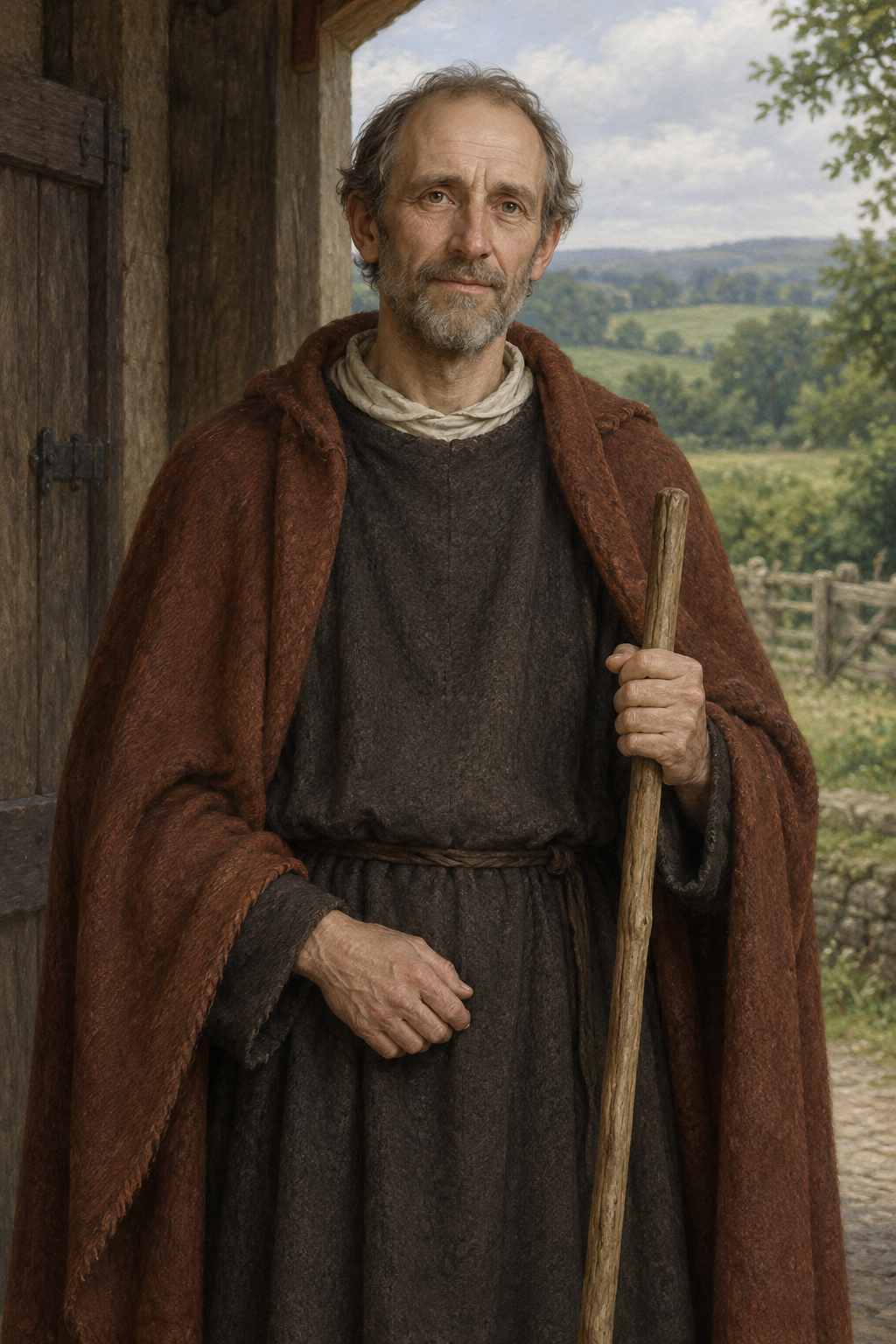
About Chad of Mercia
Chad of Mercia, also known as Ceadda, was a seventh-century monk and bishop whose most enduring association is with Lichfield. His brother Cedd was also a bishop, but the two should not be confused. Chad’s formation connected him with Aidan’s community at Lindisfarne and with religious study in Ireland. He later succeeded Cedd as abbot of Lastingham. The surviving story places learning, monastic discipline and pastoral service close together from the beginning of his public life.
His first episcopal appointment drew him into a difficult dispute. Wilfrid had gone to Gaul for consecration, and while he remained abroad King Oswiu appointed Chad to the Northumbrian bishopric. When Archbishop Theodore arrived in England, he judged Chad’s appointment and consecration irregular and restored Wilfrid. Chad accepted the decision and returned to Lastingham. Theodore subsequently regularised his consecration and entrusted him with another diocese. This episode became central to Chad’s reputation for humility: relinquishing an office did not end his service to the Church.
The dispute followed the Synod of Whitby, when the Northumbrian court supported a common calculation of Easter. Chad had been consecrated by Wini and two British bishops. The College’s account places Theodore’s intervention within a wider effort to bring the English churches under a more consistent organisation. It was a disagreement about ecclesiastical order, not an accusation that Chad had abandoned Christian faith.
In 669 Chad became bishop of the Mercians and established his centre at Lichfield. The cathedral’s account identifies the church and religious community he founded there as a lasting centre of Christian life in the kingdom. His influence therefore outlasted a short episcopate. Lichfield’s later cathedral and pilgrimage tradition grew around the memory of a bishop whose work joined a stable community of worship to ministry across a large territory. The present cathedral is the heir to that foundation, rather than the building in which Chad himself worked.
Historian Barbara Yorke places his work within a longer process of conversion. Christian communities already existed in the region before the Mercian rulers adopted the faith. Archaeological evidence even suggests an earlier British religious centre at Lichfield, although that identification remains a scholarly interpretation. Chad was thus part of a developing network, not the first Christian ever to enter an entirely untouched landscape. Connections with his family monastery at Lastingham continued after his death, preserving links between the Northumbrian and Mercian churches.
Chad’s episcopal duties did not displace his monastic life. Burton’s account describes him sharing a community with a small number of monks and returning to prayer and study when pastoral work allowed. The same account explains how his memory reached Bede: Trumberct, one of Chad’s disciples, became Bede’s teacher in Scripture. That connection brings the narrative close to Chad’s community, while still leaving us dependent on a later writer’s selection and religious interpretation of what he heard.
After his death he was buried near the church of Mary, and his remains were subsequently moved into a newly built church of Peter. Yorke identifies both locations as probably within the area of the present cathedral. The sequence helps distinguish Chad’s original burial from the later shrines that developed around his memory.
He died of plague on 2 March 672. The Birmingham diocesan account emphasizes his simplicity and humility and records the rapid growth of devotion at his shrine. His death did not leave only an institutional succession; it also left a personal example that later worshippers sought to remember through pilgrimage.
The spread of that devotion can be studied through more than written Lives. Ian Styler’s research brings together church dedications, place-names, buildings and excavated objects to examine Chad’s medieval influence. These different kinds of evidence reveal where communities remembered him over the centuries. They require a different reading from a biography: a church bearing Chad’s name can show the reach of his cult without proving that he personally visited or founded it.
The shrine at Lichfield was dismantled in 1538. Some bones preserved by Catholics eventually reached Birmingham and were enshrined in its cathedral in 1841. The diocesan history also reports important limits: examination in 1995 found an eighth-century bone and two left femurs, proving that the collection did not belong to one person. Other bones were consistent with the seventh century. That dating is compatible with Chad’s lifetime, but cannot alone identify an individual. A later decree required the collection to remain together for veneration.
In November 2022, a relic from Birmingham was brought to a reinstated shrine at Lichfield. Catholic and Anglican leaders marked the occasion together, acknowledging both their shared devotion and the divisions of the Reformation. Their addresses presented Chad’s memory as an invitation to friendship, humility and Christian service. The return gave a new meaning to an old place of pilgrimage: communities separated by later history could honour the same early bishop and pray together beside his shrine.
Wondering how to weigh the stories and sources? Learn how to read a saint biography.