Biography
Charles Henry Brent
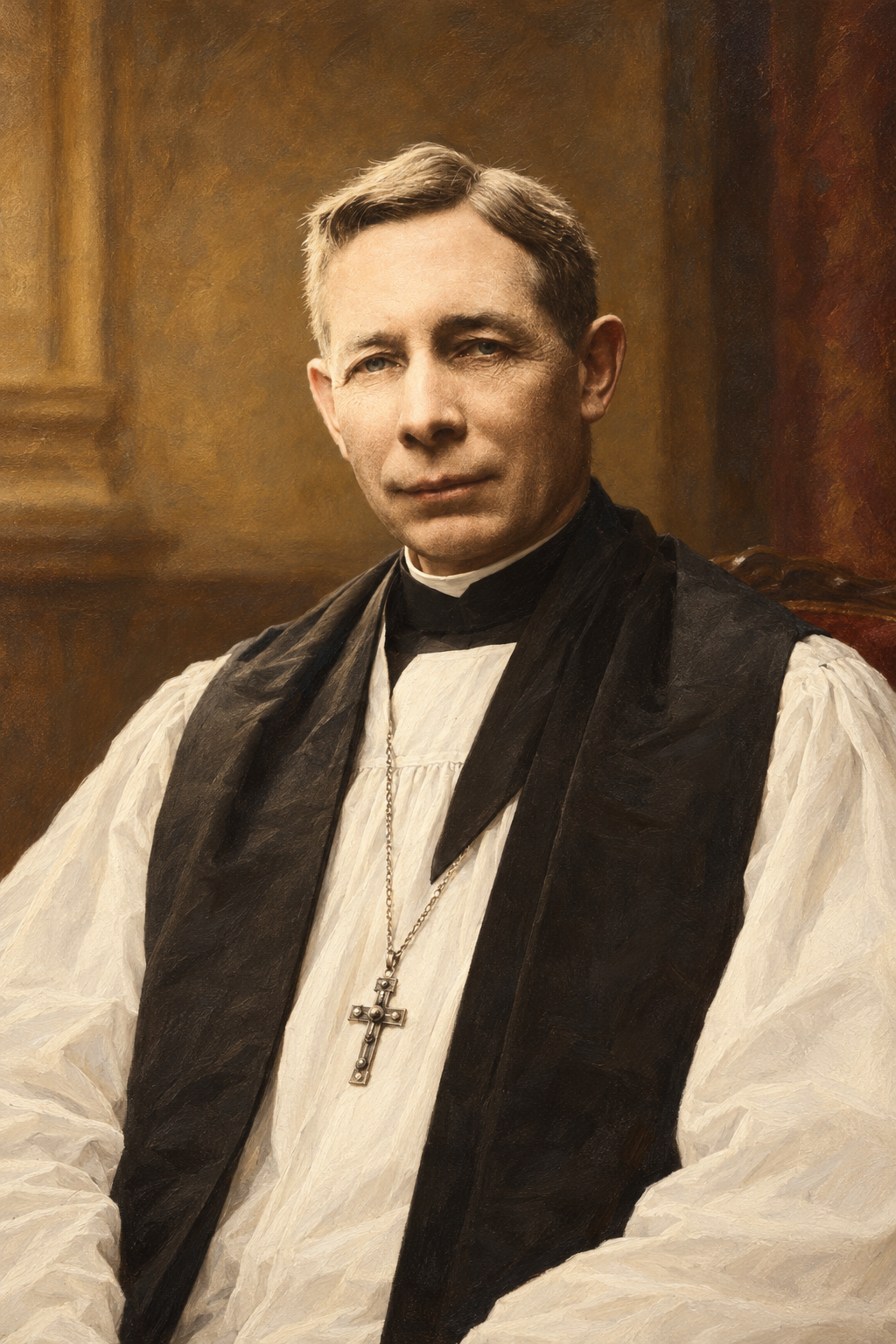
About Charles Henry Brent
Charles Henry Brent’s ministry took him from Canada to the United States, the Philippines, and international church gatherings. Born in Newcastle in 1862, he studied at Trinity College in Toronto and was ordained priest in 1887. He served at St. Stephen’s Church in Boston before becoming missionary bishop to the Philippine Islands.
In Boston, his parish work included practical provision for people in need. Ngaya-an describes St. Stephen’s expanding to include a settlement house, a lodging house and a rescue mission, with a wood and coal yard where men could earn money for food and lodging.
His Philippine ministry developed within the setting of American occupation. The Episcopal Church’s work had begun with military chaplains, and its General Convention established the missionary district and elected Brent in 1901. He initially gave particular attention to Americans and other English-speaking residents. He supported hospitals, nursing education, and a school in Baguio for expatriate children. His approach also sought to avoid recruiting members away from existing Christian churches. Instead, the mission concentrated on people outside those churches, including Chinese communities, Indigenous peoples, and Muslims. The Philippine church’s own history records that its first Filipino clergy were not ordained until 1937, after Brent’s death.
Historian Ben B. Ngaya-an cautions that this policy was not an absolute refusal to receive Catholics. Brent made room for people he regarded as lacking pastoral care, including residents of Manila’s poorer districts. Ngaya-an describes a mission shaped by two ambitions: influencing society through selected centers and responding to communities with pressing needs. Money, staff and difficult travel also helped determine where the church worked.
Those decisions also connected the mission to colonial power. Ngaya-an argues that its schools, hospitals and churches served humanitarian purposes while helping the American government extend its control. He also emphasizes local agency: Igorot communities could use the employment and transport opportunities associated with mission projects without thereby consenting to their subjugation. This history complicates an account centered only on Brent’s intentions or the institutions he founded.
Brent’s preaching reveals both a concern for service and the limits of his outlook. In a sermon delivered in Manila in 1908, he urged his listeners to attend to the opportunities already present in their homes and work. He opposed making a church’s numerical growth an end in itself and called for assistance to neglected people. Yet he addressed Americans as the people whose character could make the islands great, placing their actions at the center of the country’s future. His appeal for mutual understanding between East and West thus stood alongside an assumption of American leadership. The sermon connects ordinary responsibility, patriotism, and Christian mission rather than keeping them separate.
Brent represented the United States at the International Opium Conference held at The Hague in 1911–1912, alongside Hamilton Wright and Henry J. Finger. The agreement addressed production and international trade, distinguishing raw and prepared opium from medicinal products and calling for controls on morphine and cocaine. The American government’s own account also exposed a difficulty at home: other delegates questioned its leadership while Congress had left proposed domestic controls unpassed. An international agreement alone could not supply those laws. When President William Howard Taft sent the report to Congress in May 1912, he was not yet requesting ratification. The convention required an effort to secure further countries’ signatures first. Brent’s participation therefore belonged to a continuing process of negotiation and legislation, rather than a completed suppression of the trade.
His public responsibilities included international efforts to control the opium trade and service as chief of the American Expeditionary Forces’ chaplains. He later became bishop of Western New York. In 1927 he presided over the first World Conference on Faith and Order.
At that Lausanne gathering, Brent urged Christians to face the questions of belief that divided them. Representatives of Orthodox, Anglican, Reformation, and Free churches met to discuss their differences. His appeal treated unity as something to practice in relationships while working through unresolved theological questions. The movement continued after his death and later joined with the Life and Work movement in forming the World Council of Churches.
Brent held all Christian communities responsible for division and asked them to share the work of reconciliation. He urged delegates to understand another church’s position without abandoning their own convictions. For him, meeting together required humility as well as argument: the purpose was to discover what Christians held in common, not to defeat an opponent. He also criticized the export of denominational rivalries through missionary societies. These divisions, he argued, weakened Christian witness in places where competing missions worked.
Brent did not expect one brief conference to settle every question. He acknowledged the importance of church government but preferred postponing that difficult subject to treating it hastily. His appeal combined urgency with patience: Christians should begin practicing fellowship even while institutional disagreements remained. This was his program for the gathering, not a declaration that the churches had already reunited.
Brent died in Lausanne on March 27, 1929.
The Episcopal Church commemorates him on March 27.
Wondering how to weigh the stories and sources? Learn how to read a saint biography.