Biography
Charles Inglis
About Charles Inglis
Charles Inglis was an Irish-born Anglican clergyman whose ministry carried him through the American Revolution and into the church life of British North America. Born in Glencolumbkille, County Donegal, in 1734, he taught in Lancaster, Pennsylvania, before returning to England for ordination. He then served as a missionary in Dover, Delaware, and later at Trinity Church in New York. His religious work and his loyalty to the British Crown became closely connected.
His father’s death left Inglis orphaned at eleven, and limited means prevented him from attending Trinity College, Dublin. His education continued after he entered the ministry. In New York he studied Hebrew, Syriac, and Aramaic while improving his Greek and Latin. Oxford awarded him a doctorate in divinity in 1778. He also wrote a substantial defence of infant baptism, published in 1768. These studies and publications formed another part of a career often remembered chiefly for its political controversies.
In 1776, he answered Thomas Paine’s Common Sense with The True Interest of America Impartially Stated. Inglis argued that reconciliation with Britain offered the best prospect of ending the war and restoring commerce and agriculture. British naval protection, he maintained, would remain valuable to colonial trade. Independence would instead divide the colonists, endanger property, and place those loyal to the king in conflict with their consciences. These were the arguments of a committed loyalist, not an impartial description of every colonist’s interests. He also doubted that a republic could govern such a large territory successfully and questioned whether France would assist the Americans without pursuing advantages of its own. The pamphlet shows how firmly he associated political stability with a continuing British connection.
His predictions included the danger that Britain might surrender parts of the continent to rival European powers rather than accept American independence. This was a warning intended to influence readers’ choices, not a description of an agreement already reached.
He became rector of Trinity Church in 1777. The end of the war brought personal loss and displacement: his second wife and elder son died, and he left New York for England in 1783. Four years later he became the first bishop of Nova Scotia. The appointment gave him responsibility across a large territory, later reduced when Quebec received its own bishop.
Inglis’s life also included the enslavement of other people. Historians Karolyn Smardz Frost and David W. States reproduce an advertisement he placed in the New York Gazette and Weekly Mercury in January 1773. It offered a reward for the return of Dick, a nineteen-year-old man who had escaped from him. The advertisement makes this part of his history concrete. The historians also discuss another enslaved person formerly held by Inglis. They distinguish this documented New York slaveholding from his later residence in Nova Scotia, finding no evidence that he brought enslaved servants there in 1787. The absence of that evidence does not undo his earlier ownership of human beings.
His educational work helped establish King’s College at Windsor, but it also defended Anglican privilege. Historian Judith Fingard describes his support for religious restrictions on admission and degrees. His concern for training clergy did not amount to support for equal educational access across denominations. Fingard also challenges later accounts that portrayed him as an unusually energetic bishop, noting the limited reach of his personal tours.
His dealings with clergy were often consultative. At meetings held every three years, he sought their cooperation while requiring attendance. Fingard describes his preference for limited interference in individual parishes, alongside his willingness to dismiss a minister when serious misconduct required action. Episcopal authority operated within practical constraints.
The surviving family papers offer a record of his administration and interests. The University of New Brunswick’s finding aid identifies journals from the revolutionary period, episcopal visitation records, letter books, sermons, and catalogues of his books. It also describes official diocesan records of ordinations, confirmations, and church consecrations. These materials belong to a family collection that includes the work of his son John; the later records cannot all be attributed to Charles. The finding aid points to both original papers and later transcripts, allowing the documentary history to be traced beyond commemorative accounts.
Among the correspondents identified by the finding aid are the archbishop of Canterbury, the missionary society’s secretary, and colonial governors, reflecting the institutional connections behind his episcopal work.
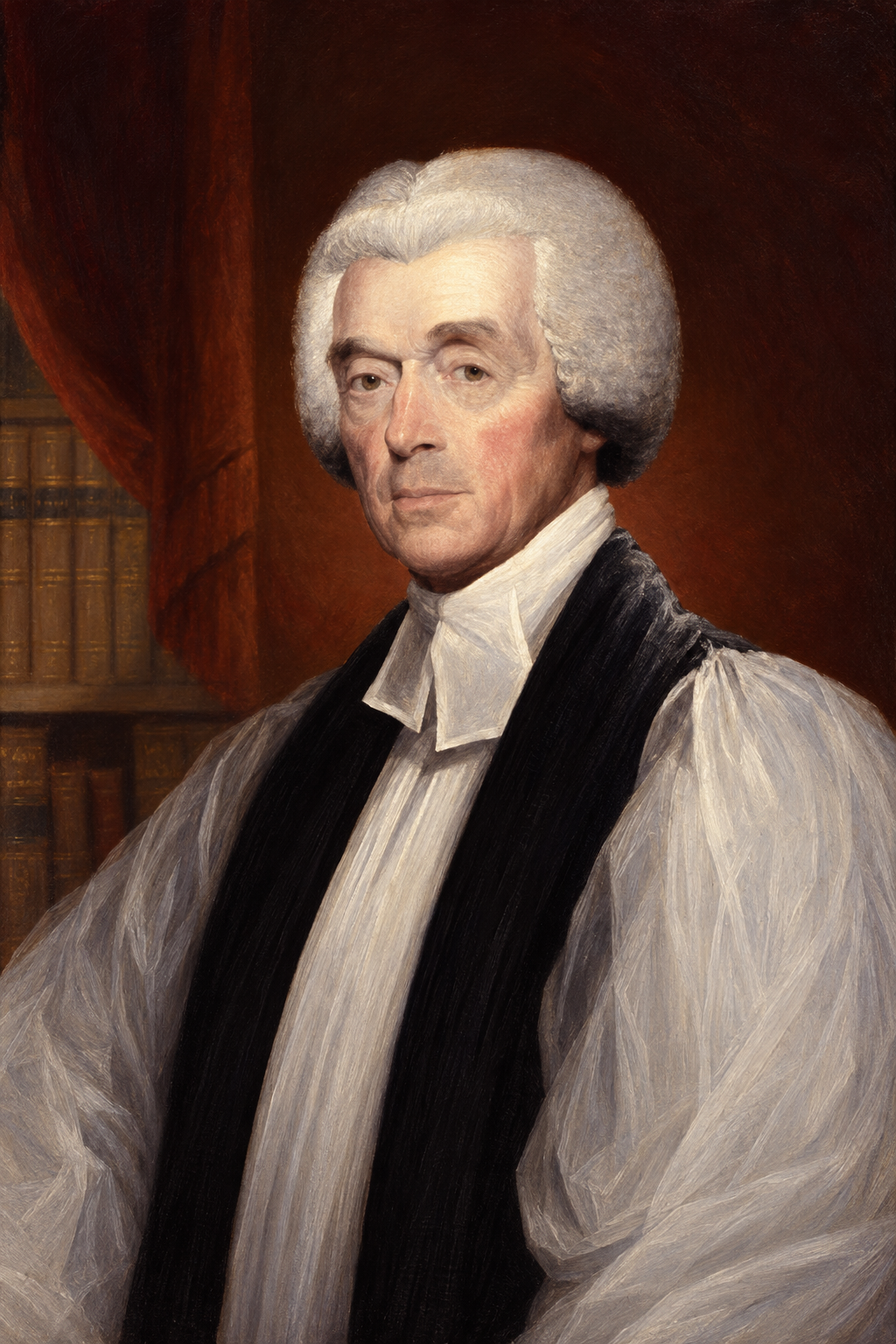
Robert Field painted Inglis in 1810. The portrait now held by London’s National Portrait Gallery shows an elderly bishop in a white wig and episcopal dress, seated beside books and writing materials. The painting preserves a contemporary likeness from the final years of his life.
Inglis died at Aylesford, Nova Scotia, on February 24, 1816.
The Anglican Church of Canada marks the anniversary of his consecration on August 12.
The Church of Ireland’s Celtic Commemorations resource names August 14 for its remembrance of him.
Wondering how to weigh the stories and sources? Learn how to read a saint biography.