Biography
Charles Jeong Cheol-sang
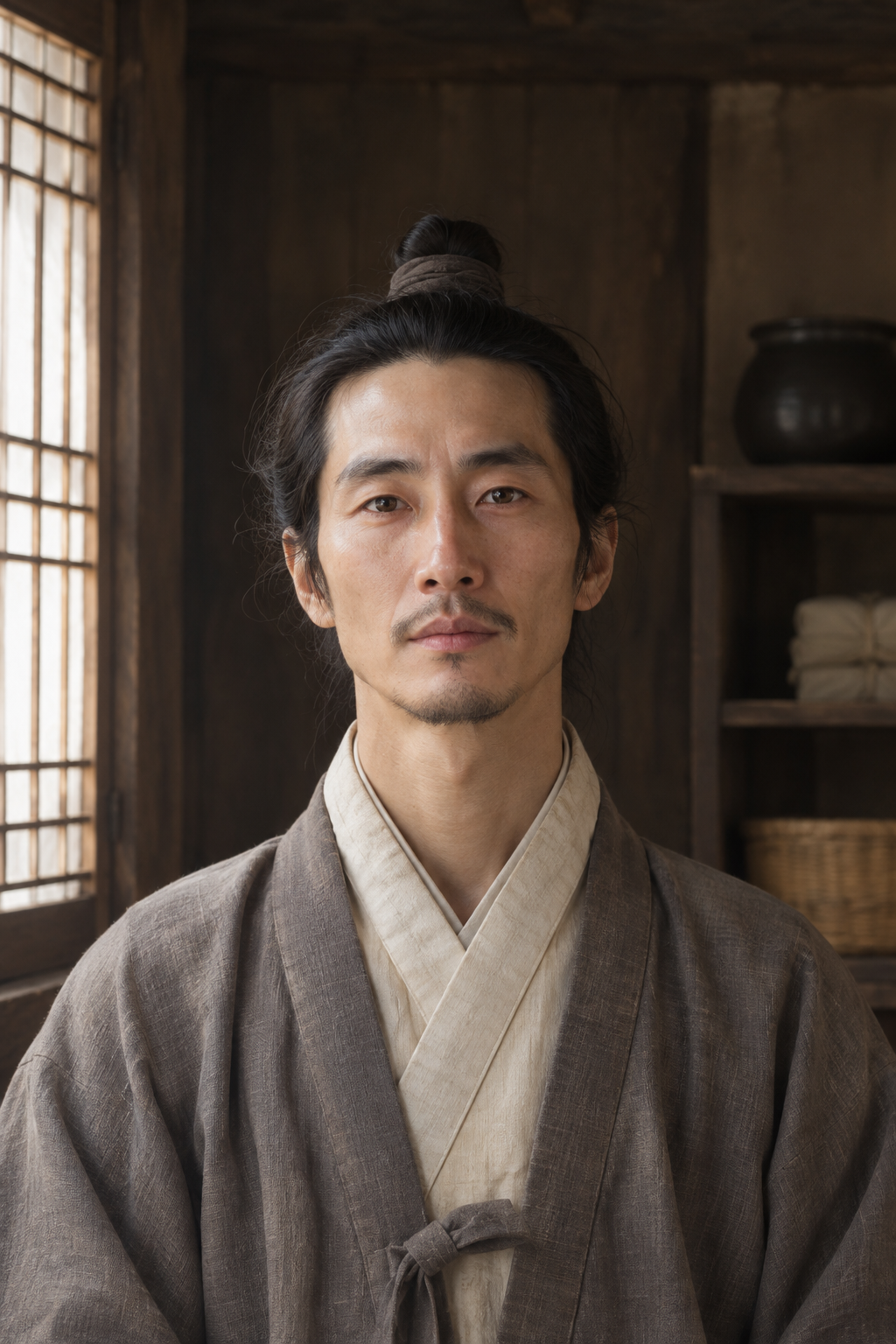
About Charles Jeong Cheol-sang
Charles Jeong Cheol-sang was born in Majae, a village in Gyeonggi Province. His father was Augustine Jeong Yak-jong, and his mother belonged to the Yi family of Hansan. She died when Charles was young. Cecilia Yu, his father’s second wife, brought him up. Paul Jeong Ha-sang and Elizabeth Jeong Jeong-hye, the children of that second marriage, were his younger brother and sister.
Augustine taught Charles the Catholic catechism when the boy was a little over ten. His father went on to lead the Myeongdohoe, an association for teaching the faith. At home the boy saw what it cost his father to follow the Church’s teaching. Among the matters that divided relatives were the sacrifices offered in honour of the ancestors. Charles followed his father in declining to take part.
When James Zhou Wen-mo came to Korea at the end of 1794, Charles could finally meet a Catholic priest. He made several visits to Seoul, where he found Zhou at the home of John Choe Chang-hyeon. The priest also came to see the family. Historian Bang Sang-geun places their move from Majae to Bunwon between 1795 and 1798. Their house at Bunwon was one of the places where Zhou could visit Catholics away from the capital.
Charles’s meetings with the priest became known to relatives who opposed his religion. In a diocesan account, Lee Seung-hun recalls the attempts to make the young man tell them where Zhou was staying. They hurt him with an awl and urged him to leave the faith. Lee relates that Charles tried to persuade the relatives questioning him. He would not give them the information with which they might expose the priest.
Charles married a daughter of Francis Xavier Hong Gyo-man, a Catholic from Pocheon who belonged to the Hong clan of Namyang. The couple had one son. Charles’s own uncles included Jeong Yak-jeon and the scholar Jeong Yak-yong.
When persecution spread in Yanggeun in 1800, Charles went with his father to live in Seoul. He was about twenty by the time the authorities seized his father and uncles early in the following year. He stayed within reach of the prison so that he could attend to his relatives.
The men in custody needed food and a change of clothes. Charles supplied them from outside. Lee’s account reports that officials intensified the punishment of his father and uncle in Charles’s presence, hoping to make him renounce his faith. Officers who saw him coming and going tried to use his visits to discover where Zhou was hiding. They offered him the prospect of saving his father’s life if he told them where to look. Charles continued to care for his father and refused to disclose the priest’s whereabouts.
On April 8, 1801, Augustine was executed for treason. Under the law that held relatives accountable, the authorities arrested his eldest son that same day. Questioned by the Ministry of Justice, Charles acknowledged his Catholic faith and the decision to abstain from ancestral sacrifices. The account distinguishes what he would admit about himself from what he was prepared to tell officials about the priest. He gave misleading answers to protect Zhou.
During more than a month in custody, Charles had to provide for his own meals. Cha Gi-jin records that he made straw sandals to pay for food. It was work he had never done before. Cha also reports that when officials demanded the names of Catholics, Charles named people who had already died.
On May 14, 1801, Charles was taken out with other Catholic prisoners and beheaded. The bishops name Peter Choe Pil-je and Lucy Yun Un-hye among his companions and place their execution outside Seoul’s Small West Gate.
Cha treats the site more cautiously. The Small West Gate was the customary execution ground in such cases, but he had found no record expressly naming the place for these prisoners. He recounts that relatives recovered Charles’s body and buried him with his father.
The family lost its property, and the house at Bunwon was destroyed. Cecilia took Paul and Elizabeth back to Majae, accompanied by Charles’s surviving family. In later years Paul travelled repeatedly to Beijing in an effort to bring priests back into Korea. For the children it meant returning to their father’s village without him or their elder brother.
On September 19, 2014 the Diocese of Uijeongbu marked the beatification of father and son at Majae. Bishop Lee Ki-heon blessed statues of Augustine and Charles. After Mass, about two hundred people set out on foot with the statues, visiting the area where the family had lived and following the bank of the Han River. A month earlier, Pope Francis had beatified the two men in Seoul. Cecilia, Paul and Elizabeth, who survived the deaths of Augustine and Charles, had themselves died in the persecution of 1839.
Wondering how to weigh the stories and sources? Learn how to read a saint biography.