Biography
Charles Todd Quintard
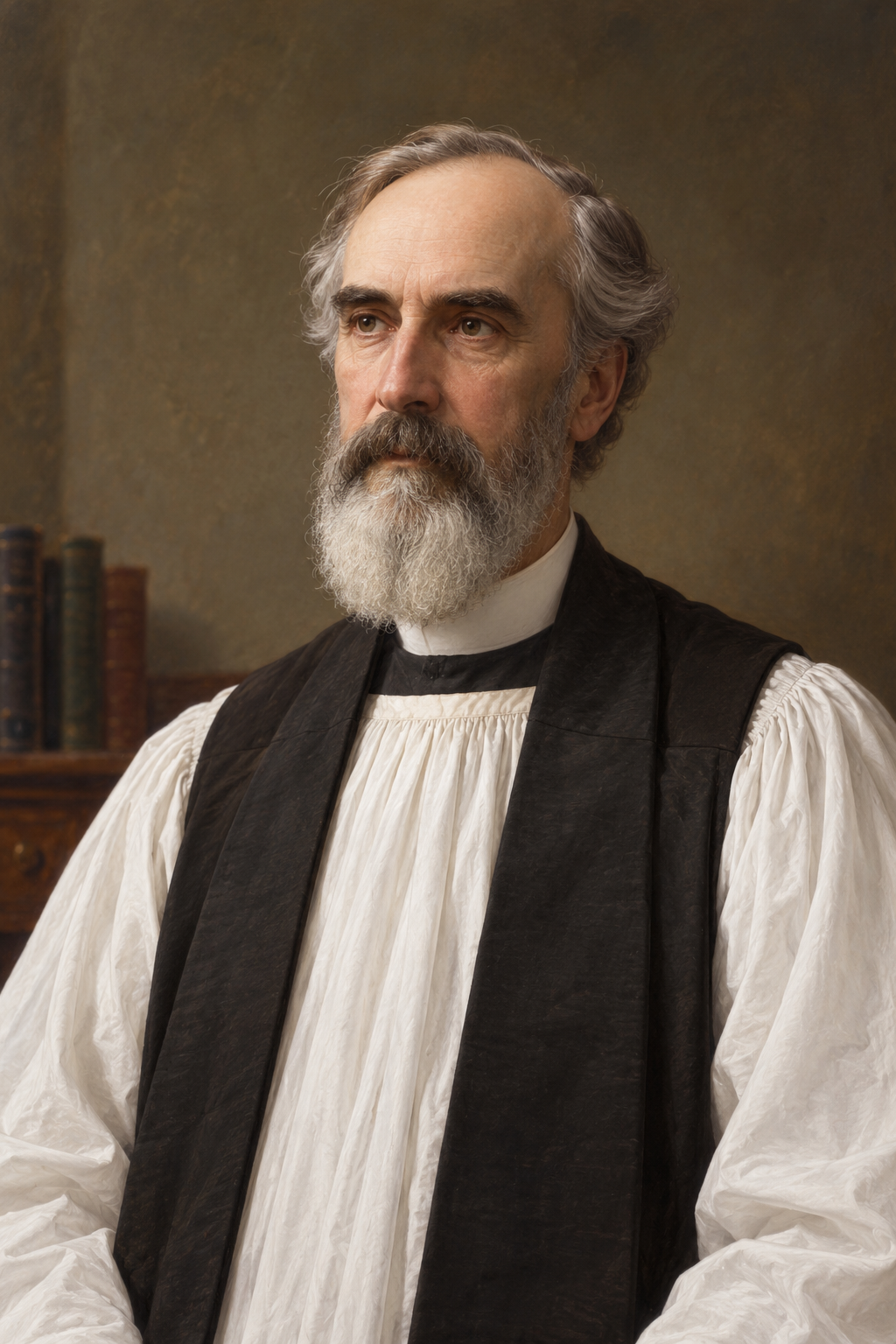
About Charles Todd Quintard
Charles Todd Quintard was a physician who became an Episcopal priest and the second bishop of Tennessee. Born in Stamford, Connecticut, he earned his medical degree in New York in 1847 and worked at Bellevue Hospital before moving south. He practiced medicine in Athens, Georgia, and in 1851 became a professor of physiology and pathological anatomy at Memphis Medical College. In Memphis he studied for the ministry under Bishop James Hervey Otey. Ordained a deacon in 1855 and a priest in 1856, he served the Church of the Advent in Nashville.
His religious outlook emphasized the sacraments: baptism established Christian membership, while confirmation bestowed spiritual gifts. He prepared instructional materials to help candidates approach confirmation.
When the Civil War began, Quintard joined the Confederate First Tennessee Infantry as its chaplain. His medical training also shaped his wartime work. The publisher’s account of the modern edition of his diary and memoir describes his care for wounded soldiers, organization of hospitals and relief, and ministry among soldiers and civilians. He attended the wounded at Murfreesboro and Chickamauga and conducted funerals after the battle of Franklin. These activities placed pastoral care within his service to the Confederate army.
His 1864 book, Balm for the Weary and the Wounded, addressed soldiers kept from active service by injury or disease. Its preface treated patient endurance as a religious calling and encouraged the sick to deepen their Christian character. It also explicitly connected that endurance with the pursuit of Confederate independence. The devotional purpose and political allegiance were intertwined. The volume included selections from other writers, so it should be understood as a compilation as well as an expression of his pastoral concerns. Its dedication mourned Captain Thomas Edward King, killed at Chickamauga, and recalled Quintard’s grief as he carried King’s body from the battlefield.
The collection offered consolation through passages about trust in God, fear of death, and perseverance through sorrow. These selections made religious reading available to people whose illness had interrupted their ordinary duties. They presented suffering within a Christian understanding of hope, while the preface retained the military and national setting of its intended readers.
After the war, Quintard was consecrated bishop on October 11, 1865. He helped restore church life in Tennessee and made education a major part of his work. He served as the University of the South’s first vice-chancellor from 1867 to 1872.
Thomas Gailor’s later memorial address recalled Quintard’s work with collaborators to establish theological training, build Otey Hall, and obtain British support for the school’s opening in 1868. It is a commemorative account that honors his predecessor’s influence.
The university project had begun before emancipation as an institution intended to serve and defend Southern slaveholding society. The Civil War destroyed much of its financial foundation. Its postwar opening changed those material circumstances without erasing the purposes and allegiances of its founders.
Sewanee’s Roberson Project supplies an essential part of that history. Its researchers document that Quintard had enslaved people and later defended the Confederacy through the ideas associated with the Lost Cause. His British fundraising drew on Confederate sympathizers, including people whose wealth had connections to Caribbean plantation slavery. The university’s recovery therefore depended partly on networks that carried the influence of slavery beyond emancipation. His achievements as an educator cannot be separated from those relationships or treated as evidence that he had rejected the racial order he had helped sustain.
At the same time, Quintard opposed proposals to segregate Episcopal congregations and supported Hoffman Hall, a school for African American ministerial training near Fisk University. Maria Evans’s Episcopal account places these actions alongside his Confederate allegiance and cautions against assuming a motive for the apparent contradictions. His support for Black church work is documented; an account of personal repentance would require evidence that these actions alone do not provide.
One example of that church work survives in the history of Holy Comforter in Columbia, Tennessee. In June 1891 Quintard invited Thomas J. Brown, a student from Hoffman Hall, to work with African Americans there. A Sunday school began in temporary quarters. When Brown left the following year, regular services eventually stopped, but the Sunday school continued through the work of local teachers. A diocesan report later credited superintendent Hugh Merrill and his colleagues with sustaining the mission. The congregation’s history preserves their contribution as well as the bishop’s initial invitation.
Quintard died on February 15, 1898. A contemporary notice in The Living Church records that date, which differs from his later commemoration. The same notice placed his episcopal consecration within the reunited Church’s General Convention of 1865, connecting his leadership with the restoration of national church relationships.
Louisiana’s Episcopal diocese marked his February 16 commemoration in 2018.
His legacy includes the university he helped establish and the enduring consequences of its ties to slavery and Confederate memory. Sewanee’s continuing examination of that history gives a fuller account of the institution and the people whose work and lives shaped it.
Wondering how to weigh the stories and sources? Learn how to read a saint biography.