Biography
Chrodegang of Metz
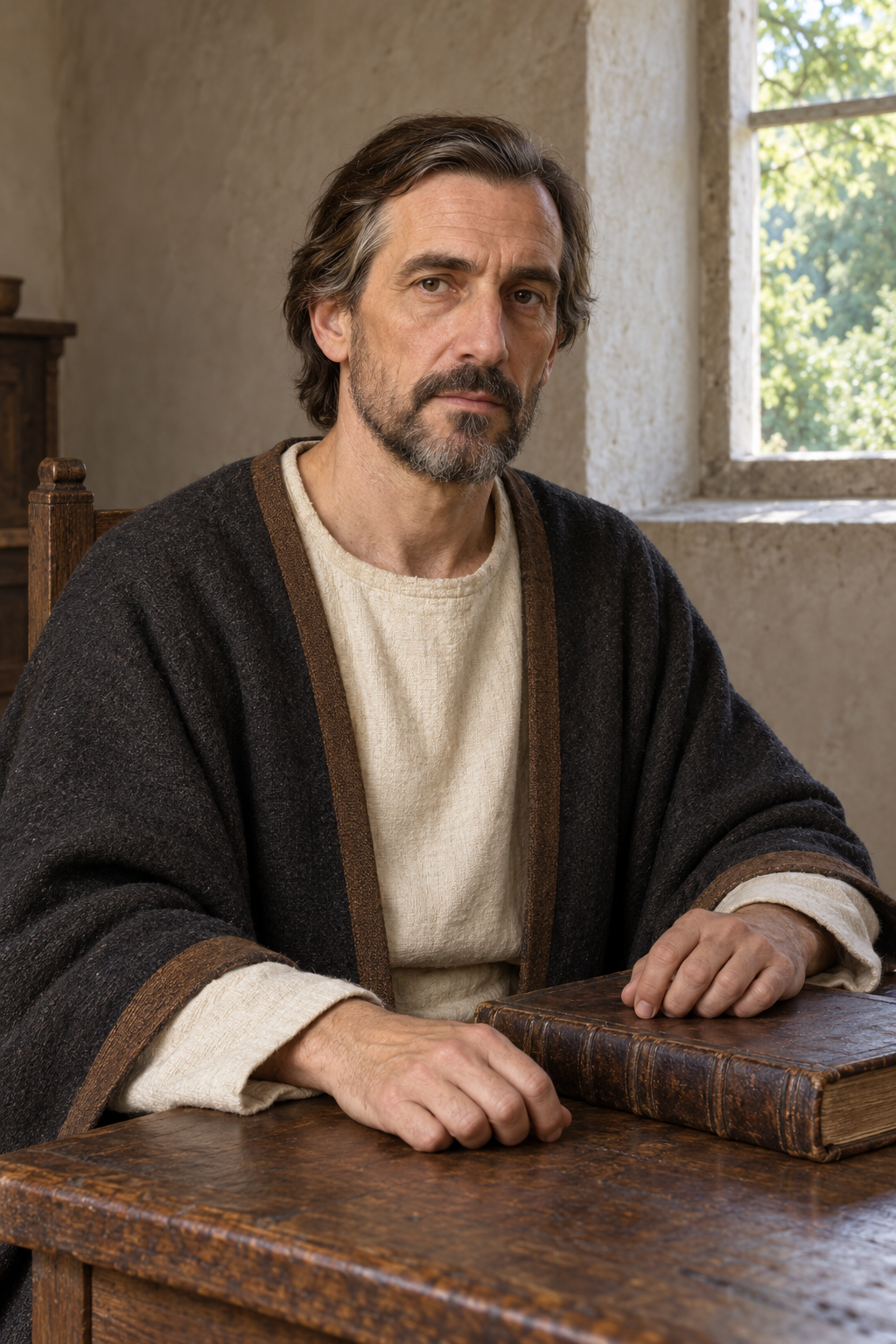
About Chrodegang of Metz
Chrodegang was an eighth-century bishop of Metz whose work joined public responsibilities to the daily life of his clergy.
He served at the Frankish court before becoming bishop. In 753 he helped escort Pope Stephen II from Rome across the Alps to meet Pippin. He supported monastic communities at Gorze and Lorsch, while working to strengthen the churches under his care. At Attigny in 762, his name headed an agreement by church leaders to pray for one another, both during life and after death.
His most enduring work was a rule for the clergy of Metz Cathedral, written around 755. It drew on the Rule of Benedict but addressed a community of canons. The surviving text developed through several versions, so not everything later circulated under Chrodegang’s name belongs to his original work.
The rule gives a detailed picture of communal life. Most members were to sleep in a shared dormitory, with exceptions requiring the bishop’s permission. They were to gather daily to hear Scripture and instruction, listen to readings from the rule and attend to the community’s business. After this meeting, they were to carry out their assigned work. Chrodegang also urged them to bear one another’s bodily and moral weaknesses patiently.
This concern for mutual care existed alongside severe discipline. The rule required confession to the bishop twice a year and threatened corporal punishment or imprisonment for deliberate concealment of offenses. For serious wrongdoing, it prescribed physical punishment followed by imprisonment or exile, with further public penance before reconciliation. These provisions show the coercive authority built into his vision of an ordered Christian community.
Historian John Contreni, reviewing the work of Michael Claussen, emphasizes that Chrodegang’s aims extended beyond the cathedral enclosure. In this interpretation, common worship was meant to bring clergy, laypeople and the poor into a more united Christian society. Canons retained the use of their property and its income during their lives; their community was not simply a monastery under another name.
The same study places his interest in Roman worship in a wider setting than the transmission of chant alone. It involved the manner of celebrating the liturgy, its books, readings and feasts. Chrodegang sought to shape a community through shared religious practice.
Later revisions substantially expanded the rule, incorporating material from the council of Aachen in 816. This enlarged version circulated more widely, particularly in England.
Chrodegang died on March 6, 766, and was buried at Gorze.
He is commemorated on March 6 and locally in Metz on October 3.
The parish community joining Sainte-Thérèse and Saint-Symphorien chose him as its common patron. A church at Althorn also bears his dedication.
Wondering how to weigh the stories and sources? Learn how to read a saint biography.