Biography
Ciriaco María Sancha y Hervás
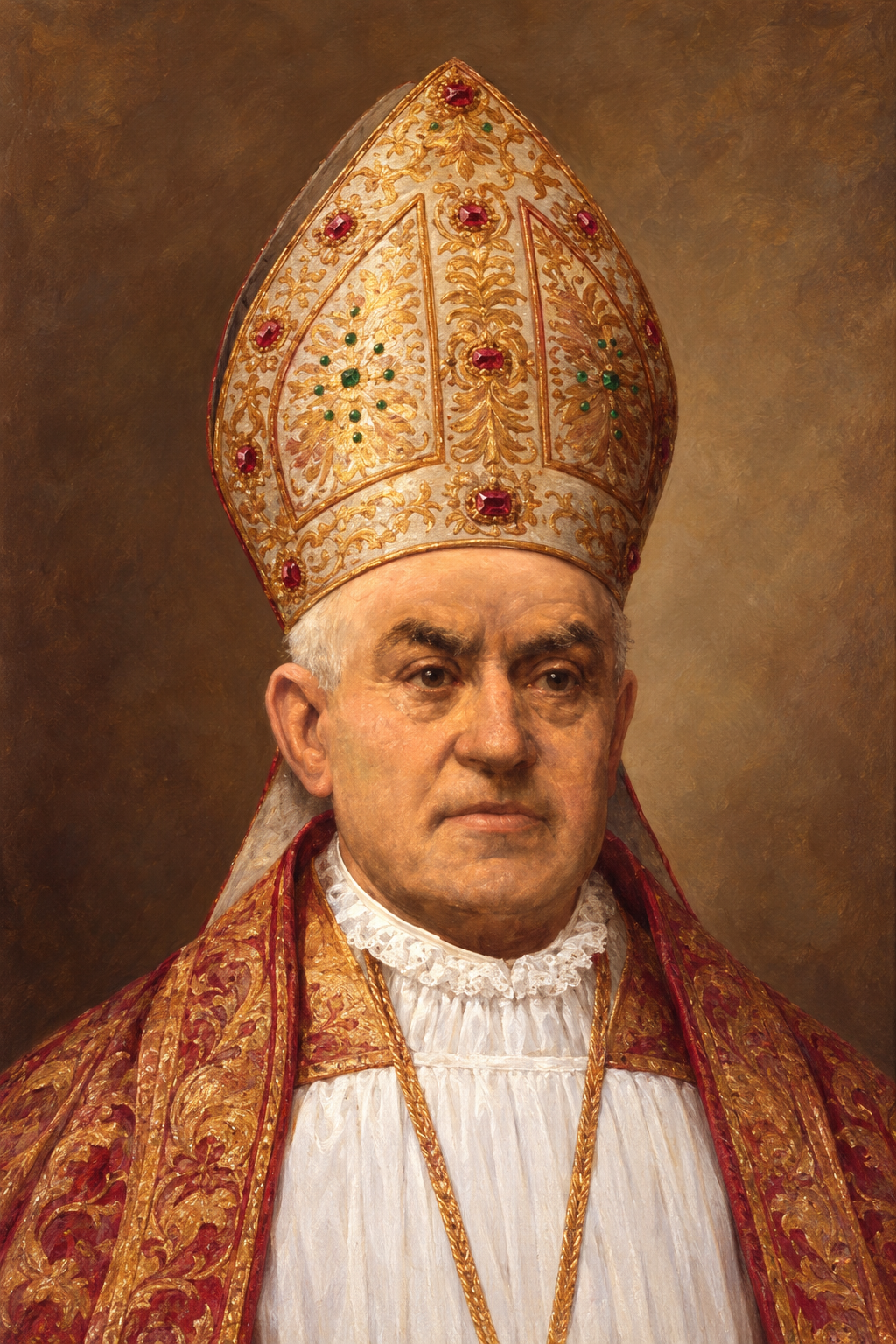
About Ciriaco María Sancha y Hervás
Ciriaco María Sancha y Hervás came from a farming family in Quintana del Pidio, Burgos. His mother died when he was ten. He entered the seminary at Osma in 1852 and taught while completing his studies. Ordained in 1858, he gained experience in parish ministry and diocesan administration before leaving for Cuba.
In 1862 he accompanied Archbishop Primo Calvo y Lope to Santiago de Cuba as his secretary. Alongside diocesan administration, he taught moral theology and served as a cathedral canon. His assistance to abandoned children and older people developed into a religious congregation, founded on August 5, 1869.
The young Cuban women who joined the institute cared for orphans, older people without support and people with disabilities. The beatification homily places its beginnings amid the poverty and disruption of Cuba’s independence struggle. Sancha also spent months in prison after opposing the installation of an archbishop appointed without papal approval. The congregation later took the name Sisters of Charity of Cardinal Sancha.
His resistance to the disputed appointment involved public argument as well as administrative work. Historian Juan López Martín describes Sancha reading José Orberá’s pastoral instruction to assembled clergy in November 1872 after its printing had been prohibited. In 1873 Sancha wrote Cisma en Cuba, a defense of the ecclesiastical position against Pedro Llorente’s authority. Orberá arranged publication in Madrid and distribution to bishops and cathedral chapters. Sancha was thus helping bring a Cuban church dispute before readers in Spain.
A letter issued from the Castillo del Morro on December 2, 1873, gives a more personal glimpse of that conflict. Orberá commends Vincentian priest Pedro Sáinz; Hilario Chaurrondo’s reproduction identifies Sancha as the countersigning secretary. The letter explains that imprisonment and loss of access to the office’s seal prevented its usual formal presentation.
After returning to Spain, he became auxiliary bishop of Toledo and later led the dioceses of Ávila, Madrid, Valencia and Toledo. His work included clerical education and organizing Catholic social initiatives. In Madrid he promoted the first National Catholic Congress, seeking cooperation among Catholics divided by politics.
He organized moral conferences for priests in Madrid, Valencia and Toledo, making continuing education part of his work as a bishop.
His responsibilities also extended into parliamentary life. The Spanish Senate records him as a senator representing the archbishopric of Toledo in the 1887–1890 legislatures, and by right from 1893. Its 1898–1899 index lists a speech by him on the war with the United States.
He died in Toledo on February 25, 1909. At his beatification on October 18, 2009, the Church remembered both his charitable service and his efforts to maintain ecclesial unity.
Wondering how to weigh the stories and sources? Learn how to read a saint biography.