Biography
Claudius of Besançon
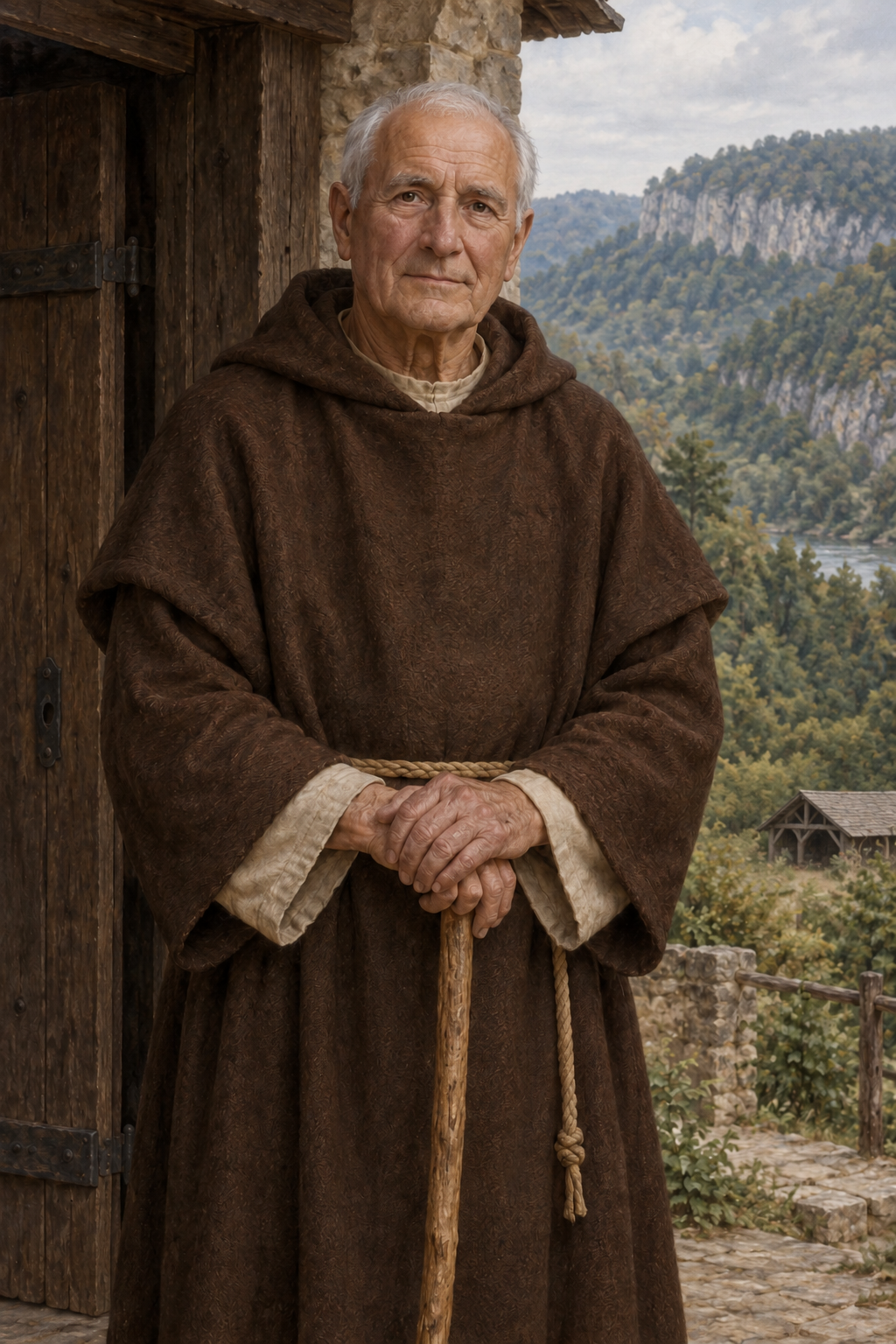
About Claudius of Besançon
Claudius, also known as Claude, is remembered as an abbot of Condat in the Jura and as patron of the Diocese of Saint-Claude. The familiar title “of Besançon” comes from a tradition that made him bishop of that city before his return to monastic life. His personal history is much less certain than the devotion that later gathered around his name.
The early monastic lists place him twelfth among the abbots. Later Lives, composed centuries after his lifetime, combined that memory with the career of a bishop named Claudius who attended sixth-century councils. In his critical account, A. A. Korolyov explains why this combination cannot simply be accepted. Modern scholarship instead considers the possibility that the abbot held episcopal rank within the monastery, without governing the see of Besançon.
His chronology is likewise disputed. Gérard Moyse discusses a reconstruction placing the beginning of his abbacy between 648 and 657 and its end in the early eighth century. Moyse explicitly describes the underlying catalogue evidence as fragile. These estimates differ from the familiar date of about 699 for his death. The surviving evidence does not justify turning the traditional sequence into a precise modern timeline.
The Lives are more revealing about the religious communities that preserved them. Korolyov notes that their descriptions of cathedral life and papal approval reflect concerns of much later centuries. The substantial growth of Claudius’s cult belongs to the Middle Ages, when accounts of his miracles and liturgical texts were assembled. Those writings are evidence of devotion and of the monastery’s remembered past; they are not contemporary records of the abbot’s childhood or daily activities.
According to the diocesan tradition, the opening of his tomb in the twelfth century revealed an unusually preserved body. Reports of miracles drew pilgrims to the monastery. During the French Revolution the relics were burned in 1794; the diocese preserves an arm relic in its cathedral. These traditions remain part of the local remembrance of a saint whose cult outgrew the scant evidence for his lifetime.
The city’s history records the wider effect of that pilgrimage. Claudius’s reputation gradually eclipsed that of the earlier abbot Oyend, and his name became the name of the town. Pilgrims also supported local craft production, which later diversified into other goods as pilgrimage declined. His memory is therefore visible not only in religious observance but in the place itself and the history of its community.
Wondering how to weigh the stories and sources? Learn how to read a saint biography.