Biography
Clement of Rome
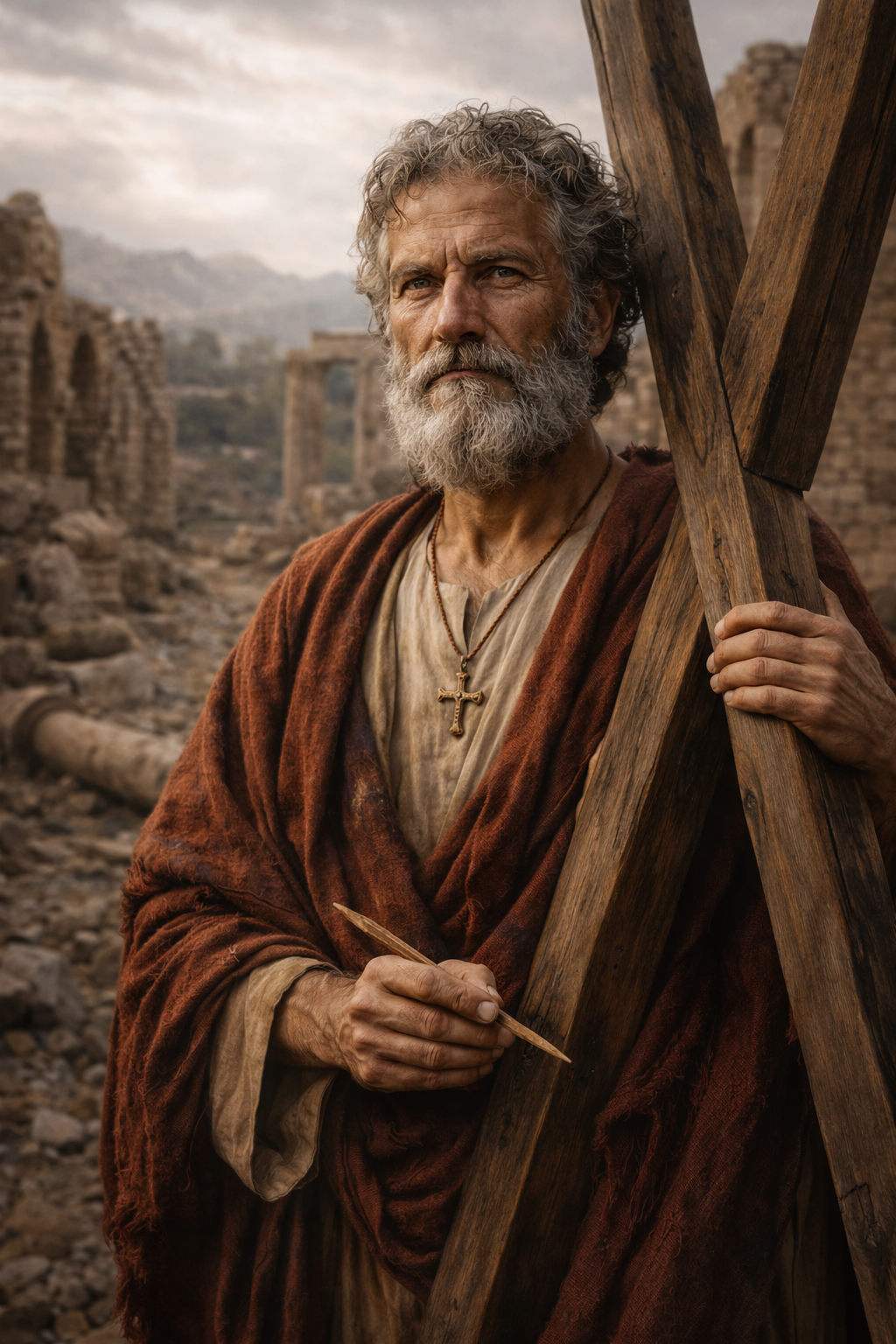
About Clement of Rome
Clement of Rome belongs to the generation that carried Christian communities beyond the lifetime of the apostles. Ancient church memory places him among the early leaders of the Roman church near the end of the first century. The evidence does not supply a childhood, birthplace, education, or birth year. It also does not permit a confident modern-style term of office. Benedict XVI's historical summary follows Irenaeus in placing Clement after Linus and Anacletus and says that he led Rome in the final years of the century. This received succession is early and important, while its exact numbering varies with how ancient lists are counted.
Philippians names a Clement among Paul's coworkers whose names are in the book of life. Later Christians sometimes identified that coworker with the Roman Clement. The letter itself gives no office, city, or later career for him, and Clement was a common Roman name. The identification therefore cannot establish that the bishop personally knew Paul. Irenaeus, writing in the late second century, says that Clement had seen the apostles and still had their preaching in his ears. That testimony records a strong early memory of proximity to the apostolic generation, but it is not Clement's own recollection.
The work most closely associated with Clement is the long letter commonly called First Clement. Its opening identifies the sender as the church of God residing at Rome and the recipients as the church at Corinth; the body never signs Clement's name. Ancient witnesses nevertheless attributed it to him. The letter responds to a serious division in Corinth after some presbyters had been removed from ministry. It does not claim that Rome had been invited to intervene. Instead, the Roman church apologizes for delay, addresses the disorder directly, and asks that the displaced leaders be restored where they had served honorably.
The letter's method is patient and expansive. It recalls examples from Scripture, creation, civic order, and the life of the Christian community. Envy and rivalry are treated as destructive forces; humility, repentance, hospitality, and mutual regard are offered as practices that can heal division. The writer does not flatter either faction. Those responsible for revolt are told to submit, while the whole congregation is urged to seek peace. Clement's remembered leadership rests chiefly on this corporate act of correction: firm enough to name wrongdoing, yet directed toward restoration rather than humiliation or personal victory.
Irenaeus knew the Corinthian letter and described it as a powerful appeal from Rome that renewed faith and proclaimed the tradition recently received from the apostles. His account is significant because it appears within roughly a century of the dispute. It also shows that Clement's importance was remembered through a community's letter, not through a collection of personal legends. Irenaeus associates him with the Roman succession and with living apostolic memory. He does not tell the quarry, anchor, or receding-sea stories that later became prominent in Clement's devotional life.
Eusebius, writing in the early fourth century, calls the letter genuine, lengthy, and admirable. He reports that it had long been read publicly in many churches. This liturgical reception explains why the work sometimes stood near the boundary of the New Testament in ancient collections, although it did not become part of the canonical New Testament. Eusebius also preserves succession traditions and notices writings circulating under Clement's name. Modern readers must therefore distinguish the well-attested Corinthian letter from later Clementine works. Attribution in an ancient title is evidence of reception, not automatic proof that every Clementine text came from one author.
The familiar martyr portrait arises later. Benedict XVI notes that testimonies from the fourth through sixth centuries give Clement the title of martyr. Eastern tradition develops the account further: exile from Rome to labor near Cherson in Crimea, ministry among prisoners, a spring revealed in answer to prayer, execution by drowning with an anchor, and a sea that receded to disclose his shrine. These stories shaped Clement's iconography and explain the anchor often shown beside him. They are not contemporary evidence. Crimea can therefore appear only as a disputed traditional setting, and neither 99 nor 101 should be presented as an exact documented death year.
Clement's letter ends its central appeal with prayer for rulers, peace, concord, and protection. Its civic language is notable: Christians ask that governing authorities use their entrusted power without offense, even while the church claims a moral order beyond imperial command. The prayer belongs to the ancient letter and demonstrates the Roman congregation's concern for public life. It should not be detached and silently presented as a modern collect written solely by Clement. In this record it remains part of the cited biography rather than a separately approved prayer, preserving both its communal voice and the unresolved questions surrounding the translation used.
Church calendars preserve distinct forms of Clement's reception. The Church of England lists Clement on November 23 among martyrs; the Orthodox Church in America commemorates him on November 25 as hieromartyr and pope of Rome. These observances document present liturgical practice, not the historical date of his death. Clement's enduring significance is clearest where the evidence is strongest: an early Roman church addressed a wounded Corinthian community with Scripture, moral seriousness, and an appeal for restored order. The later bishop, pope, martyr, exile, and anchor traditions remain meaningful parts of reception when they are labeled according to their evidence.
Wondering how to weigh the stories and sources? Learn how to read a saint biography.