Biography
Colette of Corbie
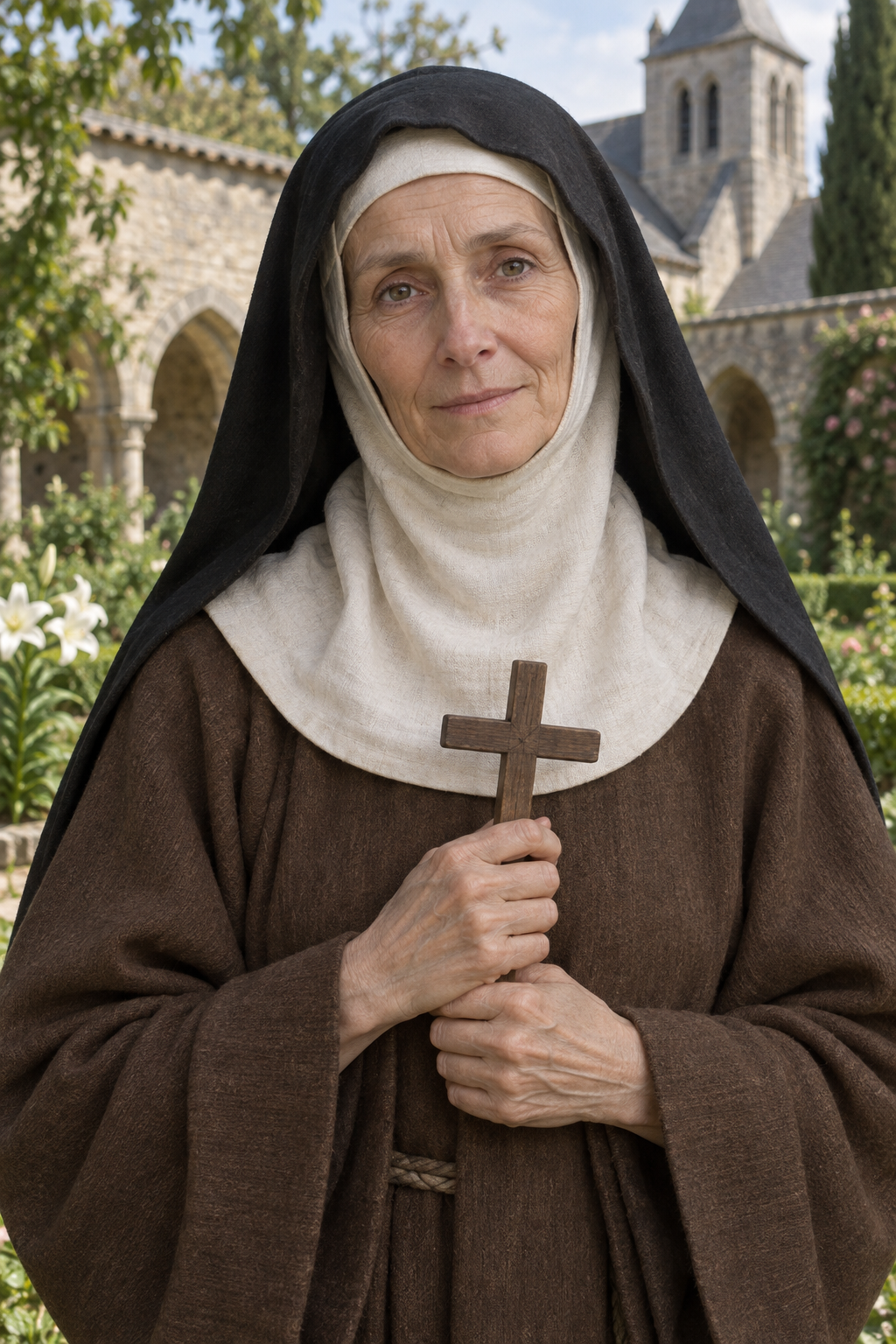
About Colette of Corbie
Colette of Corbie began life in a household connected to a great monastery and eventually reshaped the life of many religious communities herself. She was born at Corbie in Picardy on 13 January 1381. Her father, Robert, worked as a carpenter for the Benedictine abbey, and her mother was Marguerite Moyon. Colette was a familiar shortened name, derived from the longer forms Nicoletta and Coletta. Colette explored several forms of religious life before living as a recluse. Her later vocation would take her well beyond that first retreat. She became the founder of the Colettine reform of the Poor Clares, a movement that sought a stricter practice of the order’s poverty and common life.
In 1402 she adopted the Franciscan Third Order Rule and settled into a cell beside a church in Corbie. She devoted herself to prayer and penance, while people began coming to seek her prayers and advice. Accounts of her vocation describe visions in which Francis of Assisi called her to reform his religious family. With the support of Henry of Beaume, a Franciscan friar, she pursued that calling outside the cell. The woman who had chosen seclusion now had to make her case to church authorities, secure assistance and bring other people into the work. In 1430, she drew up her constitutions to regulate the communities and keep their religious observance united. She also worked with Henry to establish a reformed community of friars in 1412.
In 1406 Colette was received at Nice by Benedict XIII, the papal claimant recognized in France during the Western Schism. Women patrons helped arrange that meeting. Marguerite de Rocheouart, baroness de Brissay, placed her resources at Colette’s disposal, while Blanche of Savoy used her influence to arrange the audience. Such help was essential, but patrons also pursued their own interests.
Her Testament calls her sisters to persevere in their vows, sharing necessary possessions. Obedience excludes commands contrary to God, the soul or their Rule. After failure, they should return through repentance rather than abandon their vocation.
Writing to Ghent’s benefactors, she explained that travellers had warned against bringing sisters along dangerous roads. She accepted that another religious community might use the building if her sisters could not reach it.
Her work spread through foundations and the renewal of existing houses. At Le Puy she founded the monastery of the Ave Maria in 1432, with fourteen religious women participating. The diocesan account records that she remained there for two years. Establishing a house was therefore not simply a matter of obtaining permission and moving on. In this instance she stayed with the community as its life took shape. The same account remembers the life she encouraged as poor, contemplative and austere, but also communal and joyful. Her reform sought to give that pattern a durable home. This willingness to live without private wealth had begun before she led any monastery. After her parents died, she gave away her inheritance and searched for a community whose way of life she could embrace.
Poligny was another lasting foundation, established in 1415. Its monastery was built above cellars donated by John the Fearless, Duke of Burgundy. The history of that house shows the long life of a community beyond its founder: war later forced the sisters into exile, and the French Revolution dispersed them again. Yet the community was reconstituted. Its chapel became a place where Colette’s relics were venerated, and pilgrims continued to associate her with prayers for families hoping for a child. These later experiences belong to the reception of her work, not to events she lived through herself. The sisters returned from their wartime exile in 1648. A rebuilt chapel followed in 1838, and its renovation marked the foundation’s six-hundredth anniversary in 2015. The present community describes its life in terms of shared poverty, prayer and sisterly communion, with women of different nationalities living together.
Colette died at Ghent on 6 March 1447. Her remains stayed there for centuries before being taken to Poligny, where devotion to her continued. The Diocese of Saint-Claude remembers her in its local calendar and publishes prayers invoking her intercession. The remembrance is not confined to the founding of buildings: it also includes the confidence of people who turn to her in the hope of receiving help.
Canonized in 1807, Colette left a reform that continued beyond France. The communities associated with her became known especially for their refusal of fixed income and their demanding practice of poverty. Her significance lies in the lasting form she gave to a choice she first made for herself: a life of prayer and renunciation, sustained within a community rather than lived alone. The reform began during the Western Schism, when rival papal claimants divided Western Christianity and made the question of whom to obey a difficult and consequential choice.
Wondering how to weigh the stories and sources? Learn how to read a saint biography.
Explore similar vocations
Prayers for Colette of Corbie
Colette of Corbie — children petition
Sainte Colette, veille sur la naissance et la croissance des enfants.