Biography
Colmán of Cloyne
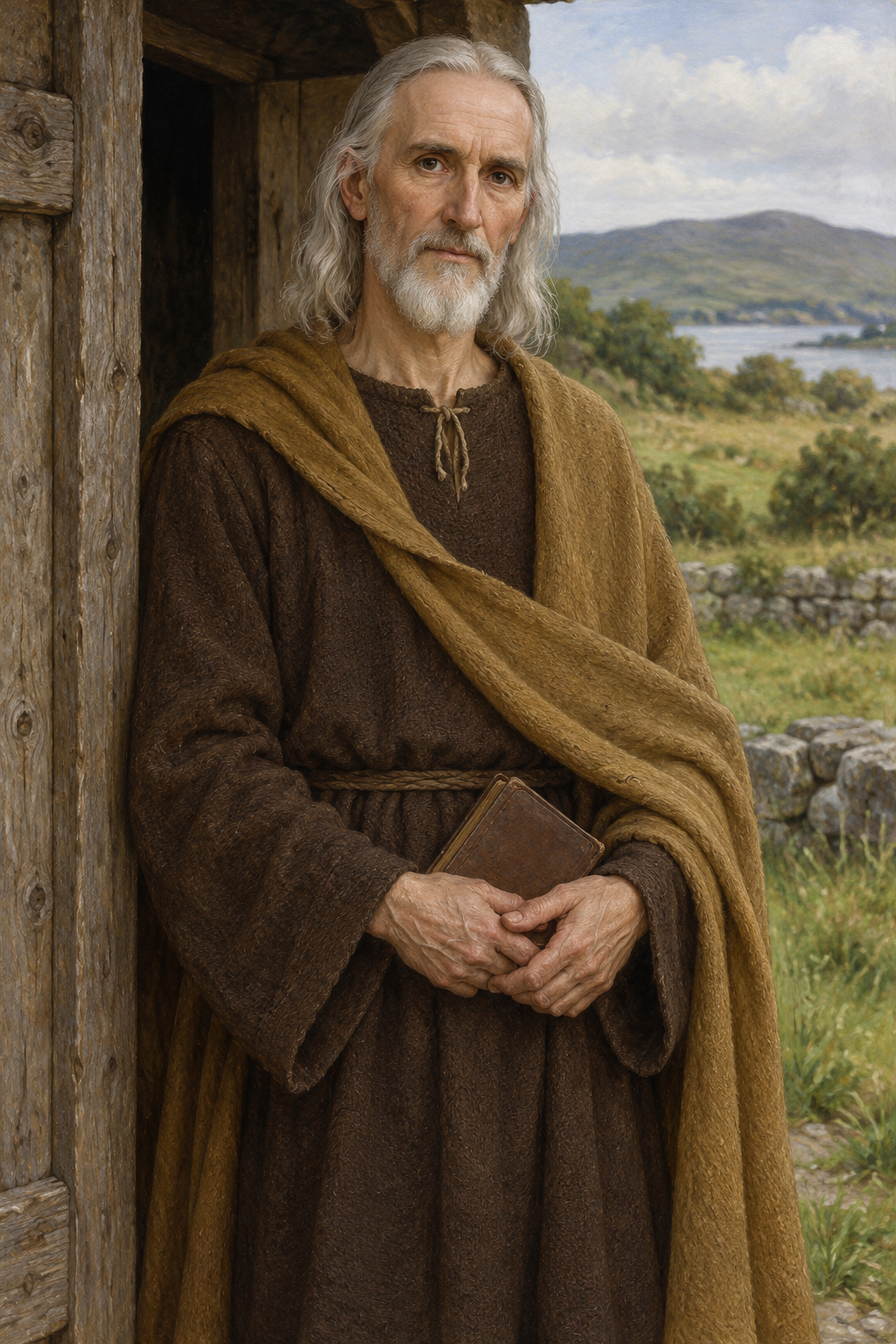
About Colmán of Cloyne
Colmán of Cloyne is remembered as a poet who entered religious life after an earlier career in the world. His name is especially associated with Cloyne in east Cork. The diocesan tradition places him at the royal court in Cashel before a change of vocation, encouraged by Brendan of Clonfert. It remembers his foundation at Cloyne as the beginning of a religious community whose name would endure long after his death.
His literary reputation deserves careful attention. The account published by the Catholic Church in Norway distinguishes a small body of early verse attributed to Colmán from the much larger range of stories surrounding him. These verses concern both religion and the kings of Tara. Their attribution is accepted by important commentators, but the precise course of the poet’s life remains difficult to reconstruct. His remembered connection with learning is firmer than a detailed chronology of his movements.
No separate medieval Life of Colmán is known. Instead, his story has to be approached through annals, genealogies, calendars and appearances in other saints’ Lives. Some of those later texts reflect the competing interests of religious communities. Cloyne’s emergence as a diocesan see in the twelfth century must therefore be distinguished from its earlier foundation. Calling Colmán its founding saint does not establish that he governed a diocese with the boundaries or institutions of a later age.
The New Catholic Encyclopedia includes him among the saints called Colman, identifying Cloyne and Kilmaclenine as his principal associations. It distinguishes him from the founders connected with Kilmacduagh, Dromore and Lynally, and from the bishop of Lindisfarne. A shared name should not bring their different stories together.
His memory remains part of local worship. In his 2024 feast-day homily, James O’Donnell named the cathedral in Cobh and churches at Cloyne, Ballintotis and Macroom among the churches dedicated to him. He also recalled the modern memorial at Kilmaclenine, whose name preserves Colmán’s association as the son of Léinín. These later dedications show how communities continue to honour him, rather than providing new details of his childhood.
A 2025 diocesan homily presented his change of vocation as an example of placing gifts of language and learning at the service of others. That is a present-day reflection on the remembered saint, rather than a surviving statement in his own words. The Diocese of Cloyne continues to honour its patron on 24 November.
Wondering how to weigh the stories and sources? Learn how to read a saint biography.