Biography
Coloman of Stockerau
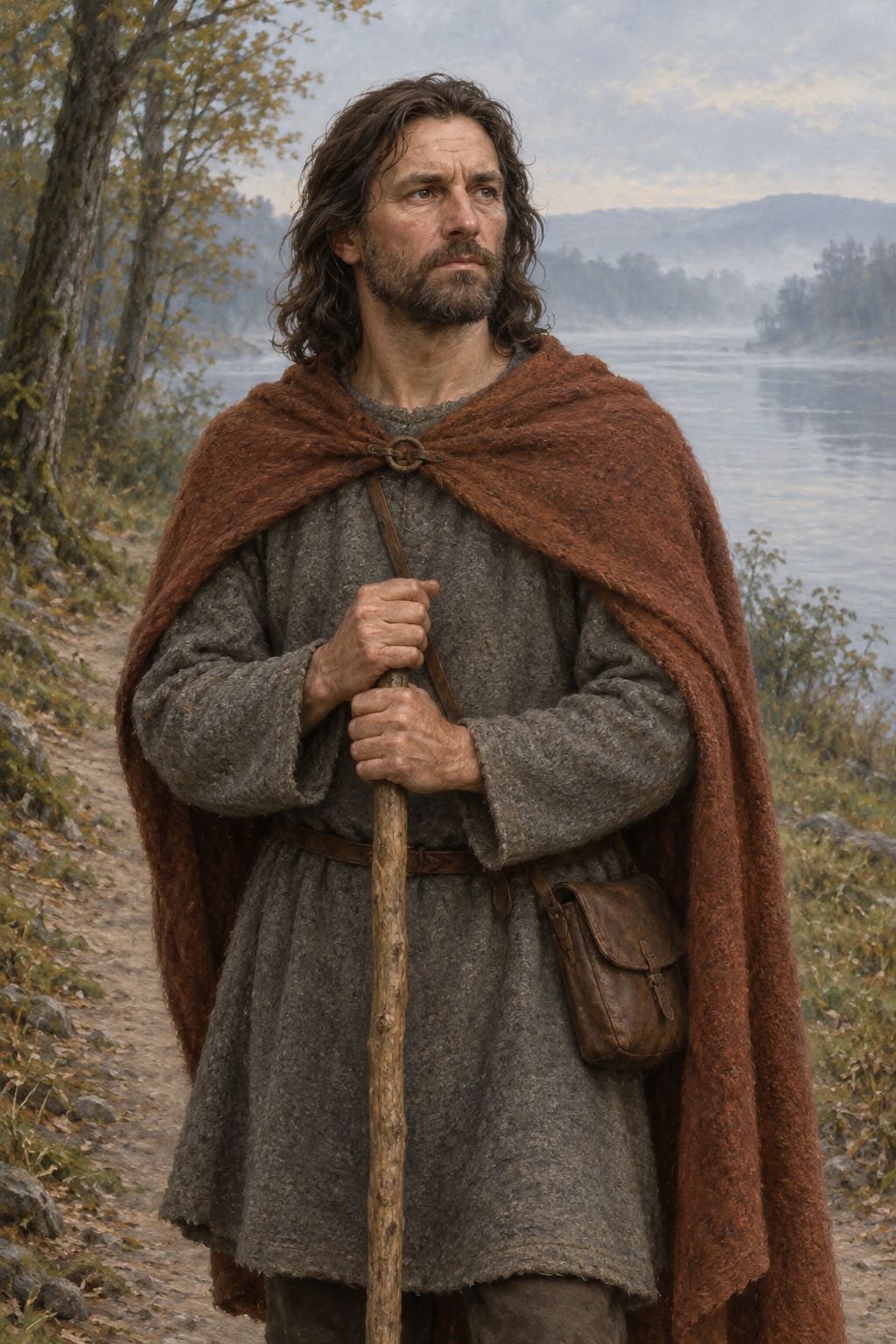
About Coloman of Stockerau
Coloman of Stockerau was a pilgrim whose journey ended in a violent death. He is remembered as an Irish traveller on the way to Jerusalem who was mistaken for a spy and killed near the Danube. His death is generally dated to 1012. Little can be recovered about his earlier life. The claim that he was the son of an Irish king belongs to later tradition and is absent from the earliest accounts.
The contemporary chronicler Thietmar of Merseburg describes local people seizing a stranger whom they suspected of spying. Coloman tried to explain that he was travelling as a poor servant of Christ. They nevertheless tortured and hanged him. The account makes the injustice clear: he was an innocent pilgrim, not a proven enemy. It does not describe a demand that he abandon Christianity. His veneration as a martyr grew from the memory of his unjust death.
Thietmar also records extraordinary signs after the execution: blood flowing from the body and renewed growth on the tree. These are the chronicler’s reports of wonders, not independently established physical events. He ends by telling how Margrave Henry learned of the events and arranged burial at Melk. The short account already joins the story of the dead stranger to the place that became the centre of his veneration.
Later accounts enlarged the narrative. Alexander O’Hara’s study distinguishes Thietmar’s brief report from a Passion that adds a judge and two robbers, shaping the death in terms that recall Christ’s Passion. O’Hara also draws attention to disagreements in the chronology. The transfer of Coloman’s remains to Melk brought a popular devotion into the orbit of the Babenberg rulers, who gained a saint associated with their residence and authority.
The textual history requires similar care. The Bavarian Academy’s source repertory distinguishes an early form of the Passion from a revision and additional miracles in the twelfth century. Its manuscript list shows how widely the account circulated. A later copy or expanded narrative is evidence for the growth of devotion, but cannot make every added detail an eyewitness recollection.
That devotion acquired a public place in Austrian life. The regional heritage record describes Coloman’s importance to attempts to establish a bishopric in Vienna and the special honour paid to him by Duke Rudolf IV. It also records his eventual replacement as territorial patron by Leopold. Images of Coloman commonly show a traveller with a tunic, cloak and walking staff. Such representations preserve his identity as a pilgrim.
Melk still honours him as patron of the abbey and town on 13 October. The abbey’s modern account explicitly distinguishes legend from history and reflects on the danger of treating unfamiliar people as threats. His remembrance thus carries a particular human claim: the stranger who could not make himself understood deserved to be heard and protected.
Wondering how to weigh the stories and sources? Learn how to read a saint biography.