Biography
Columba Kang Wan-suk
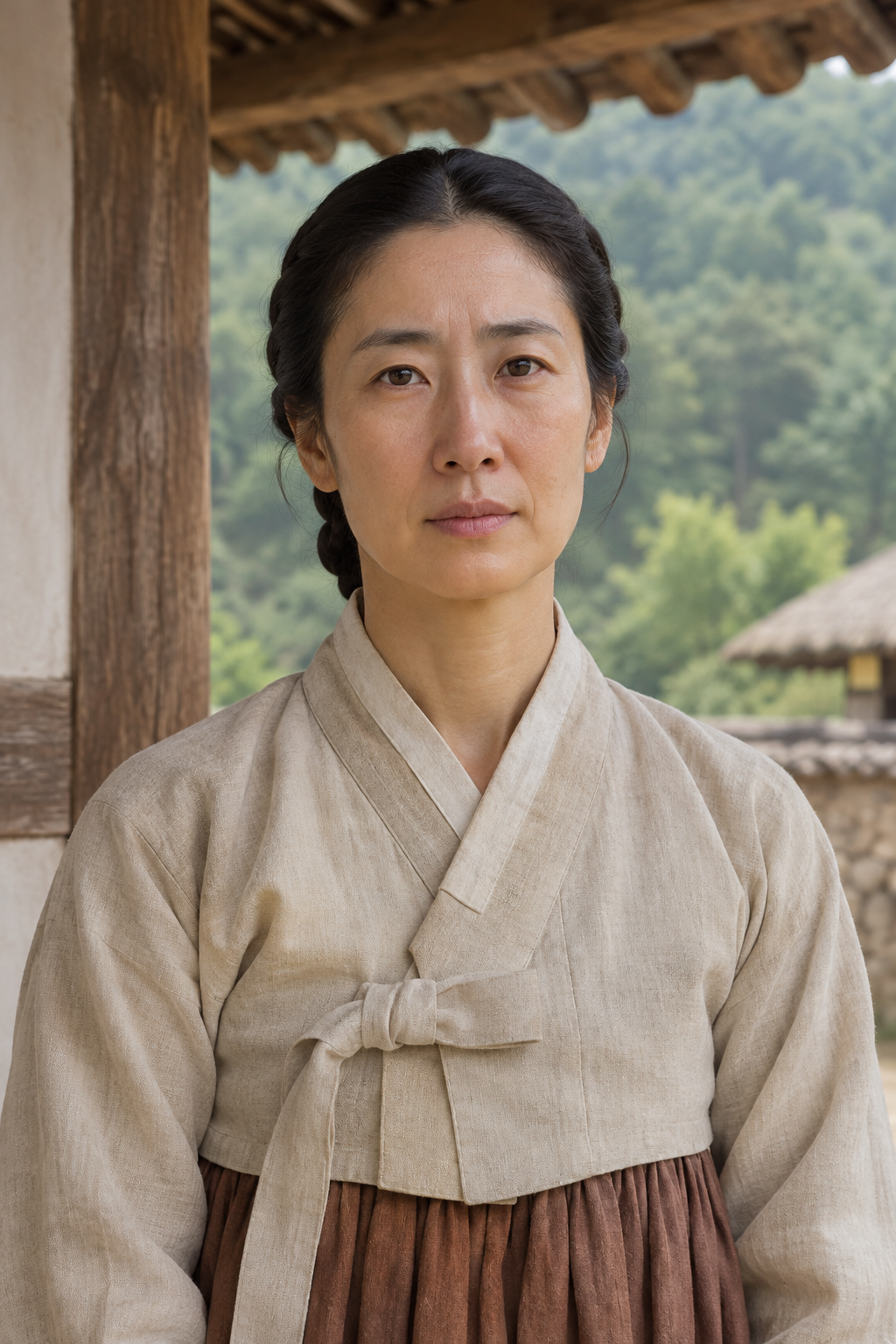
About Columba Kang Wan-suk
Before Columba Kang Wan-suk had a priest to teach her, she went looking for books. She had heard people speak of the Lord of Heaven and wanted to know what they meant. She was living in Deoksan, in the Korean province of Chungcheong, as the wife of Hong Ji-yeong. Among the first people she taught were her mother-in-law and Philip Hong Pil-ju, her husband’s son from his earlier marriage. Both became Catholics. Her husband did not.
In 1791 the authorities imprisoned Catholics in the region. Columba brought food to the prisoners and was herself detained for several days. When she returned home, the danger had not passed: her husband feared that her activities would bring the authorities to him as well. They separated. Columba set out for Seoul with her mother-in-law, her daughter and Philip. In the capital she helped pay the costs of bringing a priest into Korea, a journey being arranged by Saba Ji Hwang, Paul Yun Yu-il and their companions.
The priest whom these believers helped to bring across the border was James Zhou Wen-mo, from China. He arrived late in 1794. The following summer the authorities discovered his presence and ordered his arrest. Columba gave him shelter. That year he baptized her and appointed her to lead the work of teaching women. She had already taught people in her own family; now the priest entrusted her with responsibility for Catholics beyond it. Her home could serve as a refuge because officials did not ordinarily enter and search the private household of a woman of her social standing.
Keeping a door open to other Catholics meant moving it more than once. Historian Jeong Min has traced Columba’s moves through Seoul: in 1799 she left Changdong, outside the South Gate, for Daesadong. A dispute over the building of a house there forced another change. In the spring of 1800 she moved to Hudong, behind the office known as the Chunghunbu. Jeong places this home near present-day Anguk. Here Catholics could come to study, keep a feast together or seek the priest’s counsel.
Jeong’s reconstruction puts at least twenty people under the roof, most of them women. Among those he identifies are Agatha Yun Jeom-hye and Columba’s daughter Hong Sun-hui. The household included servants as well as relatives. Some of the women did the washing and carried messages; others prepared the priest’s food. Guests could arrive several days before a religious gathering and stay in the house. Columba’s ability to welcome so many people depended in part on that daily, shared work.
Columba discussed Catholic teaching with scholars associated with the Namin political tradition. Women from official families also came to her for instruction. Two were Mary Song, the wife of the exiled Prince Euneon, and Mary Sin, his daughter-in-law. Both women received baptism from Zhou. The ties that brought the two Marys to the priest began with a laywoman who could enter parts of society that he could scarcely visit openly.
The two women also belonged to the Myeongdohoe, an association for studying and teaching the faith. Columba helped bring them into it. Members learned with an obligation to teach what they had learned, and they met in small groups. Philip’s home was one of the meeting places identified by the Academy of Korean Studies. Accounts differ about precisely when the association began. Its rules and the part women took in it show that the instruction Columba offered could continue through other teachers and in other homes.
One connection began with a fire. Jeong Min relates that during the winter of 1800 a police officer named Kang Deung-nyeong came to put out a fire at Columba’s house. His mother, Yeon-i, lived in the house just behind hers. Columba sent a gift in thanks, and visits followed. In Jeong’s account the neighbour herself came to believe. The family of an officer charged with finding offenders was thus among the households drawn into Columba’s circle.
On April 6, 1801, Columba was arrested with people who were in her home. The priest had escaped. Officials repeatedly questioned and punished her to find out where he had gone, but she would not tell them. During the three months she spent in prison, she continued her own religious studies and encouraged the people imprisoned with her.
One account of her imprisonment remembers an attempt to write down what the priest had done in Korea. Columba tore a piece from her own clothing and used it for the record. The woman to whom it was entrusted lost it. What survives is the account of Columba trying to preserve that history; the words she set down cannot now be recovered.
On July 2, 1801, Columba was beheaded outside Seoul’s Small West Gate. More than two centuries later, on August 16, 2014, Catholics gathered in the same city, at Gwanghwamun Square, for the beatification at which she was named blessed.
Wondering how to weigh the stories and sources? Learn how to read a saint biography.