Biography
Crispin of Viterbo
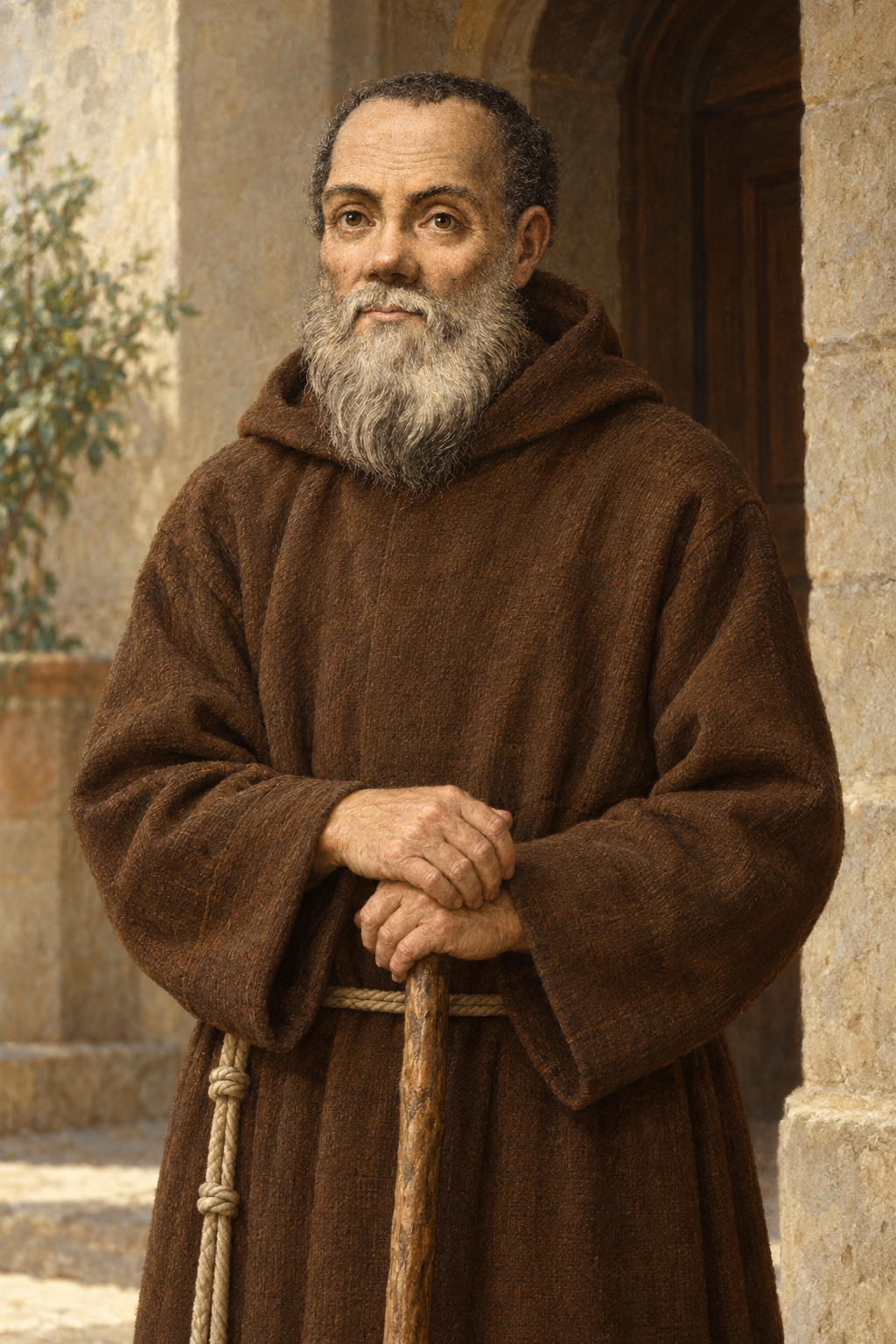
About Crispin of Viterbo
Crispin of Viterbo was a Capuchin lay brother whose long religious life was spent in practical service. The Vatican’s biography describes a man who worked in kitchens and infirmaries, welcomed visitors, taught Christian faith while travelling, and gave particular attention to people in need. He was not a priest. His reputation grew through the ordinary duties of a brother and through the counsel sought from him by people of very different circumstances.
Born Pietro Fioretti at Viterbo on 13 November 1668, he lost his father while still young. Rinaldo Cordovani’s study cites the baptismal register and describes his education with the Jesuits, followed by work in his uncle Francesco’s shoemaking workshop. His mother’s devotion to Mary remained important to him. These early connections with family, schooling and manual work preceded his decision to enter the Capuchins.
Admission was not straightforward. The canonization decree records objections from relatives and concern within the order about his physical strength. He nevertheless entered on 22 July 1693, taking the name Crispin in honour of the patron of shoemakers, and professed his vows a year later. His first assignments included cooking at Tolfa, nursing in Rome and kitchen work at Albano. Later he tended the garden at Monterotondo.
Cordovani describes the novice community’s formal assessments of his suitability. Despite the initial doubts, the recorded votes in 1694 were unanimously favourable. The small, apparently frail applicant had demonstrated that he could undertake the work and discipline of the community. The study also notes that the page bearing his signed profession has been removed from the surviving register; the missing page should not be confused with uncertainty about the profession itself.
Crispin also volunteered to care for brothers struck by fever at Bracciano. The decree remembers his dedication during the outbreak and his own serious illness afterward. He recovered and continued his work. In 1709 he was assigned to Orvieto, where collecting alms became his principal task for almost forty years. The decree describes his worn, repaired clothing and sparse possessions as expressions of his chosen Franciscan poverty.
His rounds connected the friary with a much larger circle of need. Mariano d’Alatri describes how Crispin enlisted households to provide food for prisoners in turn, so that assistance continued from day to day. He also sheltered abandoned infants overnight before taking them to the hospital of Santa Maria della Stella. Some received his continuing attention as they grew, including help toward learning a trade. These accounts place organized, practical help beside his better-known reputation for cheerful conversation.
The decree also records his insistence that people asking at the friary door should receive help. He urged the brothers responsible for welcoming visitors not to send beggars away empty-handed, making care for outsiders a responsibility within the community’s ordinary life.
D’Alatri also emphasizes Crispin’s concern about injustice. He challenged employers who withheld wages and urged fair dealing from traders. His gentleness did not mean that he avoided difficult conversations with people who possessed power or money. The same biography describes his correspondence with priests, religious and lay friends. Letters brought questions about illness, family decisions and spiritual anxiety, extending the relationships formed during his daily rounds.
John Paul II’s canonization homily identifies joy as a central feature of his life. The pope connects this with faith and confidence in God, rather than treating it as a pleasant disposition alone. He also draws attention to Crispin’s teaching: the brother used accessible sayings and familiar language to explain Christian belief, while continuing to deepen his own understanding. The journeys made to collect food thus also became occasions for religious instruction.
The homily gives equal weight to Crispin’s devotion to Mary. People brought him anxieties and requests for prayer, which he entrusted to her intercession. In this account, his Marian devotion belongs beside his care for others and his life in the community. It is part of the religious outlook that sustained his repeated acts of service.
Serious illness in the winter of 1747–1748 led to his transfer to Rome for care. He died there on 19 May 1750. The Vatican biography records his beatification by Pius VII in 1806. His final years brought dependence on others after decades spent helping to provide for their needs.
John Paul II canonized him on 20 June 1982, the first canonization of his pontificate. In the Angelus that day, the pope placed Crispin within the Franciscan spiritual family while emphasizing his individual vocation: poverty, service, wise counsel and quiet confidence in God.
His remains returned to Viterbo in 1983 and are venerated in the chapel dedicated to him at San Paolo ai Cappuccini. The local heritage account connects that shrine with the brother’s earlier life in the city and his later work at Orvieto. His remembrance remains rooted in the places where he lived and served.
Wondering how to weigh the stories and sources? Learn how to read a saint biography.