Biography
Cristóbal of Tlaxcala
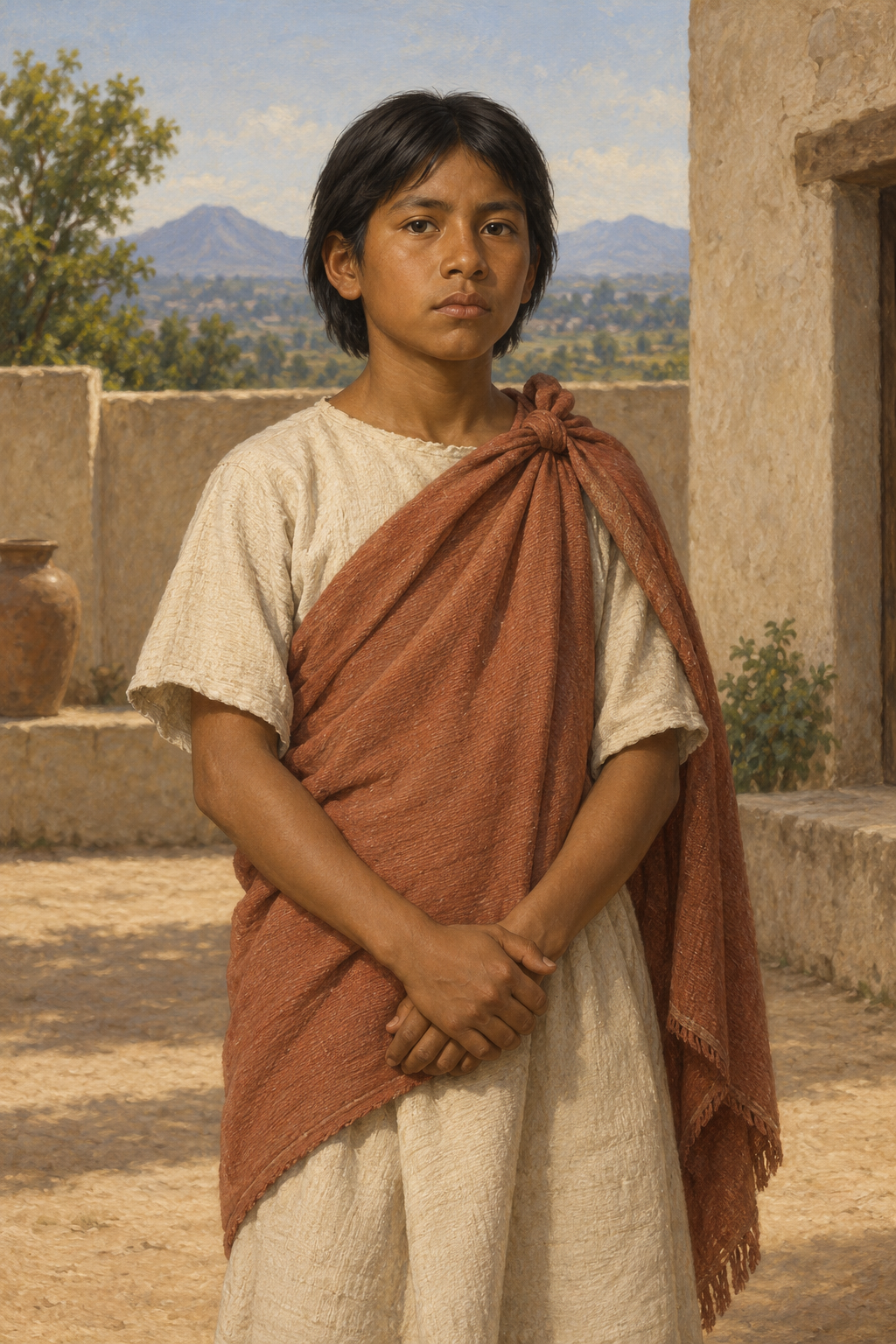
About Cristóbal of Tlaxcala
Cristóbal of Tlaxcala was a young Indigenous Christian from Atlihuetzia who died in 1527. The Catholic Church honours him with Antonio and Juan as the child martyrs of Tlaxcala, although their deaths occurred in separate episodes. The Vatican’s canonization account places his birth between 1514 and 1515 and describes him as the favoured son and prospective heir of the local lord Acxotécatl. He received Christian instruction from the Franciscans who arrived in 1524.
The fullest early account comes from the Franciscan Toribio de Benavente, known as Motolinía. Writing at Atlihuetzia in March 1539, he says that he visited the places of Cristóbal’s death and burial. He names the boy’s brother Luis as an informant who had witnessed the assault. Motolinía also acknowledges uncertainty about details, including conflicting reports of the final injuries. His account is a missionary’s religious narrative, even while it records his efforts to question witnesses.
In that narrative, Cristóbal urges his father and members of the household to accept Christianity. He also breaks their sacred images and empties the vessels of alcoholic drink. Acxotécatl calls his sons home, separates Cristóbal from his brothers, and attacks him. The boy is beaten and burned, surviving until the following morning. Motolinía portrays him as praying through his suffering and expressing forgiveness toward his father before dying. These reported words belong to the transmitted account; they are not a surviving statement written by Cristóbal.
The destruction of sacred objects is part of this history and should not disappear from a retelling. Stephanie Schmidt’s study examines the story within the militant evangelization of early colonial Mexico. Its publisher’s description emphasizes the role assigned to young Nahua converts as intermediaries between their communities and foreign missionaries, and the ways missionary accounts could deflect attention from the friars’ own actions. The study also considers Nahuatl versions, bringing Indigenous perspectives into a history often presented through Spanish missionary writing.
Cristóbal’s story must also be distinguished from the later deaths of Antonio and Juan. The Vatican biography dates their deaths to 1529, during work with Dominican missionaries. Their shared commemoration brings the three boys together without making them companions in a single execution. John Paul II beatified them at the shrine of Guadalupe on 6 May 1990.
Their remembrance became an important part of the Diocese of Tlaxcala’s pastoral life. Bishop Francisco Moreno Barrón described the diocesan celebration on 23 September at the former Franciscan convent in Atlihuetzia, which the diocese was working to restore as their sanctuary. He also connected their memory with the diocesan pastoral plan and with teaching children and young people about Christian life. His account belongs to the period when their canonization was still being sought.
Pope Francis canonized Cristóbal, Antonio and Juan on 15 October 2017. In the homily for that ceremony, he spoke of the saints’ lifelong response to God’s love and of the daily practice of forgiveness. That emphasis gives their Catholic commemoration a purpose beyond simply repeating the violence of their deaths.
Devotion also travelled beyond Tlaxcala. In March 2018, the diocese reported the reception of an image of the three children at Saint Patrick’s Cathedral in New York, for its Guadalupe chapel. The report identified the painter as Armando Ahuatzi and recalled the Mexican bishops’ proclamation of the three as patrons of the children of Mexico. Their shared patronage remains distinct from the individual life of Cristóbal.
Wondering how to weigh the stories and sources? Learn how to read a saint biography.