Biography
Damaskinos the Studite
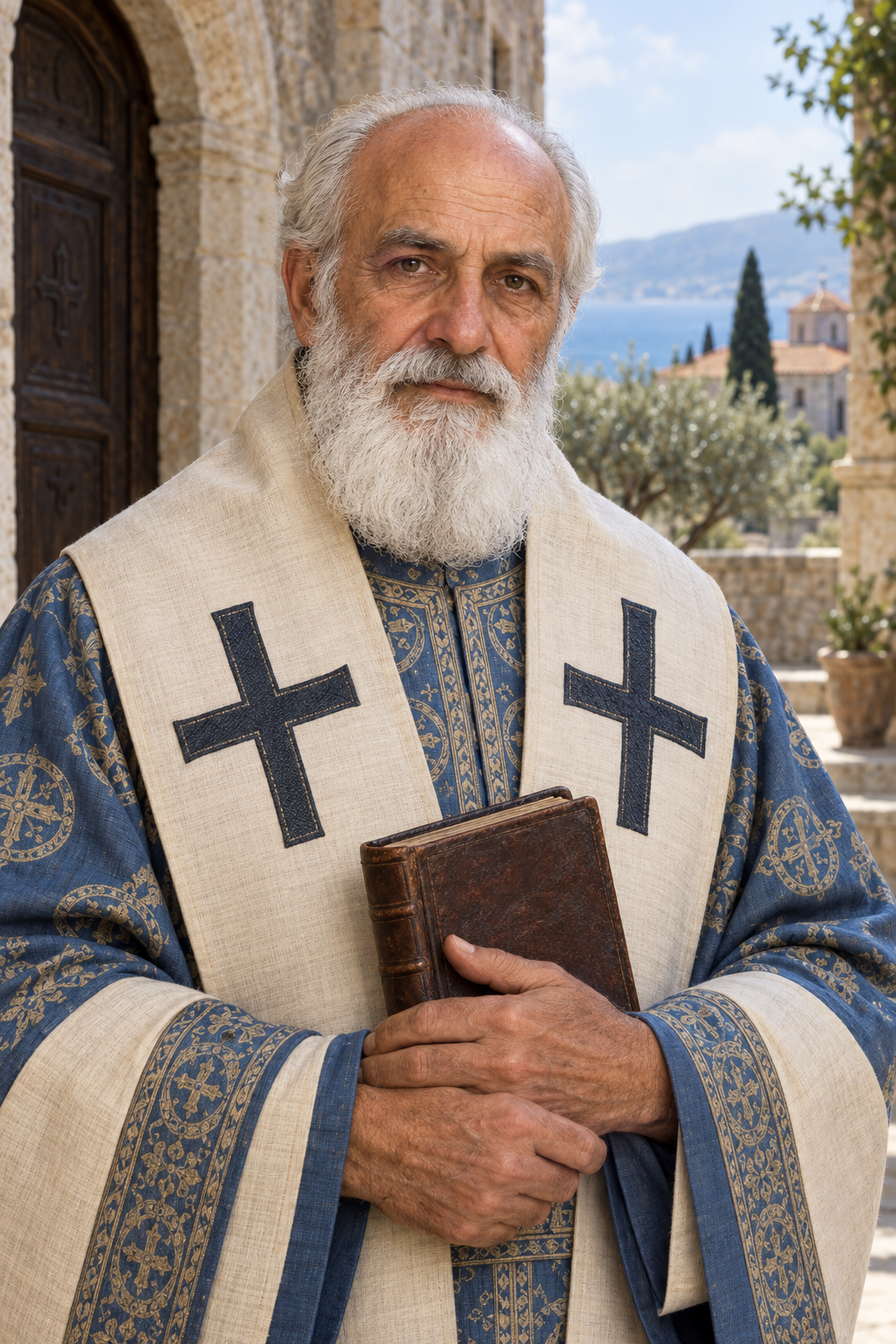
About Damaskinos the Studite
Damaskinos the Studite was a sixteenth-century Greek churchman whose preaching reached readers far beyond his own diocese. He studied under Theophanes Notaras in Constantinople and later served as bishop of Liti and Rendini. His place of origin is not entirely settled: the Orthodox Encyclopedia gives Thessaloniki or Thessaly. Even his familiar title needs care. A traditional account connects him with the monastery of Stoudios, while the scholar E. K. Litsas interprets it as a description of his distinction as a preacher.
The local church biography places him in the educational world of Constantinople and describes his work as a teacher of grammar. Among his pupils was Jeremias, the future patriarch. The same account follows his movements through Meteora and Trikala in the 1550s and mentions letters to fellow scholars.
His best-known book, the Thesauros, or Treasury, appeared in Venice in 1557–1558. Grace Fielder describes its original contents as thirty-six religious and instructive texts intended for use in worship. She cautions that the extent to which Damaskinos composed or compiled them is not clear.
As bishop, he also undertook responsibilities beyond Liti and Rendini. A lecture by Eirenaios Delidimos, summarized by the local metropolis, places his mission to the Orthodox communities of the Polish-Lithuanian territories around 1570. The report distinguishes those communities from the church centered in Moscow. It describes the mission as involving education and preaching, with support from local nobles and Orthodox brotherhoods.
The local biography records another sign of patriarchal trust. During Jeremias II’s absence from Constantinople, Damaskinos acted in his place from October 1573 until July 1574. Afterward he became metropolitan of Naupaktos and Arta. The account places his death and burial at Naupaktos in 1577. Exact details of his earlier episcopal appointment vary within the same publication, so a precise ordination date cannot be stated confidently from it.
His writings extended beyond the Treasury. The Orthodox Encyclopedia lists a treatment of animals drawn from older authorities, an explanation of the Ten Commandments, an exhortation to monks, and historical compilations. It also records a comic dialogue criticizing bishops.
The Treasury continued to change as it crossed linguistic boundaries. Fielder explains that later Balkan Slavic versions returned to the Greek text rather than merely revising the earlier Church Slavonic translations. Compilers added material and reshaped the collections for new readers. The resulting damaskin miscellanies became a literary form with a history of its own.
His formal recognition as a saint came in 2013. The patriarchal and synodal act, numbered 613 and dated July 10, recognized both Damaskinos and the earlier bishop Akakios. It referred to their continuing place in the religious memory of the local community and confirmed November 27 as Damaskinos’s annual feast.
The recognition was celebrated at Saint Athanasios in Liti that November. A contemporary report in Ekklisia describes a theological conference alongside the services, including a presentation on Damaskinos’s preaching and pastoral work.
During the recognition service, the synodal act was read aloud and new icons of the two bishops were blessed. The local church’s report places the ceremony in the parish associated with their former episcopal see. Damaskinos was remembered there both as a bishop of that community and as a teacher whose writings had circulated much more widely.
Wondering how to weigh the stories and sources? Learn how to read a saint biography.