Biography
Damasus I
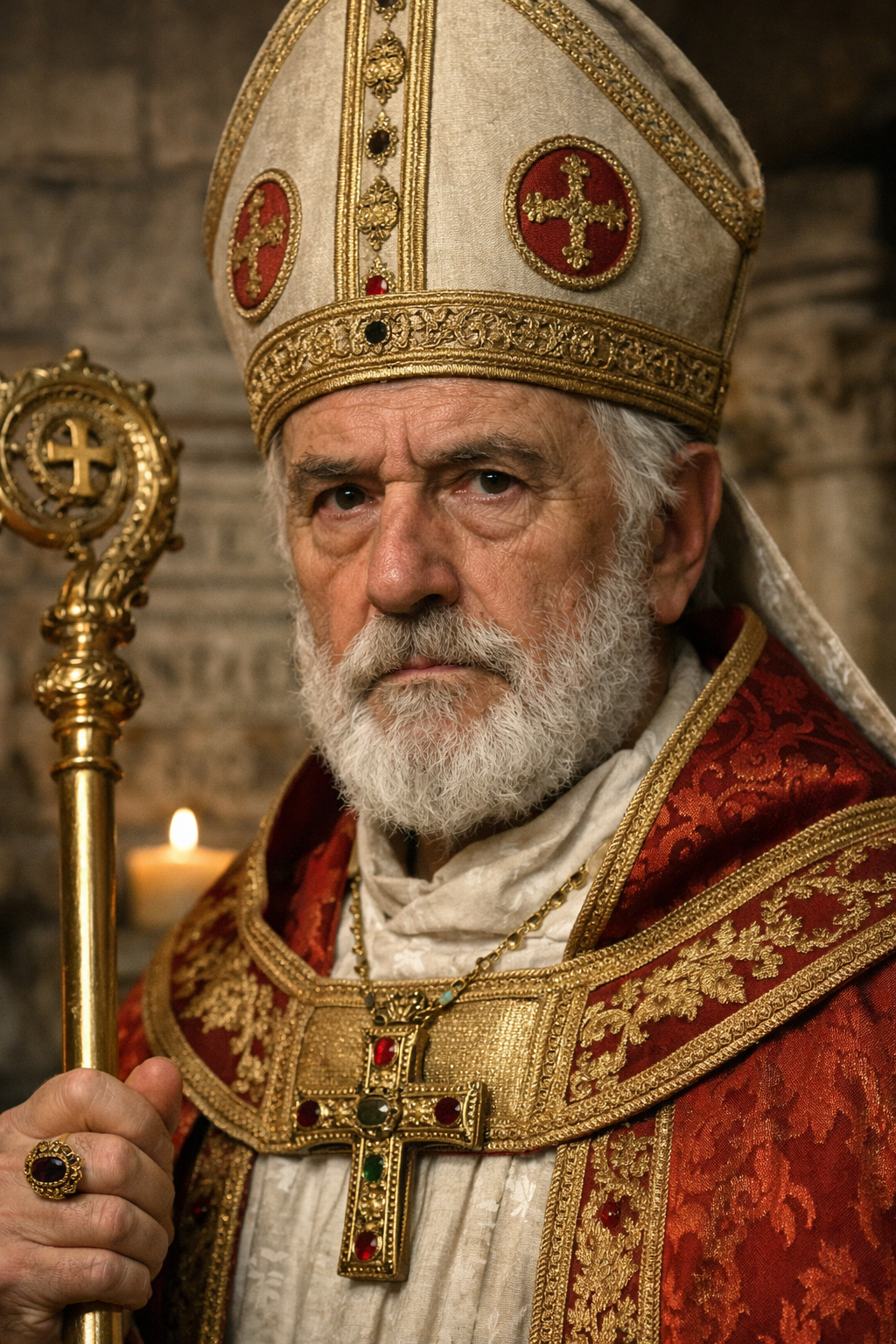
About Damasus I
Damasus I served as bishop of Rome from 366 to 384. The Vatican's papal list dates the beginning of his pontificate to October 1, 366, and its end to December 11, 384.
Born around the beginning of the fourth century, he grew up in Rome in the service of the church of Saint Lawrence. His family background is less certain: the Catholic Encyclopedia considers his father probably Spanish and his own birth in Rome likely. The connection with Lawrence's church would remain visible in his later work as pope.
His election brought violence rather than a peaceful transfer of responsibility. The historian Ammianus Marcellinus describes rival supporters of Damasus and Ursinus fighting for control of the bishopric. The city's prefect, unable to contain them, withdrew to the suburbs. Ammianus reports 137 bodies found in the basilica of Sicininus on a single day and says Damasus prevailed through his supporters. He then criticizes the wealth and display surrounding the Roman episcopate, contrasting it with the simpler lives of some provincial bishops. His account is hostile to the contest, but it cannot be replaced with a story of an untroubled election. Nor does this passage establish that Damasus personally ordered the killings.
Damasus also faced divisions that crossed the boundaries between churches. Writing to him from the East, Jerome asked which of Antioch's competing bishops he should recognize. He was troubled by pressure to use a theological expression whose meaning seemed dangerous to him. The letter shows someone seeking a clear answer from Rome amid disagreements over both leadership and language. Jerome's appeal was personal and urgent: he wanted to know with whom he could share communion. It does not describe a church already free of rival loyalties.
A confession preserved by Theodoret under Damasus's name explains what was at stake in some of these arguments. It rejects teaching that makes the Son or the Holy Spirit a creature. It also insists that Christ assumed a human soul capable of reason, rather than a human body in which the divine Word replaced the mind. For the confession, salvation includes the human soul as well as the body. Theodoret also preserves Damasus's letter announcing the condemnation of Apollinarius and his follower Timotheus. These documents present doctrinal teaching together with a bishop's effort to set boundaries for communion; their sharply exclusionary language belongs to that disputed setting.
His collaboration with Jerome addressed a different practical problem: Latin copies of the Gospels disagreed with one another. In a preface addressed to Damasus, Jerome says the pope asked him to compare them with Greek manuscripts and correct the Latin text. Jerome expected readers to resent changes to familiar wording and to accuse the reviser of tampering with Scripture. Damasus's backing gave him a reason to continue. The preface specifically offers the four Gospels, not a completed new translation of the entire Bible. Jerome also explains his restraint: where the meaning did not require correction, he allowed familiar Latin wording to remain. The commission joined textual care with attention to the people who would hear and read the result.
Damasus made the memory of martyrs visible in Rome's burial places. In his poem for Marcellinus and Peter, he says that, as a boy, he heard their executioner describe their deaths. The poem tells of an attempt to conceal their burial and of Lucilla's later care for their remains. Its first-person recollection gives the memorial a particular human chain: a remembered conversation becomes a text for later visitors. The account is Damasus's testimony to what he heard, not a surviving record written at the execution.
The lettering mattered too. The calligrapher Furius Dionisius Filocalus developed the distinctive capitals associated with the inscriptions. Carefully spaced letters, curved finishing strokes and occasional joined or smaller letters made the texts both formal and readable. Mazzoleni's study distinguishes Filocalus's own work from that of less accomplished hands; not every Damasan inscription was cut by the same craftsman. The monuments therefore preserve collaboration as well as poetry, bringing literary composition into the physical spaces where Christians gathered to remember the dead.
Care for these places included ordinary building work. Damasus restored the church now called San Lorenzo in Damaso and arranged accommodation for the Roman church's archives. At the Vatican he had drainage work carried out to protect burials from standing or overflowing water. He died on December 11, 384. The burial tradition places him in a small church on the Via Ardeatina with his mother and sister. The building stood between the cemeteries of Callistus and Domitilla.
His own later commemoration keeps that distinction: the Roman calendar honors Damasus as a pope, with an optional memorial on December 11.
The Roman collect asks worshippers to honor the martyrs whose memory he cherished. It remembers him through care for others' witness, rather than describing him as one who died under persecution.
Wondering how to weigh the stories and sources? Learn how to read a saint biography.
Explore similar vocations
Prayers for Damasus I
Damasus: collect excerpt
that we may constantly exalt the merits of your Martyrs