Biography
Daniel II of Serbia
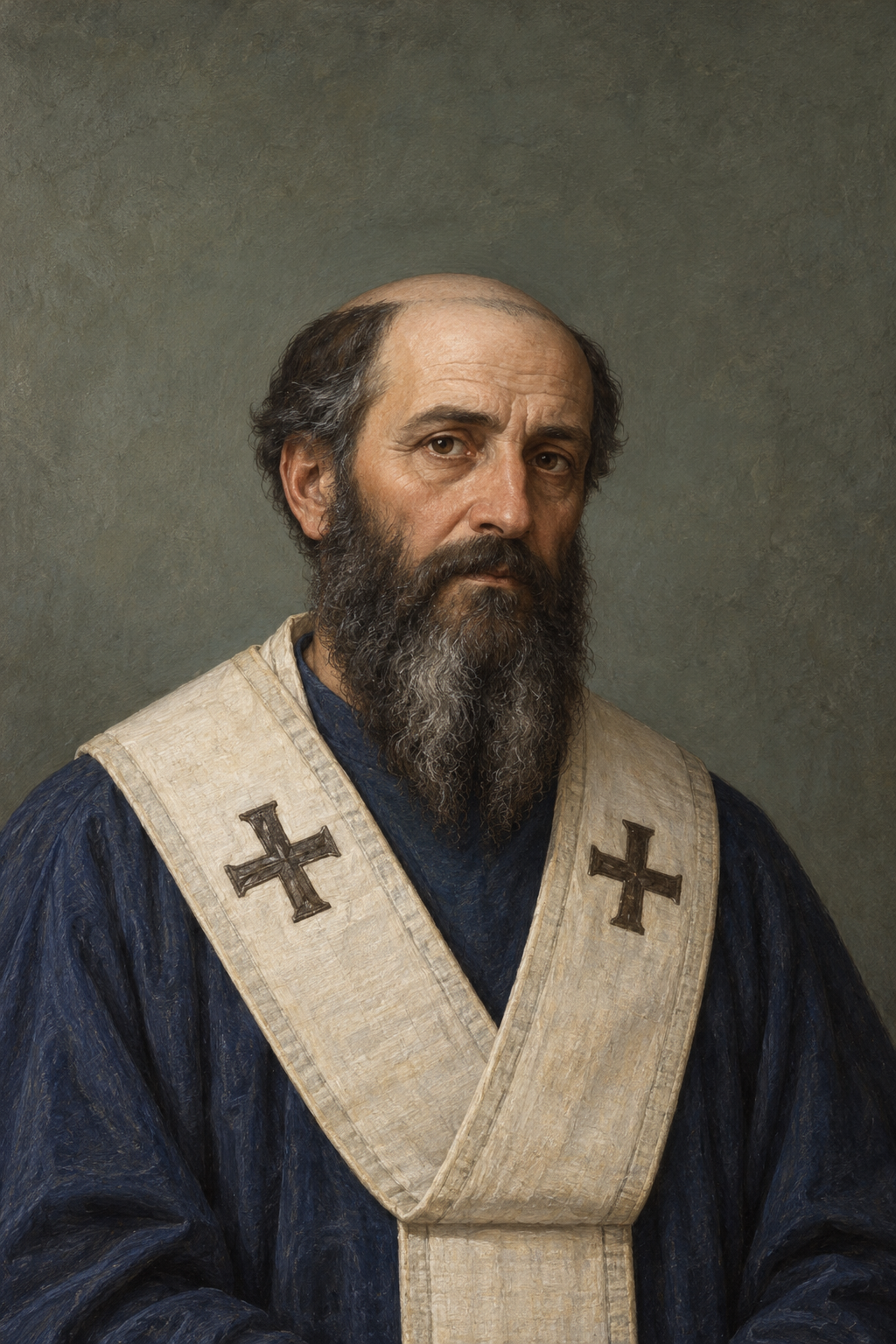
About Daniel II of Serbia
Daniel II moved between a monk’s cell, the royal court, and the leadership of the Serbian Church. Born into a noble family, he served King Milutin before receiving the name Daniel when he became a monk at Končul around 1300. His earlier name is not securely known. He subsequently moved to Peć, where he was ordained a priest.
As abbot of Hilandar on Mount Athos, he faced a crisis far removed from quiet study. Catalan forces attacked the Athonite monasteries in the early fourteenth century, and Daniel organized Hilandar’s successful defense. Documents still name him as abbot in May 1310. His movements between Athos and Serbia during these years are not equally clear in every reconstruction.
Royal service continued alongside his monastic responsibilities. He carried messages between rulers, became a bishop, and served in the region of Hum. He also maintained ties with Athonite monks, including a spiritual adviser at the monastery of Saint Panteleimon. After Milutin’s death, Daniel supported his son Stefan of Dečani and undertook diplomatic missions involving Byzantine and Bulgarian rulers. In September 1324, a council elected him archbishop.
His political choices were not always those of a neutral mediator. In the conflict between Stefan of Dečani and his son Dušan in 1331, Daniel supported Dušan and later crowned him. This change of allegiance belongs alongside the accounts of his earlier service to Stefan. His ecclesiastical work took place within the competing interests of a ruling family.
Historian Dragana Janjić examines this combination of withdrawal and public responsibility through Daniel’s monastic practice. In her reading, prayer and service to the wider community were not understood as mutually exclusive duties. His repeated movement from ascetic life into administration and royal affairs reflects that setting. This interpretation helps explain the range of his responsibilities without making every political decision an expression of spiritual perfection. Janjić also cautions that the literary evidence does not establish Daniel as a major theological exponent of hesychasm, the tradition associated with contemplative prayer.
Buildings provide another way to encounter his work. At Peć, Daniel added a church dedicated to the Virgin Hodegetria and a chapel of Saint Nicholas. A common entrance hall brought neighboring churches into a connected complex. A painted donor portrait shows him presenting a model of his buildings. That model is valuable evidence for features subsequently altered or lost, including the original open porch. The architecture thus preserves both his contribution and the changes made by later generations.
The entrance hall also served the practical needs of church government. Stone seats along its walls accommodated ecclesiastical gatherings. Daniel’s building work provided spaces for deliberation as well as worship. The structure later suffered damage and reconstruction, so the surviving arrangement cannot be assumed to reproduce his design in every detail.
At Dečani, his responsibilities extended to the meaning conveyed by religious art. The monastery’s account attributes the direction of the church’s sculptural program to Daniel and connects it with the Gospels, Psalms, and prophetic and apostolic writings. Carved scenes and creatures were arranged to communicate religious themes rather than simply fill empty surfaces. The monastery describes images of Christ’s baptism and the Last Judgment, together with symbolic animals and plant forms. Daniel’s role was one of guidance and interpretation; this does not make him the sculptor who carved each figure.
Placement was part of this visual teaching. The Last Judgment appears over the main entrance, while the eastern window brings together imagery interpreted through the tree of life, suffering, sins, and virtues. The monastery’s interpretation presents these carvings as a connected statement about creation and moral life.
His written work gave Serbian history another lasting form. He composed Church Slavonic biographies of rulers and archbishops, including King Milutin and Queen Helena. His pupils continued the collection, which eventually included an account of Daniel himself. The Croatian Encyclopedia identifies the resulting compilation as an important source for the medieval history of Serbia and neighboring lands. Its growth through several writers matters when deciding which passages can be attributed to Daniel.
These lives were religious interpretations of human conduct as well as records of events. Gavryushina notes their attention to conflict, wrongdoing, and repentance. Their characters are not simply described through public accomplishments; the narratives also explore inner struggle and the possibility of spiritual change.
The Orthodox Encyclopedia also notes Daniel’s selective treatment of sensitive political matters. His closeness to the dynasty is part of the evidence that readers must consider when using his works as historical sources. Daniel died on December 19, 1337, and was buried in the church of the Virgin Hodegetria at Peć.
The Orthodox Church in America commemorates him on December 20 as Saint Daniel II, Archbishop of Serbia. His biographies remain a substantial part of his legacy: they preserve the people, institutions, and struggles through which later readers encounter medieval Serbian history.
Wondering how to weigh the stories and sources? Learn how to read a saint biography.