Biography
David the Dendrite
About David the Dendrite
David the Dendrite is remembered as an ascetic associated with Thessalonica in the early Byzantine period. His familiar image as a monk living in a tree belongs to a tradition that developed through several texts. The earliest account and the later Life do not tell exactly the same story, and their differences make a precise personal chronology difficult to establish.
In John Moschus’s Spiritual Meadow, the monk Palladius recalls an elderly recluse named David from Mesopotamia who lived outside Thessalonica. Soldiers watching the city walls thought they saw his cell on fire, but found him unharmed. The story describes the light as a sign of holiness and says that witnessing it encouraged Palladius to become a monk. It is an account of religious inspiration, with its miraculous element explicitly belonging to the narrative.
The next chapter concerns a different Mesopotamian ascetic, Addas, who made his dwelling in a plane tree. Keeping these two accounts distinct matters: the tree-dweller in this early sequence is not named David.
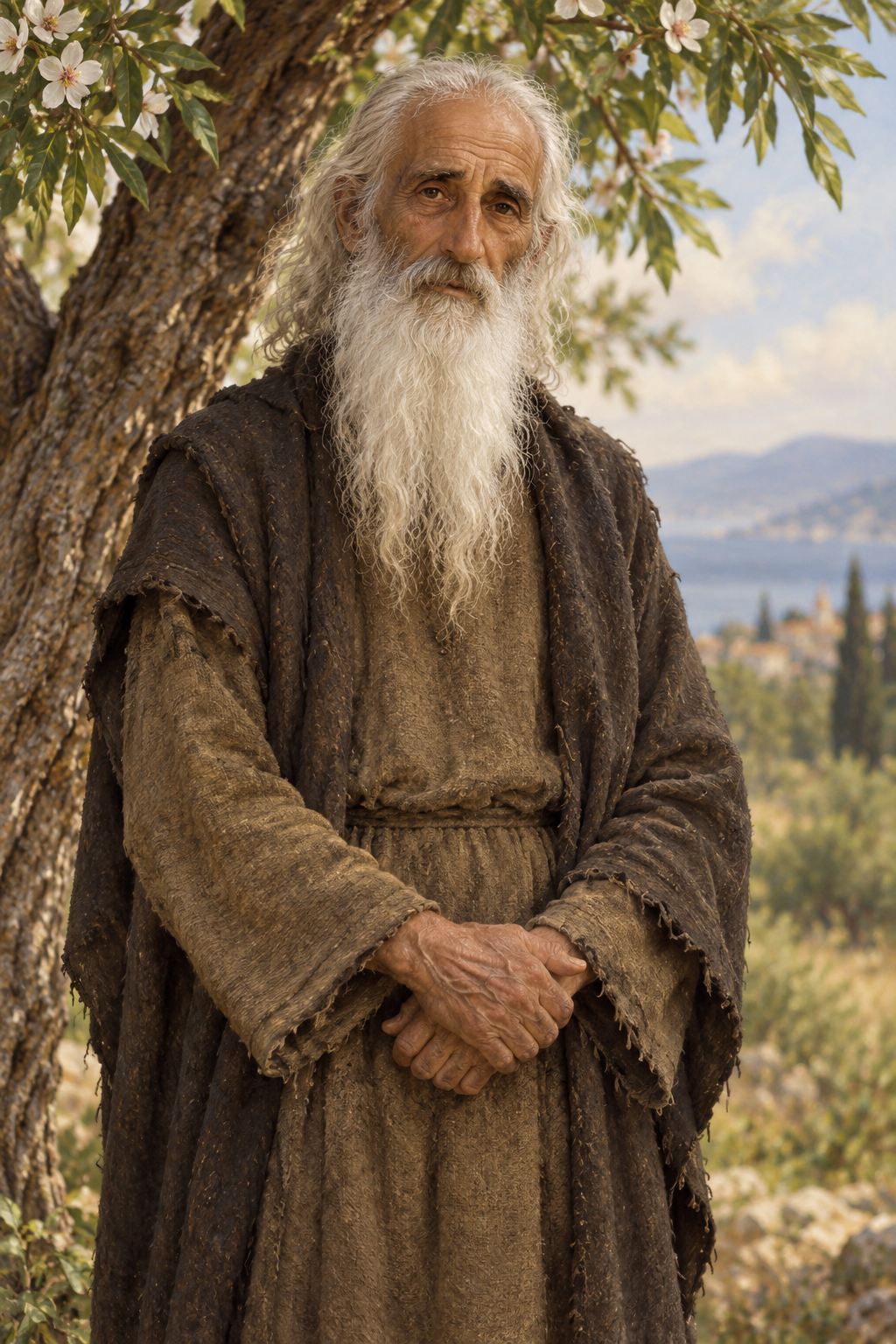
The later Life places David in a monastery dedicated to the martyrs Theodore and Mercurius. It describes three years of prayer and exposure to the weather in an almond tree, followed by life in a cell. In this tradition, disciples seek his guidance, and an angel tells him when to leave the tree. These are remembered acts of ascetic devotion, not details independently established by contemporary records.
That Life also tells of an embassy to Justinian and Theodora on behalf of Thessalonica, followed by David’s death during the return voyage. Its accounts of burning coals held without injury and a miraculous sea journey express the author’s belief in his holiness.
The Orthodox Encyclopedia notes disagreement about how to reconcile these narratives, including whether they originally concerned the same person. It dates the anonymous Life to the early eighth century. It also distinguishes David’s lost monastery from the surviving church now called Hosios David, which received that dedication only in 1921. Relics associated with him returned from Italy to Thessalonica in 1978, preserving a separate history of later devotion.
The Orthodox Church in America commemorates him on June 26. Its account emphasizes prayer, endurance and spiritual counsel, the qualities through which his monastic memory continues to be honoured.
Wondering how to weigh the stories and sources? Learn how to read a saint biography.