Biography
Declan of Ardmore
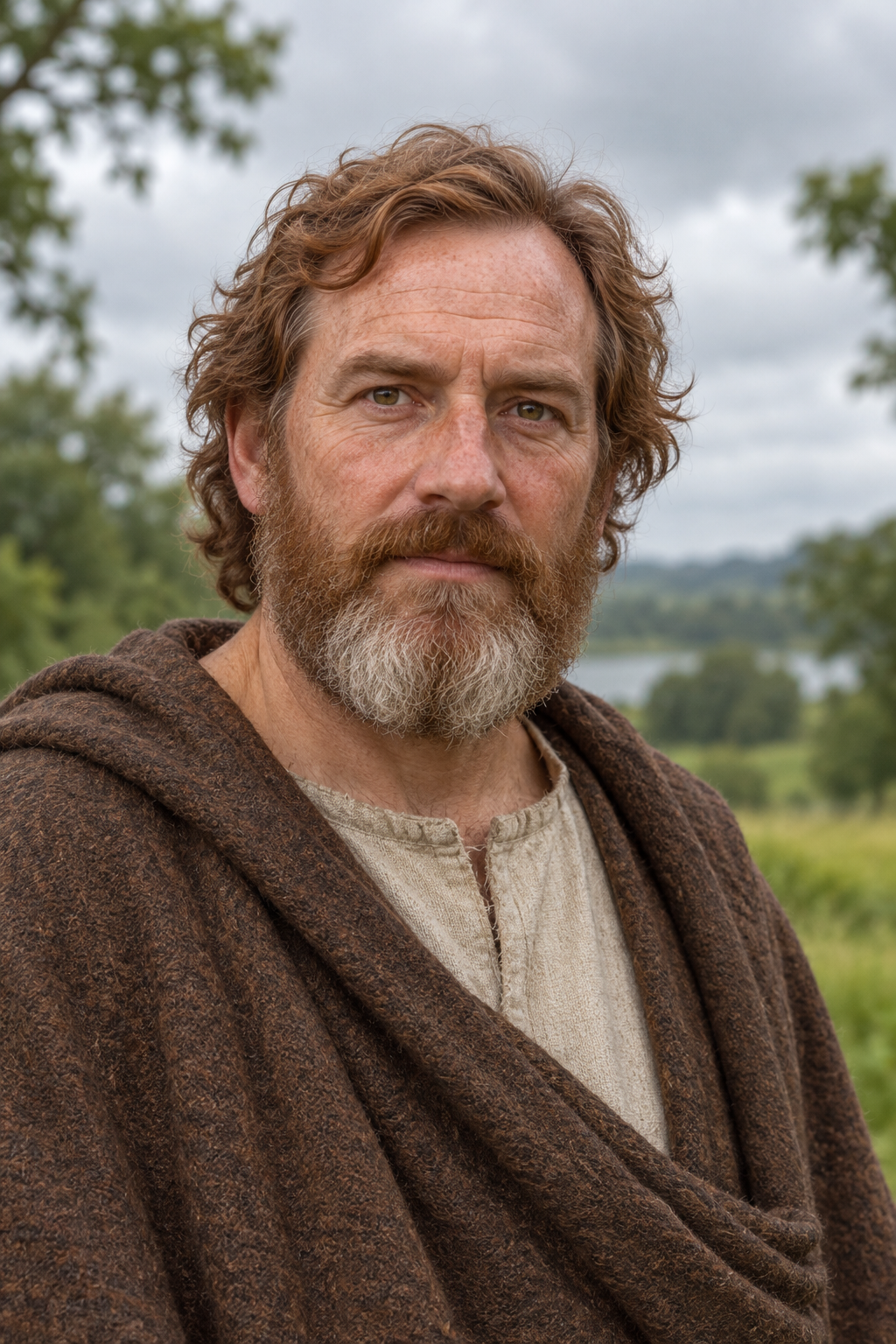
About Declan of Ardmore
Declan is remembered as the bishop and founder associated with Ardmore and as patron of the Déisi of East Munster. Aidan Breen places his activity broadly in the fifth or early sixth century, while noting that the genealogies and martyrologies disagree. This gives a setting for his ministry, but does not establish a birth or death year.
Tradition places his birth at Drumroe. A diocesan leaflet drawing on Michael G. Olden’s account identifies Drumroe as a townland near Lismore. It also preserves the story that a priest named Colmán baptized Declan, while warning that the many local saints of that name make a precise identification uncertain.
The Irish Life tells how Declan studied with Dioma, travelled to Rome, received episcopal consecration, and returned to preach among the Déisi. It portrays him building churches and placing followers in them. These are episodes in a later devotional narrative, rather than a contemporary record of his journeys.
One of its legends concerns a bell left on a rock during a sea crossing. In the story, the rock floats after Declan’s company, carrying the bell toward the place chosen for his church. The miraculous voyage belongs to the sacred stories explaining his connection with Ardmore.
The chronology of these traditions is difficult. Breen dates the Latin Life to around 1200 and identifies its meetings with Patrick, David of Wales and Ultán as incompatible with a single ordinary lifetime. A narrative that joins these figures cannot securely prove that Declan’s mission preceded Patrick’s.
Patrick Power, who edited and translated the Irish Life in 1914, also recognized its contradictions. He nevertheless argued for an early mission and described the deep local attachment to Declan. His introduction sets out arguments on both sides, including the silence of Patrick’s Lives and possible later claims about church authority. The strength of a local tradition and the precision of a historical date are separate questions.
The closing account describes Declan withdrawing to a seaside cell for prayer, then returning to his community as death approached. It places his final blessing, death and burial at Ardmore. The location is retained as traditional; the narrative supplies no dependable death year.
Later generations remembered him through Ardmore’s religious landscape. Power described a round tower, a ruined cathedral, an oratory and a church beside a holy well. These surviving monuments mark the long life of the religious site; they should not all be treated as buildings erected by Declan himself.
The organizers of the Ardmore Pattern Festival explicitly name him as the village’s patron. Their account connects the celebration with his July 24 feast and describes a revival that combined remembrance of the saint with music, performances and other community activities. His legacy continues through both pilgrimage traditions and local identity.
Wondering how to weigh the stories and sources? Learn how to read a saint biography.