Biography
Demetrius of Thessaloniki
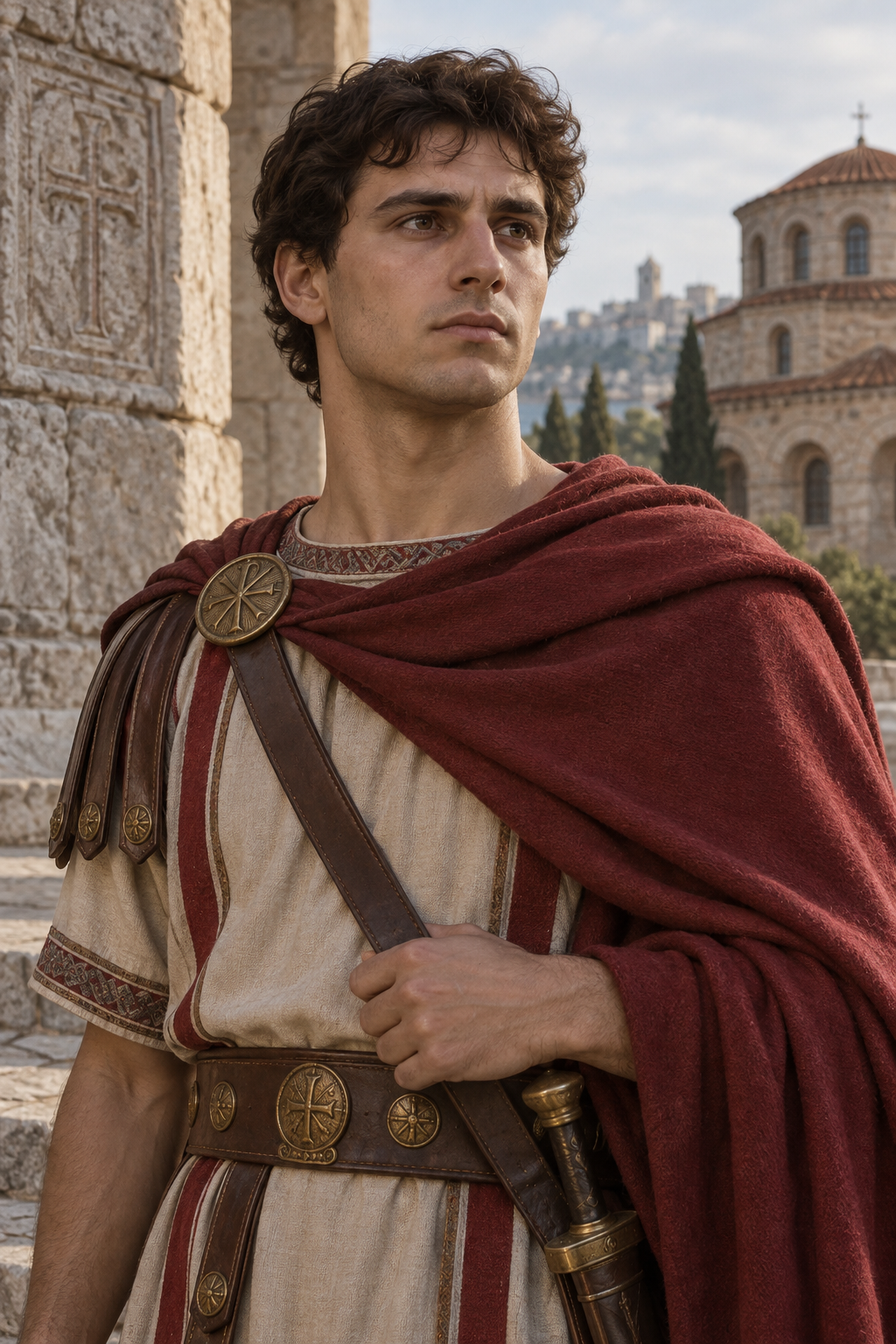
About Demetrius of Thessaloniki
Demetrius of Thessaloniki belongs to the world of late antique Christian martyr cults, but the record of his individual life is unusually hard to separate from later devotion. The Orthodox Church in America commemorates him on October 26 and preserves a full narrative of his ministry and death. That narrative is important as a received church tradition. It does not by itself supply a contemporary account of what happened to him.
In the traditional Life, Demetrius is the son of a Roman official in Thessaloniki and becomes a Christian in secret. The emperor gives him public responsibilities, expecting him to oppose Christianity. Instead, the story says, Demetrius teaches the faith openly. His high rank, office, and precise career should be understood as features of that later account rather than secure entries in a fourth-century personnel record.
The same tradition connects his death with Nestor, a Christian who confronted the emperor’s champion Lyaeus. After Nestor won, imperial soldiers killed Demetrius with lances in prison. Church versions assign the event to the early fourth century and tell of a servant named Lupus collecting objects touched by his blood. These scenes explain the saint’s received identity, but their exact date and eyewitness basis cannot be confirmed.
Christopher Walter’s study compares the earliest surviving Passion texts with the later miracle collections. He finds that the Passions offer no historically reliable account of Demetrius’s martyrdom or the foundation of his cult. An Oxford research study likewise describes the origins of the Thessalonian basilica and the link to a martyred deacon named Demetrius at Sirmium as unresolved questions. That uncertainty prevents a confident birth date, death date, civil office, or birthplace from being stored here.
A recent archaeological article re-examines the claimed church of Saint Demetrius at Sirmium and cautions that the remains have not been securely identified. Its discussion shows why a place named in a later Passion cannot automatically settle the origin of a cult. The competing Thessaloniki and Sirmium explanations are scholarly hypotheses, not a reason to conflate every ancient Demetrius into one documented biography. This account therefore keeps the saint’s traditional place-name while leaving life places unset.
What can be traced more confidently is the later devotion centered on Thessaloniki. Walter describes a seventh-century collection of miracles assembled by Bishop John of that city, whose stories show Demetrius as its defender. These accounts tell us about the concerns and religious memory of Thessaloniki after Demetrius’s supposed lifetime. They cannot be read backward as eyewitness evidence for his military service.
The Church of Saint Demetrius belongs to the group of Thessaloniki monuments recognized by UNESCO for their early Christian and Byzantine architecture. A Metropolitan Museum of Art icon catalogue shows how Byzantine artists presented him as a military saint. A modern study of his cult observes that the fragrant myron associated with the shrine became a focus of devotion in the middle Byzantine period. The monument, image, and ritual trace the history of veneration, regardless of the gaps in the martyr’s personal chronology.
Demetrius remains a named presence in Orthodox worship on October 26 and in the architectural memory of Thessaloniki. His story should be told with its layers visible: a martyr remembered by churches, a traditional account of courage under persecution, and a historical cult whose beginnings are still debated. The continuing basilica and icon tradition help explain why this figure became closely tied to the city. The strongest historical account respects that endurance without converting every later legend into an established life event.
Wondering how to weigh the stories and sources? Learn how to read a saint biography.