Biography
Dina Bélanger
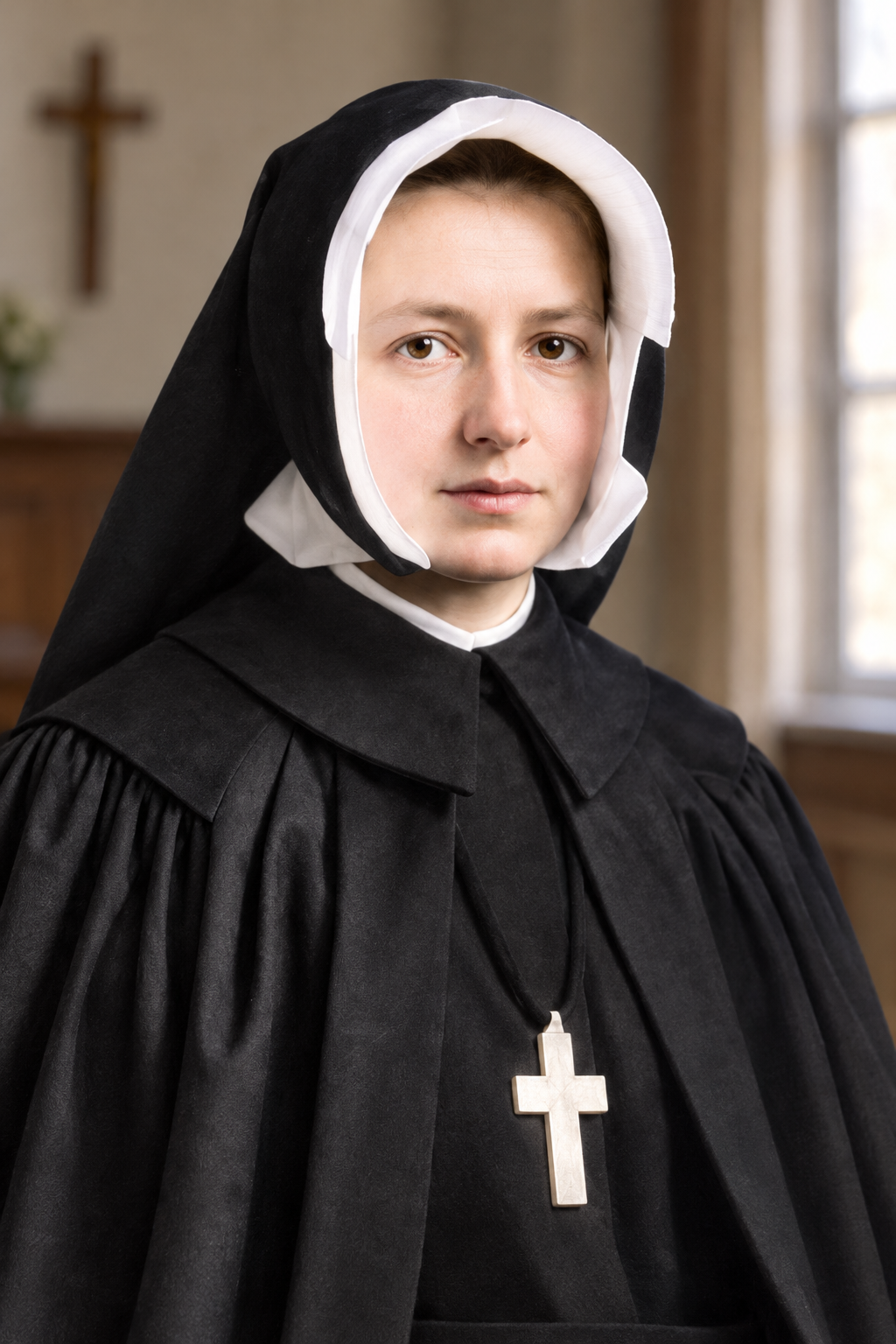
About Dina Bélanger
Dina Bélanger was born in Québec on April 30, 1897. She grew up in a comfortable family and showed an aptitude for study and music. Her congregation remembers her as sociable and attentive to people who were poor or vulnerable, with a love of beauty and nature. Musical talent offered her the prospect of a performing career, but she eventually chose religious life.
Her education took place in schools run by the Congregation of Notre Dame, including the Bellevue boarding school. Alongside her musical studies, she helped with parish care for people who were poor or sick. She also participated in the Work of the Tabernacles, whose members made altar cloths and vestments for parishes and missions that needed them.
She began music lessons at eight and later studied at the Institute of Musical Art in New York from 1916 to 1918. While there, she lived at Our Lady of Peace Residence with the Religious of Jesus and Mary. After returning to Québec, she gave piano concerts for charitable causes and helped her mother with parish volunteer work. On August 11, 1921, she entered the congregation at Sillery.
Bélanger received the religious habit under the name Marie Sainte-Cécile de Rome. She made renewable vows on August 15, 1923, and was assigned to teach music at Saint-Michel-de-Bellechasse. Illness repeatedly interrupted her teaching. In 1924, at her superior’s request, she began writing an account of her spiritual experiences. She made perpetual vows on August 15, 1928. The following April she entered the infirmary, where she remained during her final illness.
The account she wrote bore the title Cantique d’actions de grâces ou Chant d’amour. It remained unfinished. In his study of the work, literary scholar Carlos Bergeron distinguishes its recollections of earlier life from the spiritual journal that follows them. He examines how Bélanger combined everyday experiences with the inward voice she understood as divine. This approach reads the work as a carefully expressed account of faith, attending to its language and intended religious readers. It does not offer independent confirmation of the supernatural experiences described in its pages.
María Lourdes Rossell’s study of Bélanger describes practical service continuing despite the limits imposed by illness. From her room, she worked on musical compositions, helped with correspondence and translations, and gave piano instruction through letters. Rossell connects this work with the congregation’s educational mission and its emphasis on joining prayer to service. Her interpretation places ordinary tasks alongside the mystical experiences for which Bélanger later became known.
Rossell also identifies an Ignatian influence in Bélanger’s formation. She describes fidelity in small duties, attention to other people and a desire to serve God as recurring features of that spirituality. This is a later interpretation of Bélanger’s writings within the tradition of her congregation.
Rossell cautions that Bélanger’s language about letting Christ act through her did not mean abandoning her own will or responsibility. In this reading, her spiritual commitment required active cooperation rather than passivity. The study connects that commitment with attention to the ordinary duties of community life.
Bélanger died at Sillery on September 4, 1929. She had spent eight years in religious life and was thirty-two years old.
The publication of her writings required work by others after her death. Biographer Ghislaine Boucher records that the congregation had Bélanger’s manuscript journals transcribed and entrusted them to Dom Léonce Crenier for publication. The resulting work, Une vie dans le Christ, appeared in two volumes in 1934, combining autobiography and testimony. Boucher also reports that archival records concerning Bélanger were destroyed in a fire at the Sillery convent in 1983. The published account therefore remains an important witness to her life, with an editorial history that readers should recognize.
Literary scholar Claude-Marie Gagnon examined how that edition shaped Bélanger’s public reputation. Gagnon distinguishes Crenier’s annotated edition from a critical edition and describes his visit to Sillery in 1933 to investigate her life. He gathered recollections from people who had known her in childhood, teachers, school companions and fellow sisters. These memories impressed him and helped guide the way he presented her to readers. His aim was to make a path to holiness understandable through the life of someone whom witnesses had known. Gagnon also traces the book’s reception in clerical periodicals, including French publications. Cardinal Villeneuve encouraged readers both within religious communities and outside them, while reserving a formal judgment on Bélanger’s virtues and spiritual experiences. This distinction matters in the history of her recognition: early encouragement to read her writings preceded the Church’s later formal decision to beatify her.
Pope John Paul II beatified her on March 20, 1993. In his homily, he emphasized her devotion to the Eucharist and her desire to let Christ shape her actions. He linked that devotion with the affection and charity she showed toward the other sisters. His account presented her spiritual life as part of the congregation’s mission of Christian education.
Wondering how to weigh the stories and sources? Learn how to read a saint biography.