Biography
Diodorus of Tarsus
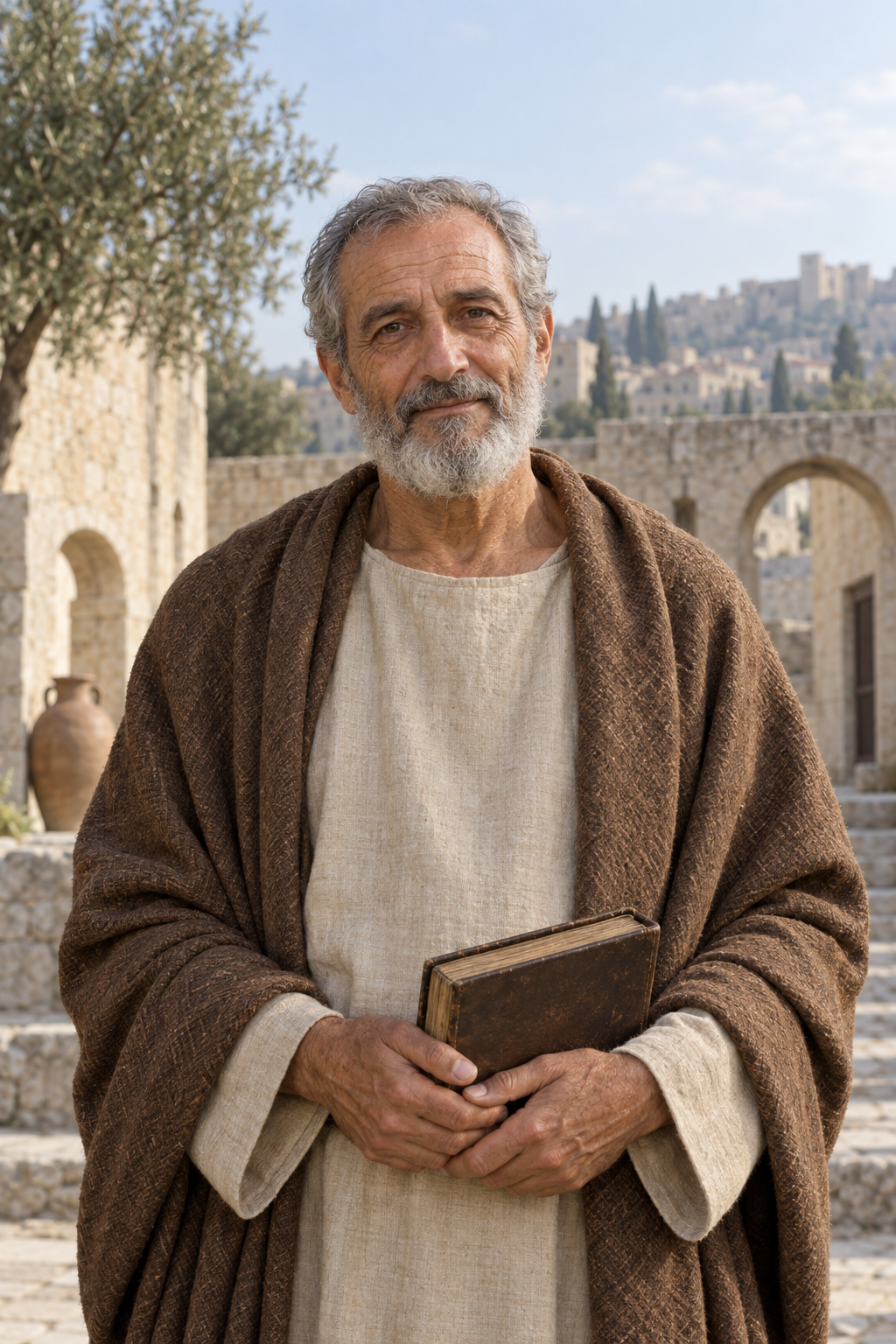
About Diodorus of Tarsus
Diodorus of Tarsus was a Christian priest, teacher, and bishop whose work joined the study of Scripture to the care of a divided church. Jerome knew him as a writer who had already earned a considerable reputation while serving as a presbyter at Antioch, before becoming bishop of Tarsus. In his short notice, Jerome mentions commentaries on the biblical epistles and other writings associated with the approach of Eusebius of Emesa. His assessment is not unqualified praise: he distinguishes Diodorus’s interpretation from the literary elegance he admired in Eusebius. This contemporary notice gives a firmer starting point than later attempts to reconstruct every detail of Diodorus’s childhood.
His birth year is uncertain, and his family is usually associated with Antioch rather than a securely documented birthplace. The older Catholic Encyclopedia describes him as coming from a noble family, studying at Athens, and then entering monastic life. It also places him among the supporters of Meletius, the bishop of Antioch. These early details are less firmly anchored than the surviving evidence for his teaching and correspondence, so an exact birth date and a precise birth location should not be supplied.
The historian Socrates describes Diodorus and Carterius directing an ascetic community in which John Chrysostom and his companions pursued a simpler life. Among those companions was Theodore, later bishop of Mopsuestia. In this account, learning and religious discipline belong together: the young men turned away from ambitious public careers toward Scripture and an ordered common life. Socrates subsequently identifies Diodorus as bishop of Tarsus, making clear that the teacher and the bishop were the same person. He also characterizes Diodorus’s biblical writings by their attention to the literal meaning of the text. That description records an ancient judgment about his method; it does not supply the contents of every lost commentary.
His method did not simply rule out every meaning beyond the surface of a passage. The University of Graz’s patristic reference distinguishes theoria—an understanding of Scripture’s deeper meaning grounded in its historical sense—from allegory, and reports a treatise attributed to Diodorus on that distinction. Only fragments of his many writings survive. His reputation as an interpreter therefore rests partly on ancient descriptions and scattered remains, not a complete collection of his works.
Teaching took place amid serious conflict. Theodoret recounts how Christians loyal to Meletius lost access to their churches during the reign of Valens. When Meletius was absent in exile, Diodorus and Flavian helped keep the community together. The congregation gathered near the river after being driven from another meeting place; when that gathering was also forbidden, the two leaders brought people together at a military training ground. Theodoret writes as an admirer of their cause, using vivid pastoral images for their care. His narrative nevertheless preserves concrete actions: finding places to meet, sustaining worship, and continuing instruction when ordinary church life had been disrupted. Diodorus appears here as a working pastor as well as an author.
A surviving letter from Basil of Caesarea offers a more personal view of Diodorus’s work. Diodorus had sent him two books, and Basil preferred the shorter, clearer one. He admired its organization of objections and replies, while finding the longer work harder to follow because of elaborate language and digressions against opponents. Basil explained that frank criticism was a sign of brotherly respect rather than hostility. He returned the larger volume and hoped to copy the smaller. The exchange shows Diodorus submitting his arguments to a fellow Christian scholar and receiving practical advice about writing for the benefit of readers.
Another letter illustrates the difficulty of attributing teachings accurately. Basil had seen a document circulated under Diodorus’s name concerning marriage to a deceased wife’s sister. He suspected that someone else had used the name and asked Diodorus to help challenge the document. The letter establishes Basil’s suspicion and request; without a reply, it should not be turned into a report of what Diodorus subsequently did.
Diodorus later served as bishop of Tarsus and attended the councils of Antioch in 379 and Constantinople in 381. His death is commonly placed around 392. His reputation became contested after his lifetime: Cyril of Alexandria attacked his theology, while Theodoret defended him. The Catholic Encyclopedia also cautions that some hostile quotations attributed to him may belong to Theodore of Mopsuestia. Such disputes make confident summaries of his entire theology difficult.
His later reception also differs across Christian traditions. Syriaca’s scholarly record explicitly identifies Diodore of Tarsus as a Greek father venerated in the Church of the East. That recognition should be named on its own terms, rather than silently transferred to every church that honors his pupil John Chrysostom.
Within that tradition he is commemorated with Theodore of Mopsuestia and Nestorius of Constantinople as one of the Greek Doctors. This collective remembrance is distinct from a verified individual feast day. It preserves Diodorus’s place in a particular Christian memory: a teacher whose legacy was received alongside other theologians central to the Church of the East.
Wondering how to weigh the stories and sources? Learn how to read a saint biography.