Biography
Dionysios of Zakynthos
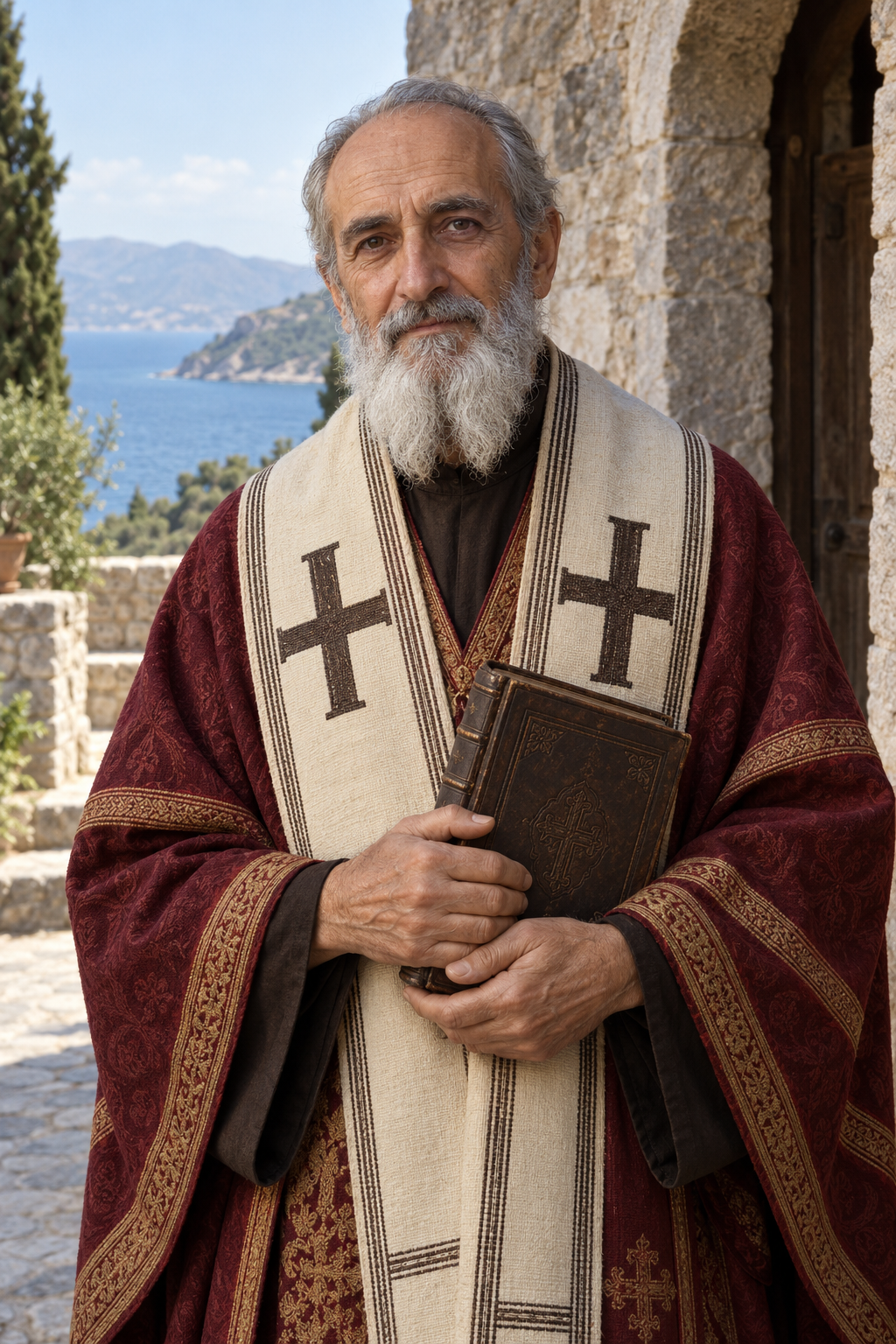
About Dionysios of Zakynthos
Dionysios of Zakynthos was a monk who became bishop of Aegina and later returned to his native island. Born in 1547, he entered the monastery of Strophades before his ordination.
Before becoming a bishop, he used the monastic name Daniel. Dinos Konomos cites contracts showing him managing monastic property during the 1570s. His work included appointing a representative to defend the monastery’s rights and conduct its business. Konomos dates his episcopacy to 1577–1578; he did not remain in Aegina for the rest of his life.
The best-known episode belongs to the received Life. A fugitive reached his monastery and admitted killing Constantine, Dionysios’s brother. Dionysios grieved, hid the man from pursuing relatives, urged him to repent, and helped him escape.
Konomos distinguishes this tradition from the surviving documentary trail. Records establish that Constantine died during 1580, but contemporary written confirmation of the murder remained missing. The historian discusses lost court pages without recovering their contents.
Dionysios died on December 17, 1622, according to Konomos’s document-based account. It places his final illness in a relative’s house in Zakynthos town and his burial at Strophades. This date follows the historian’s discussion of records, some of which were subsequently lost.
His recognition and the later movement of his relics helped make him a focus of island devotion. The Zakynthos Chamber of Commerce records his recognition as a saint in 1703, the transfer of his relics from Strophades in 1717, and the community’s proclamation of him as patron in 1724.
Its silver reliquary, made by George Diamantis Bafas in 1829, includes a representation of his burial.
The present church in Zakynthos was designed by Anastasios Orlandos. The Metropolis of Chios records its foundation in 1925 and dedication in 1948, and describes the bell tower as an enduring point of recognition for Zakynthians.
His patronage extends to Aegina, where he served as bishop. The same diocesan account explicitly identifies him as patron of both Aegina and Zakynthos, and describes celebrations maintained by people from those islands living in Athens. It also records pilgrimage to his relics and devotion in other Greek communities.
December 17 commemorates his death, while August 24 marks the celebration of the transfer of his relics.
Outside Greece, Saint Dionysios Greek Orthodox Church in Overland Park, Kansas, names him as its patron.
Wondering how to weigh the stories and sources? Learn how to read a saint biography.