Biography
Dorotheus of Gaza
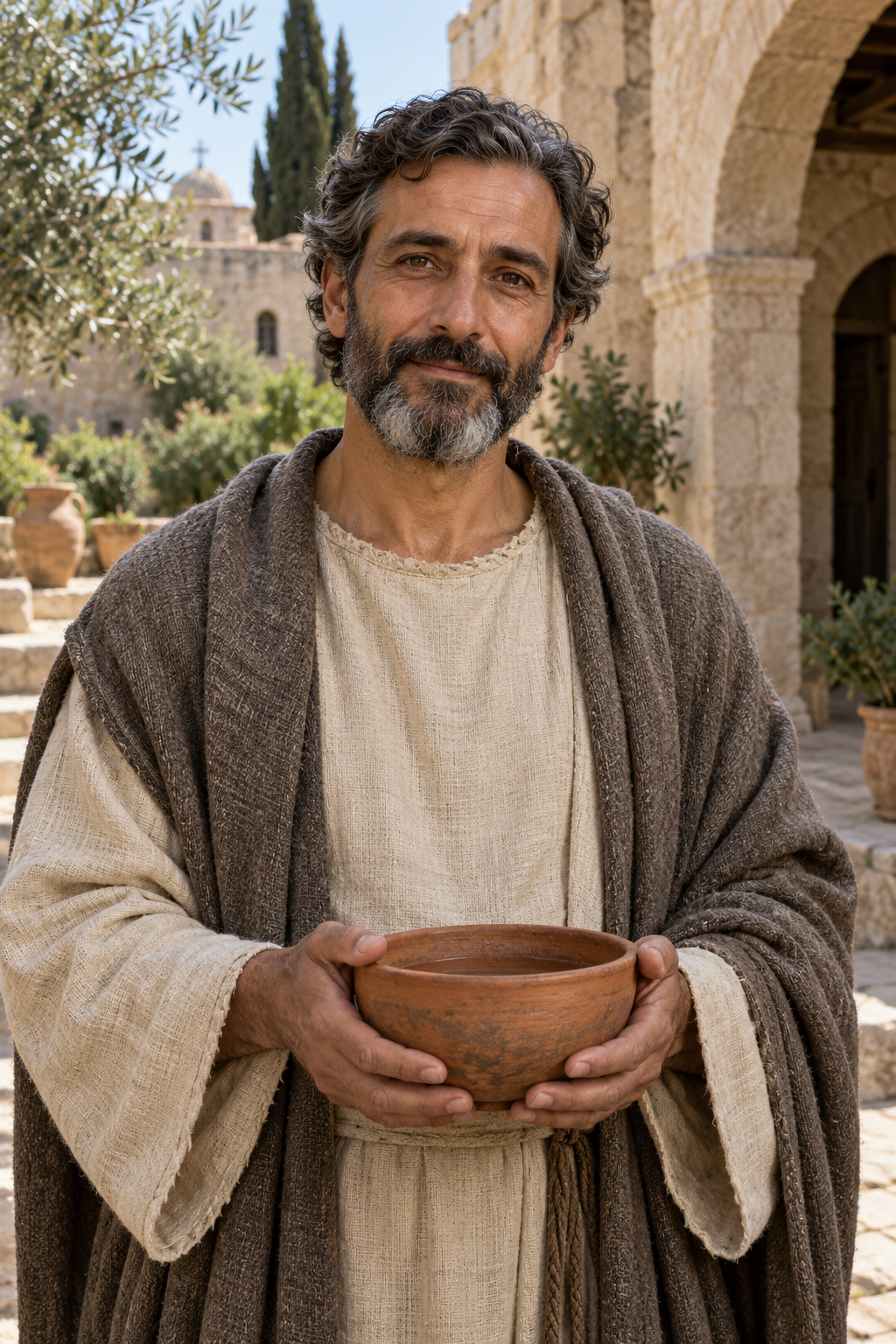
About Dorotheus of Gaza
Dorotheus of Gaza was a sixth-century monk whose work joined practical care with spiritual teaching. Scholar Thomas Kitson describes him as coming from a wealthy family in Antioch and probably studying rhetoric at Gaza before entering the monastery of Seridos at Tawatha. There he supervised the guesthouse and later the infirmary, which his brother had funded.
In his tenth Instruction, Dorotheus says that study initially felt burdensome, but persistent effort turned it into an absorbing habit. He recalls reading late into the night and neglecting meals and rest. After entering monastic life, he drew encouragement from that experience: attention and repeated practice could also shape his conduct.
Dorotheus served within a community guided by Barsanuphius and John, two elders whose correspondence became a major source for his life. Kitson states that he handled John’s correspondence for nine years before the elder’s death in 543. His later movements are less certain. Kitson cautions that it is not clear whether he succeeded Seridos as abbot and suggests that he may have moved toward a more contemplative setting.
Dionisiy Shlenov’s study describes the subsequent foundation of a monastery and places Dorotheus’s death most probably between 560 and 580, while noting other estimates. It rejects an older chronology extending his life into the seventh century. The surviving evidence does not establish a precise death year.
His sixth Instruction addresses the damage caused by condemning another person. Dorotheus distinguishes naming a wrongful act from passing judgment on someone’s entire character. He urges compassion for a struggling member of the community, comparing that care with tending an injured part of the body. Near the end, he pictures people moving toward the center of a circle, which represents God. As they approach the center, they also draw closer to one another. The image connects love of God with care for other people.
Kitson identifies early Arabic and Georgian witnesses and a later surviving Greek manuscript tradition. He also traces their influence through Studite monastic reform and their use in communities of the Greek East.
Shlenov explains that an early compiler gathered scattered texts but apparently lacked enough information to write a full life. The present collection also includes different kinds of material: spoken instructions, letters and accounts transmitted by later hands.
His commemoration follows different calendars. The Orthodox Church in America lists him on June 5.
Nominis, the French Catholic calendar, records a local observance on August 13.
In his December 2024 address to the Roman Curia, Pope Francis explicitly turned to Dorotheus while discussing humility and the harm of speaking ill of others. He asked his listeners to examine their own conduct as a way of strengthening community life.
Wondering how to weigh the stories and sources? Learn how to read a saint biography.