Biography
Ebrulf of Ouche
About Ebrulf of Ouche
Ebrulf is remembered as the founder of the monastery of Ouche in Normandy. The New Catholic Encyclopedia describes him as a former royal courtier who entered religious life after separating from his wife. It places his death in 706, while noting that the medieval historian Orderic Vitalis assigned him to the sixth century. The chronology is disputed.
The surviving lives are later witnesses to that memory. Maximiliane Berger studies five lives written between the eighth and late twelfth centuries. Her published abstract explains that their accounts of material support reflect changing ideas about the monastery’s economy, including the exchange of spiritual and material goods.
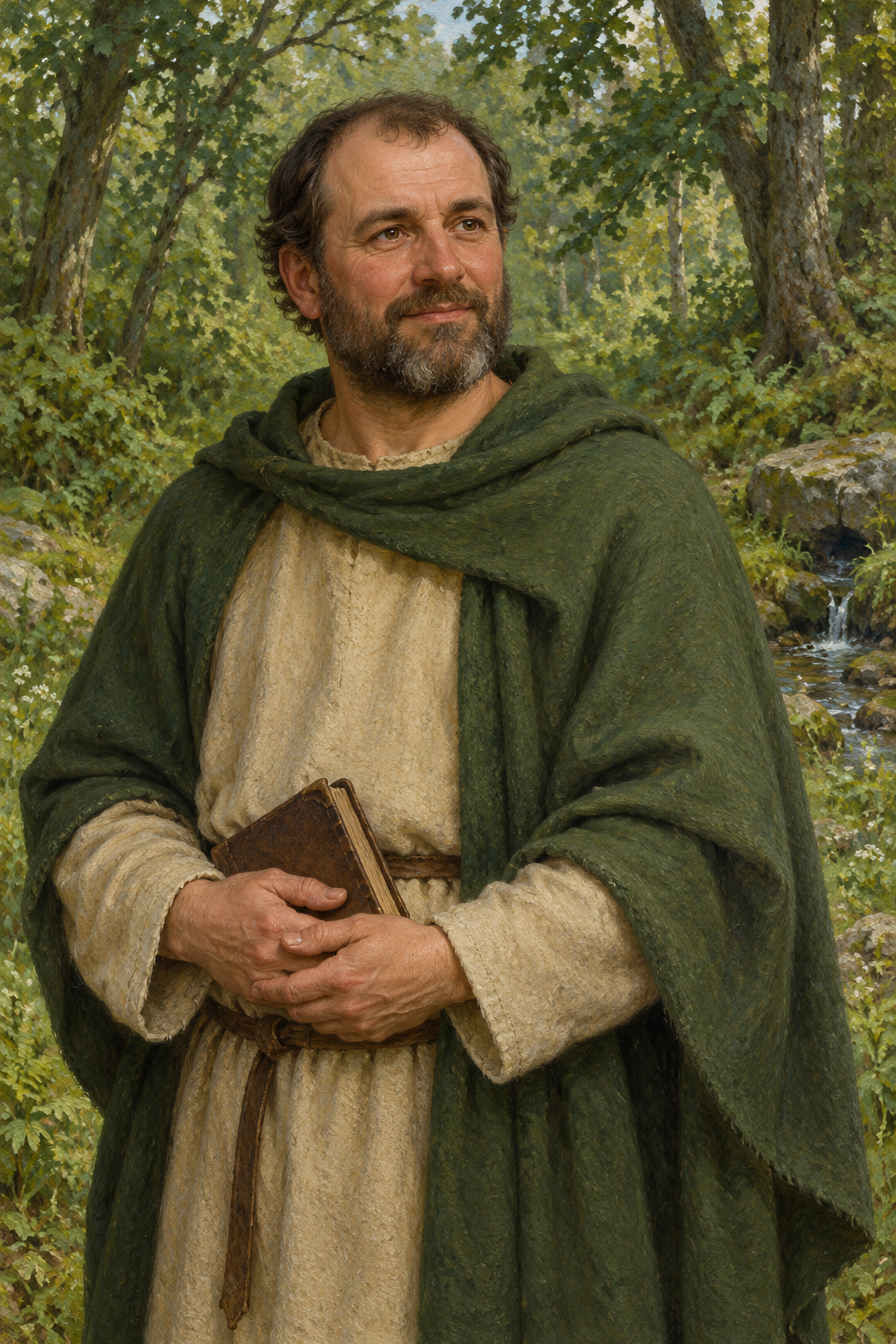
In Orderic’s account, Ebrulf leaves his first monastery with three companions in search of solitude. They settle near water in the forest of Ouche. A robber warns them that the woods belong to violent men and will not support peaceful labor. Ebrulf answers by inviting him to abandon robbery and trust in God. The man returns with bread and honey, becomes a monk, and is followed by others who choose monastic life or farming. This is a hagiographic story of conversion, not a contemporary record of the settlement.
Orderic’s death narrative gives Ebrulf a final exhortation to mutual love, humility and hospitality. The historian closes the life by calling Ebrulf his patron, expressing the monastery’s continuing attachment to its founder.
The Diocese of Seez records his December 29 feast and historical invocations for skin and blood disorders, fever, mental illness and the protection of livestock. These describe devotional practice, not demonstrated healing.
He should be distinguished from Evroul of Saint-Fuscien-au-Bois, whose biography has sometimes been confused with his.
Wondering how to weigh the stories and sources? Learn how to read a saint biography.