Biography
Edward Thomas Demby
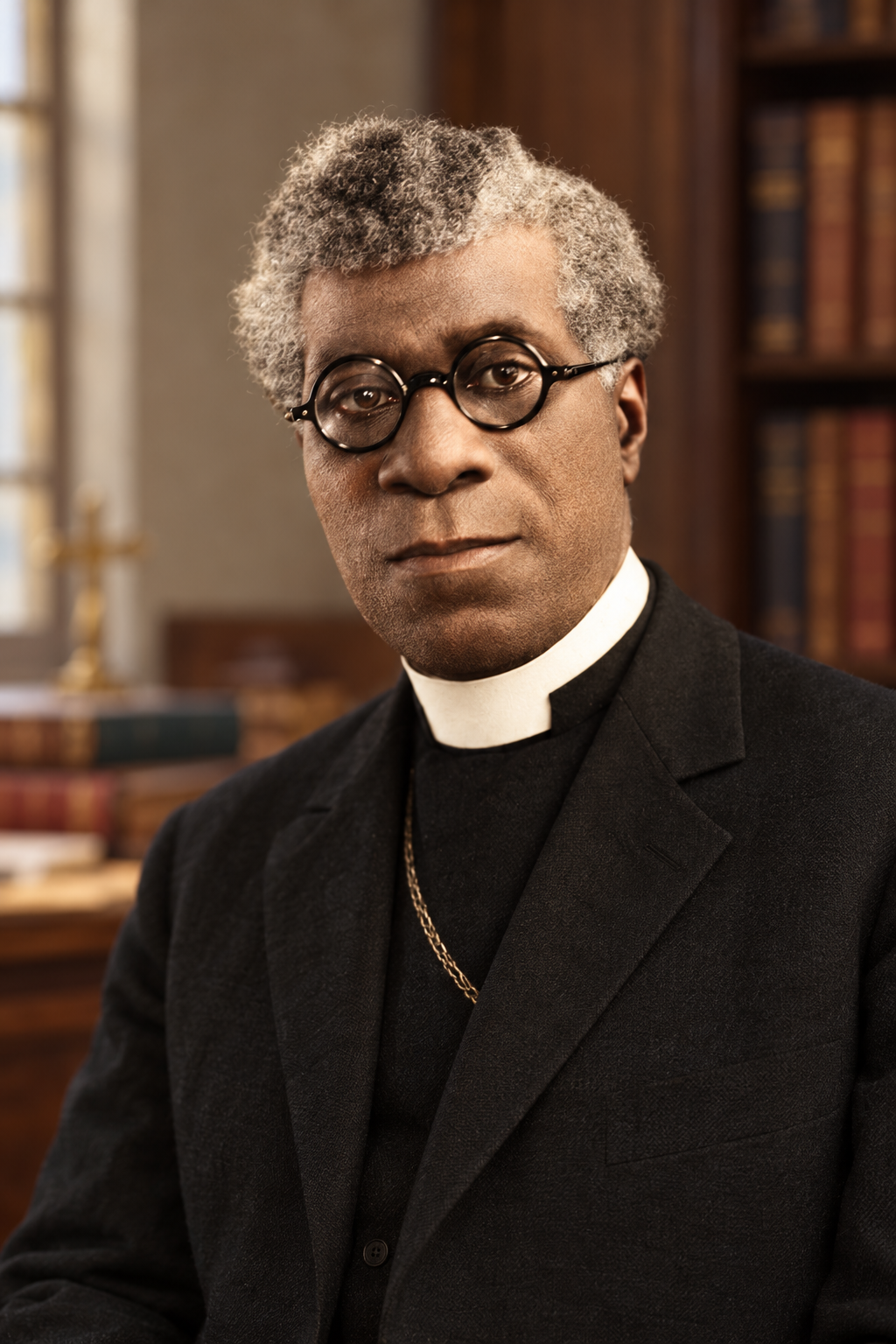
About Edward Thomas Demby
Edward Thomas Demby worked to strengthen Black congregations in an Episcopal Church that restricted their place in its leadership. He grew up in Philadelphia, studied at Howard and Wilberforce universities, and served as dean of students at Paul Quinn College in Texas. During his time there, he joined the Episcopal Church. Bishop John Spalding encouraged him and sent him to work in Tennessee, where teaching and parish ministry became closely connected parts of his vocation.
Born in Wilmington, Delaware, on February 13, 1869, Demby had pursued theological education before beginning this work. His 1941 clerical directory entry records a divinity degree from Wilberforce in 1893 and teaching in philosophy and metaphysics at Paul Quinn. He was ordained deacon in 1898 and priest in 1899. His early appointments took him through Tennessee, Missouri, Illinois, and Florida before his return to Memphis.
In Tennessee, he served St. Paul’s Church in Mason, directed its parochial school, and held a leadership position at Hoffman Hall. In 1907 he became rector of Emmanuel Church in Memphis. He also served the church’s segregated convocations and became an archdeacon responsible for Black congregations. These offices brought him into the structures through which the church administered ministry along racial lines. He later served on the Forward Movement Commission, the Joint Commission on Negro Work, and the Race Relations Commission within the wider church.
His work included public service and writing. The clerical directory records his leadership in the Federation of Charities in Memphis and his organization of a sociological congress there in 1914. He founded and edited The Southwest Churchman. His publications addressed Christian devotion, biblical interpretation, and sacramental life, including studies of Paul and James and a devotional book titled My Companion. His record therefore includes teaching and publishing as well as the succession of parishes and church offices. His educational responsibilities also included the Hoffman–St. Mary Industrial Institute at Keeling, Tennessee, during the years preceding his election as bishop.
Demby was consecrated bishop on September 29, 1918, at All Saints’ Church in St. Louis. His office concerned Black congregations in Arkansas and the southwestern province. Yet the congregation hosting his consecration did not want to be formally transferred to his oversight. Its history records an offer of annual financial support while retaining its place in the Diocese of Missouri. The occasion thus brought together recognition of a Black bishop and disagreement over how racially organized jurisdiction should operate.
The ministry required resources that were difficult to secure. In a contemporary account, Bishop Theodore DuBose Bratton described unreliable income, vacant posts, and the doubts of prospective clergy about entering a church that might leave them without sustained support. Bratton reproduced Demby’s appeal for substantial help in eastern Arkansas, where church work had reached only part of the population he hoped to serve. The appeal concerned the practical means to carry out the responsibilities for which he had been consecrated.
Bratton also quoted Demby’s opposition to peonage, lynching, mob violence, and injustice in the courts. Demby presented Christian ministry as a contribution to better relations in American life. These reported words show the public concerns he connected with his office; they do not establish that all church leaders acted consistently against racial injustice. Bratton’s own account used paternalistic assumptions about Black people, an important limit when reading its praise of Demby and its description of the church’s work.
One lasting undertaking was Christ Church Mission and its school in Forrest City, Arkansas. Demby obtained money from the Women’s Auxiliary in Pennsylvania for a chapel and recruited James Henry King, an experienced priest and educator. The mission began in 1921, and the school followed in the 1920s. Its program combined academic subjects with practical skills. King directed it for more than thirty years, accepting produce and other goods when families could not pay tuition in cash.
King’s wife, Nina Pearl Fields King, taught domestic science and helped local families preserve food. Vegetables contributed in return for using a donated pressure cooker supported a school lunch program. These were the Kings’ achievements within the institution Demby helped establish. After a fire, replacement school buildings were dedicated in 1959 in memory of Demby and King. The school continued until 1968, when insufficient funding forced its closure despite continued demand for places.
After retiring from Arkansas, Demby served as an assisting bishop in Ohio. He died in Cleveland in October 1957, and his funeral was held at Trinity Cathedral. Decades later, diocesan researchers found a design he had drawn for his own grave monument. A headstone was dedicated in 1992, giving a further public memorial to his ministry.
Demby’s former parish of St. Augustine’s in Kansas City remembers him among its early clergy and identifies April 14 as his Episcopal commemoration. His work survives in the histories of congregations and institutions whose leadership and resources he sought to strengthen.
Wondering how to weigh the stories and sources? Learn how to read a saint biography.