Biography
Elisabeta of Pasărea
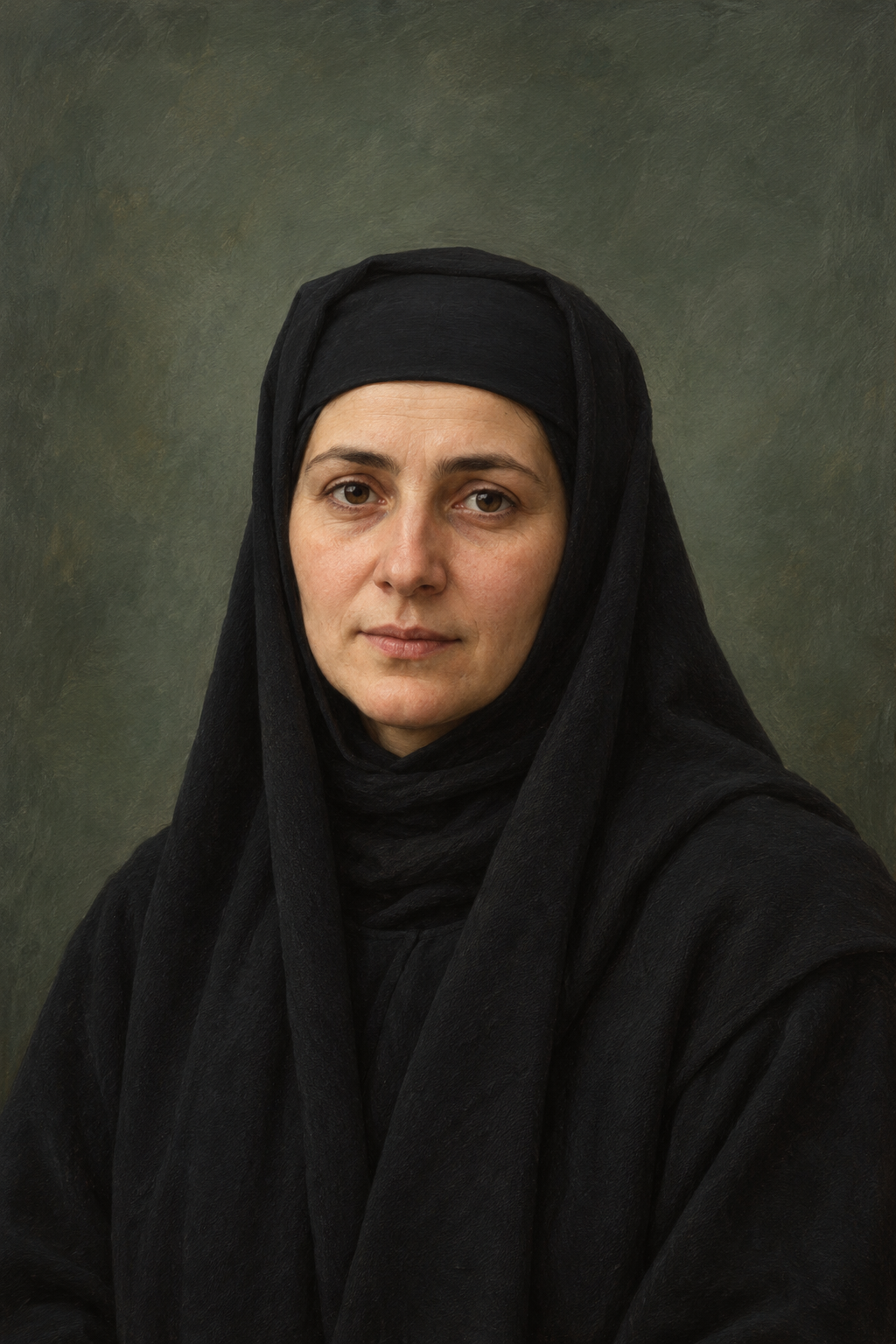
About Elisabeta of Pasărea
Elisabeta of Pasărea was born Rodica Lazăr in Benia, a village in Bucovina, in 1970. Her father, Vasile, worked in a mine, while her mother, Maria, worked the land and raised their family. Relatives interviewed by Oana Nistor remembered a quiet child who helped with difficult chores and took a prayer book while tending the cows.
Her relatives recalled that her mother combined farm work with skills such as sewing and decorating eggs. The children also helped raise one another. After a pilgrimage brought Rodica to Pasărea, she wrote home to say that she intended to remain. Her mother needed time to accept the decision.
Her sister Nectaria recalled that their grandmother Evdochia taught them about the saints and took them to church, including to help with cleaning. Rodica wanted to join two cousins entering monastic life. Her mother objected because she considered her too young, but Rodica remained determined. Nectaria later followed her to Pasărea, although the sisters did not enter together.
At Pasărea, Rodica worked in the monastery’s metalwork workshop. She received the name Elisabeta, later Teodora, and finally Elisabeta again when she received the great schema, a form of Orthodox monastic profession. In 1996 she went to the Romanian establishment in Jerusalem, where she served as sacristan and sang in church.
Nectaria visited her in Jerusalem in 1997. She recalled Elisabeta describing a vision during a serious illness, in which John Jacob of Neamț guided her through the world beyond death. Her sister understood the experience and subsequent recovery as miraculous. This account is family testimony to Elisabeta’s religious experience, rather than an independently established medical explanation.
After returning to Romania, Elisabeta lived as a hermit in the Giumalău Mountains. Forestry work disrupted her solitude, and she moved to the Neamț Mountains before returning to Giumalău. Pelaghia joined her in the mountains in 2010, after seeking advice from Arsenie Muscalu. Her first day was unsettling, and she considered leaving. Elisabeta asked her to wait until their spiritual father arrived before deciding. Pelaghia remembered becoming more peaceful and choosing to stay. She later described a demanding routine that nevertheless allowed room for individual strength. Night prayer began with two hours and gradually lengthened, while daily tasks included cooking, cutting wood, and clearing winter snow.
Reading saints’ lives formed part of their practice. When Pelaghia fell behind, Elisabeta told her to resume with the current day rather than remain burdened by the backlog. They also gathered food and carried supplies uphill. Despite her own illness, Elisabeta took heavy loads and discouraged the thinner Pelaghia from overburdening herself. Pelaghia remembered being reminded to protect her health. These recollections place practical care alongside the severity of their chosen way of life. She made paper candle guards bearing verses by John Jacob of Neamț and sometimes asked a disciple to help write them.
Nectaria sometimes spent a week or two with her sister in the mountains, praying with her and learning from her daily habits. Later, she kept a walking stick Elisabeta had given her because of a weakness in her leg, along with a prayer rope her sister had made. These personal belongings preserved memories of assistance as well as devotion.
Marina Andreica, later abbess of Teodoreni, remembered being asked to embroider two monastic garments for Elisabeta. She also received a cassock and vest that Elisabeta had worn. In her account, the exchange became a deeply personal spiritual bond. Marina attributed a recovery from illness to Elisabeta’s prayers; that remains her religious interpretation, not a medical finding established by this account. She described Elisabeta’s prayer as extending beyond individual visitors to peace, rain, and the needs of the wider world.
Her family remembered that withdrawal from ordinary life did not end her concern for them. She urged her siblings to forgive one another and discouraged praise of herself. One sister recalled being corrected for placing Elisabeta’s photograph beside icons. Visits home were remembered partly for her quiet singing, while her teaching helped draw the family closer together.
In 2014, weakened by cancer, she returned to Pasărea. The church’s published life records her death there on June 5, 2014, and her burial in the monastery cemetery. Nectaria recalled caring for her during the painful final months and being present at her death. She remembered a broad smile at the end, which she understood as a sign of release and joy. Her account conveys the experience of a sister and caregiver, while leaving the meaning she attached to it clearly identified as her own.
The Romanian Orthodox Church approved her canonization in 2025. After the general proclamation in February 2026, Pasărea celebrated the local proclamation on June 5, together with Philothea, the mother of Calinic of Cernica. Elisabeta’s feast is June 5.
The archdiocese identifies Elisabeta and Philothea as protectors of Pasărea’s monastic community.
Wondering how to weigh the stories and sources? Learn how to read a saint biography.