Biography
Eluned
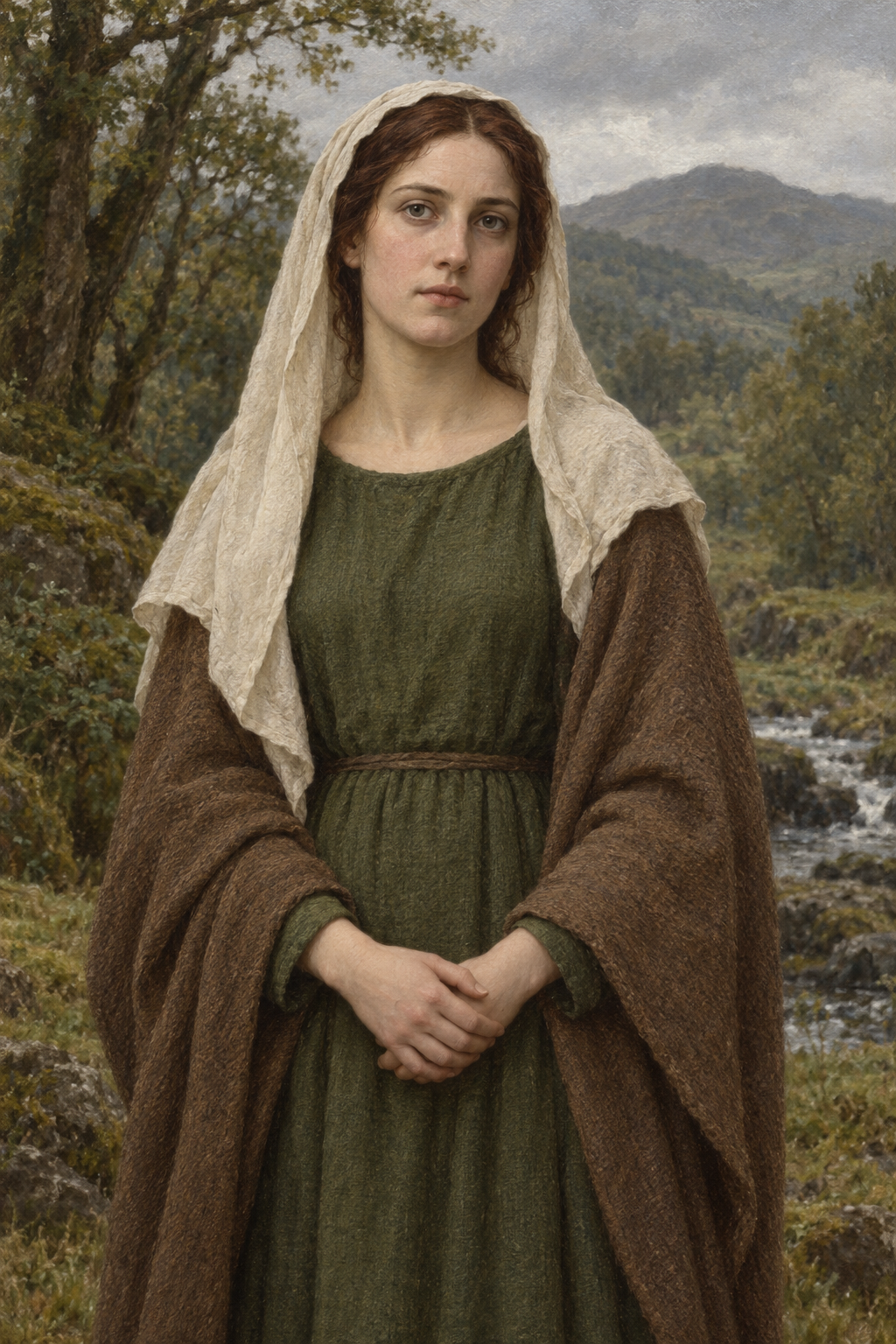
About Eluned
Eluned is a Welsh saint remembered at a shrine near Brecon. Her surviving story is much clearer as a record of devotion than as a dated biography. Writing in the late twelfth century, Gerald of Wales calls her Almedda and places her among the daughters attributed to Brychan. He describes her as a virgin who rejected marriage and suffered martyrdom. This is a medieval religious tradition, not a contemporary record of her life.
Gerald describes crowds gathering for her festival at the beginning of August. People sang and danced around the churchyard; some fell into trances and acted out work they had performed on holy days. He names ordinary tasks such as ploughing, shoemaking and weaving. In his account, worshippers recovered their composure when brought to the altar with offerings. He understands these experiences as correction and healing through divine mercy.
Laura Hellsten’s study cautions against treating this scene simply as forbidden dancing or demonic possession. She observes that Gerald expresses wonder rather than condemnation here, despite criticizing inappropriate dancing elsewhere. Her interpretation places the movements within the community’s celebration of its saint. The account preserves something of medieval worship and ordinary working lives, but cannot establish the details of Eluned’s own lifetime.
A much later account attributed to Hugh Thomas expands the story. Eluned flees an unwanted marriage, suffers rejection in neighbouring villages and finds shelter on Slwch hill. Her pursuer kills her, and a spring appears where her head comes to rest. These are elements of a late devotional narrative, including a miracle story; they should not be treated as an independently verified journey or death scene.
The Lampeter Orthodox Church preserves her remembrance with that account and photographs of the landscape. Its captions are cautious: they identify places where the community thinks her cell, well and chapel may have stood. This distinction matters. A place can carry a longstanding sacred memory without every proposed location or detail being securely established.
Wondering how to weigh the stories and sources? Learn how to read a saint biography.