Biography
Emilian of Cyzicus
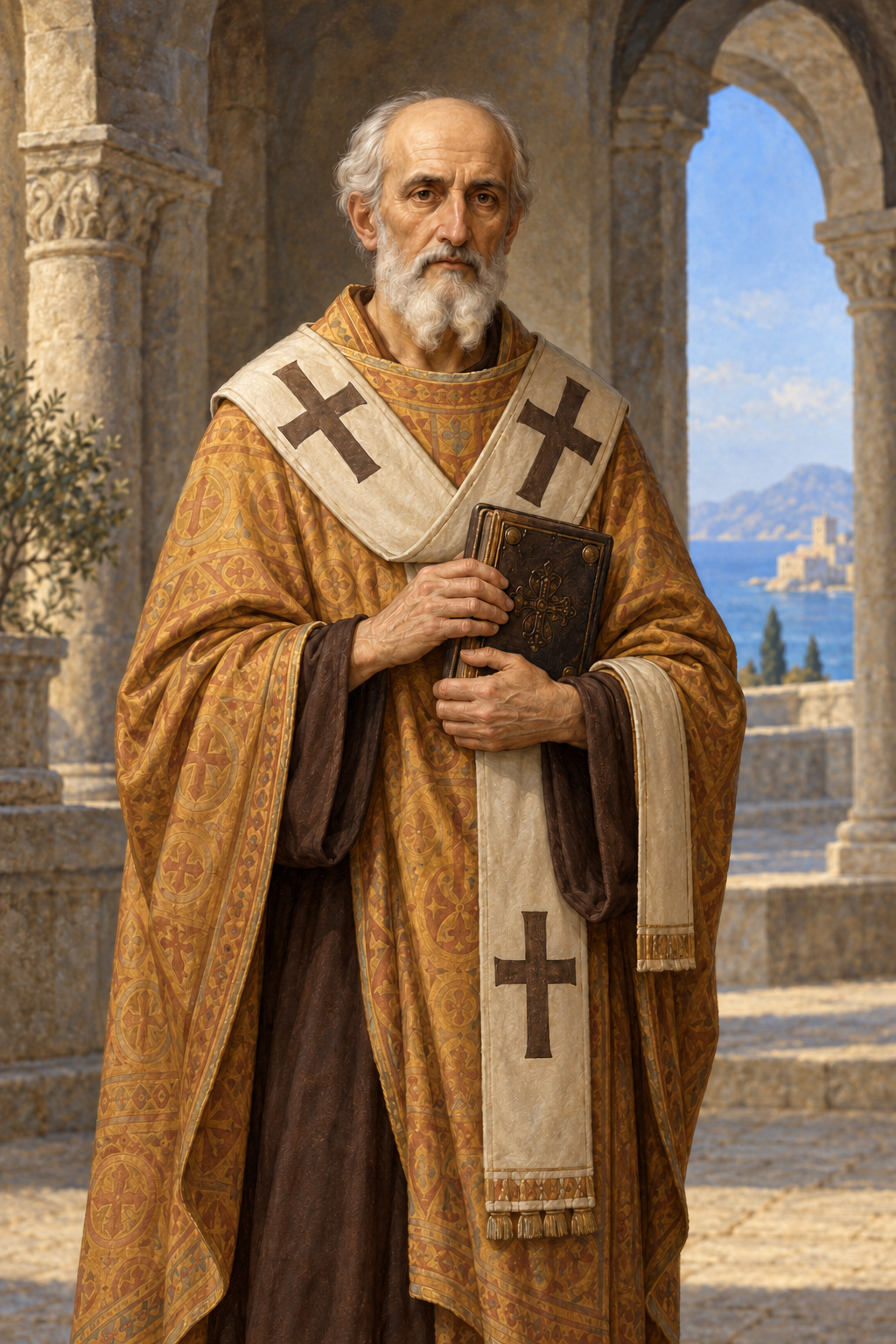
About Emilian of Cyzicus
Emilian of Cyzicus was a Byzantine bishop who defended the veneration of religious images under Emperor Leo V. The scholarly prosopography places him at the imperial palace on December 24, 814, supporting Patriarch Nicephorus during a dispute over icons. This is the most securely dated episode in the surviving outline of his life.
The Great Synaxaristes account published by Saint Andrew Greek Orthodox Church places his formation in a monastery founded by Patriarch Tarasius. It presents his monastic discipline as preparation for episcopal service. Those details belong to the received narrative; they do not supply a securely documented childhood or an exact date of appointment.
His earlier career is less certain. He may have been the unnamed metropolitan of Cyzicus who opposed war with the Bulgarians at a council in 812. The prosopography treats this identification as likely, not certain. It also describes him as the possible successor of Nicholas, the bishop associated with Cyzicus at the council of Nicaea in 787.
The Orthodox Church in America preserves the central point of his answer to Leo: decisions about the veneration of icons belonged within the Church, rather than at the imperial court. Its account remembers him encouraging his flock while resisting the order to stop teaching icon veneration. His opposition concerned both the religious practice itself and the authority claimed by the emperor.
In the Great Synaxaristes narrative, Emilian explains that honor offered to a sacred image passes to the person represented. This was the theological conviction behind his refusal to abandon icons. The same account describes his death amid the hardships of exile without identifying a precise place.
After Nicephorus was deposed and the iconoclast council met in 815, Emilian was sent into exile. The Orthodox Encyclopedia records his death there without establishing its precise year or location. It also identifies a surviving lead seal naming Emilian as metropolitan of Cyzicus, a different kind of evidence for his episcopal office from the later accounts of his suffering.
The palace confrontation appears in the Life of Nicetas of Medikion and in two versions of the Life of Theophylact of Nicomedia. The Orthodox Encyclopedia identifies these witnesses to Emilian’s participation alongside other bishops.
The church biography dates his death to 820, after five years of banishment.
The scholarly prosopography is more cautious, placing his death no earlier than 815. That limit does not establish a particular year, and the detailed chronology remains unresolved.
His remembrance continued through calendars and hymns. The Orthodox Encyclopedia records both January and August observances and a canon associated with Theophanes. It also notes a manuscript copying error that attached the life of Myron of Crete to Emilian’s notice, a reminder that neighboring calendar entries require careful distinction.
The Orthodox Church in America lists January 8 as an additional commemoration and August 8 as his principal feast. It honors him as a confessor whose resistance to imperial demands brought suffering and exile.
Wondering how to weigh the stories and sources? Learn how to read a saint biography.