Biography
Émilie de Rodat
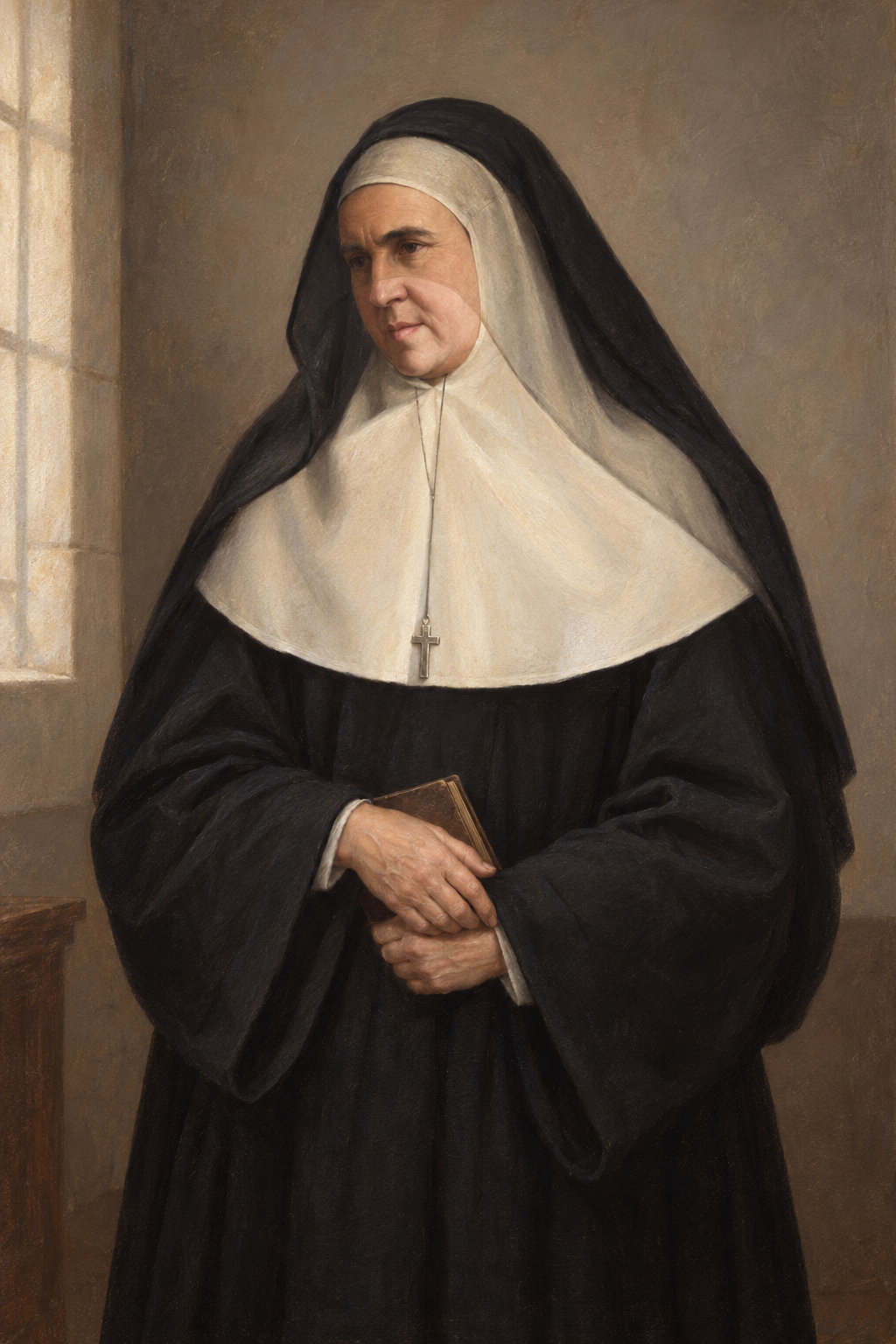
About Émilie de Rodat
Émilie de Rodat founded the Sisters of the Holy Family at Villefranche-de-Rouergue to educate children whose families could not afford schooling. Born at Druelle on September 6, 1787, she spent much of her childhood with her maternal grandmother at Ginals, where her family sought greater safety during the French Revolution. Her later vocation grew through years of searching rather than an immediate, settled choice of religious community.
The Vatican biography describes her attempts to find a place among several religious congregations. Her visits to sick people and encounters with children lacking education gradually pointed her toward a different response. She began teaching in a room made available by the Saint-Cyr community. Her work joined instruction with attention to the poverty that limited those children’s prospects; it developed from needs she encountered close at hand.
With Antoine Marty’s guidance, she and three companions committed themselves to the work in April 1816. Their free class opened on May 3, the date the congregation commemorates as its foundation. The community adopted the name Sisters of the Holy Family in 1822. Prayer, simplicity and shared religious life remained central to the undertaking as it expanded beyond its first classroom.
The material setting changed as the work grew. The regional heritage account places her early teaching in the Saint-Cyr community on Place Bernard Lhez. It records the purchase of the former Cordeliers convent in 1817. The older religious buildings thus became part of a new educational undertaking after the disruptions of the Revolution. The same account traces the community’s development from a preference for enclosed religious life toward wider practical service.
That service required a way to pay for it. The congregation’s archive guide explains that fee-paying classes for better-off families supported free education for poorer children. It also records visits to sick people from 1822 and work with prisoners from 1840. In 1845 the sisters opened a refuge for women who had been involved in prostitution and whom they had encountered in prison. The range of work followed particular local needs rather than remaining limited to one form of schooling.
Further initiatives addressed changing working lives. In 1834 a small community went to families of English immigrants in the Decazeville mining area, while another foundation brought the sisters into a rural setting at Lassouts. In 1841 an early-childhood institution responded to children left without care while parents and older siblings worked. These details show how the congregation adapted its educational commitment to the circumstances of different families.
Her own guidance combines firmness with gentleness. In passages preserved by the congregation, she advises teachers to wait until an agitated child is calmer before renewing a request. She also recalls apologizing to pupils when she had spoken too strongly, explaining that such admissions did not destroy their respect for her. The passages make self-correction part of a teacher’s responsibility. They survive here as selected excerpts, without a date or original document reference supplied for each one.
A dated letter gives a similar picture of her direction of the sisters. Writing to a sister at Aubin on May 11, 1825, she welcomes the fruits of a retreat and encourages peace, humility and trust. She urges the recipient not to become discouraged by recurring faults, but to begin again with renewed resolve. The letter turns attention toward love rather than anxious preoccupation with failure. Its tone is personal and encouraging, even while asking for continued spiritual effort.
The surviving writings extend beyond letters. Reviewing Henri de Gensac’s spiritual anthology, Étienne Catta describes an autobiography, early regulations, conferences, dialogues, a spiritual testament and a selection of 219 letters. He sees both firmness and sensitivity in her leadership. These texts preserve her religious teaching and the practical demands of directing a community; the review should not be mistaken for an examination of every manuscript or the complete correspondence. Catta also emphasizes the simplicity and seriousness of this teaching, shaped by experience and by a strong sense of responsibility.
Growth brought suffering as well as achievement. The Vatican biography records deaths among children and sisters during an epidemic in 1819, when Émilie considered giving up responsibility for the undertaking. Her companions encouraged her to continue. Later she experienced hearing difficulties and a painful tumour, while continuing to guide the institute. She eventually relinquished leadership before her death. Her activity was sustained through illness, not by freedom from it.
Émilie died on September 19, 1852. Her congregation’s chronology also records a prolonged period of spiritual darkness lasting much of her adult life. Pius XII canonized her on April 23, 1950. In his homily he presented the congregation’s contemplative and active branches as related expressions of one vocation, joining prayer with education, nursing and care for vulnerable people. He placed its work within the broader contribution of religious women to both the Church and society.
Wondering how to weigh the stories and sources? Learn how to read a saint biography.