Biography
Émilie Tavernier-Gamelin
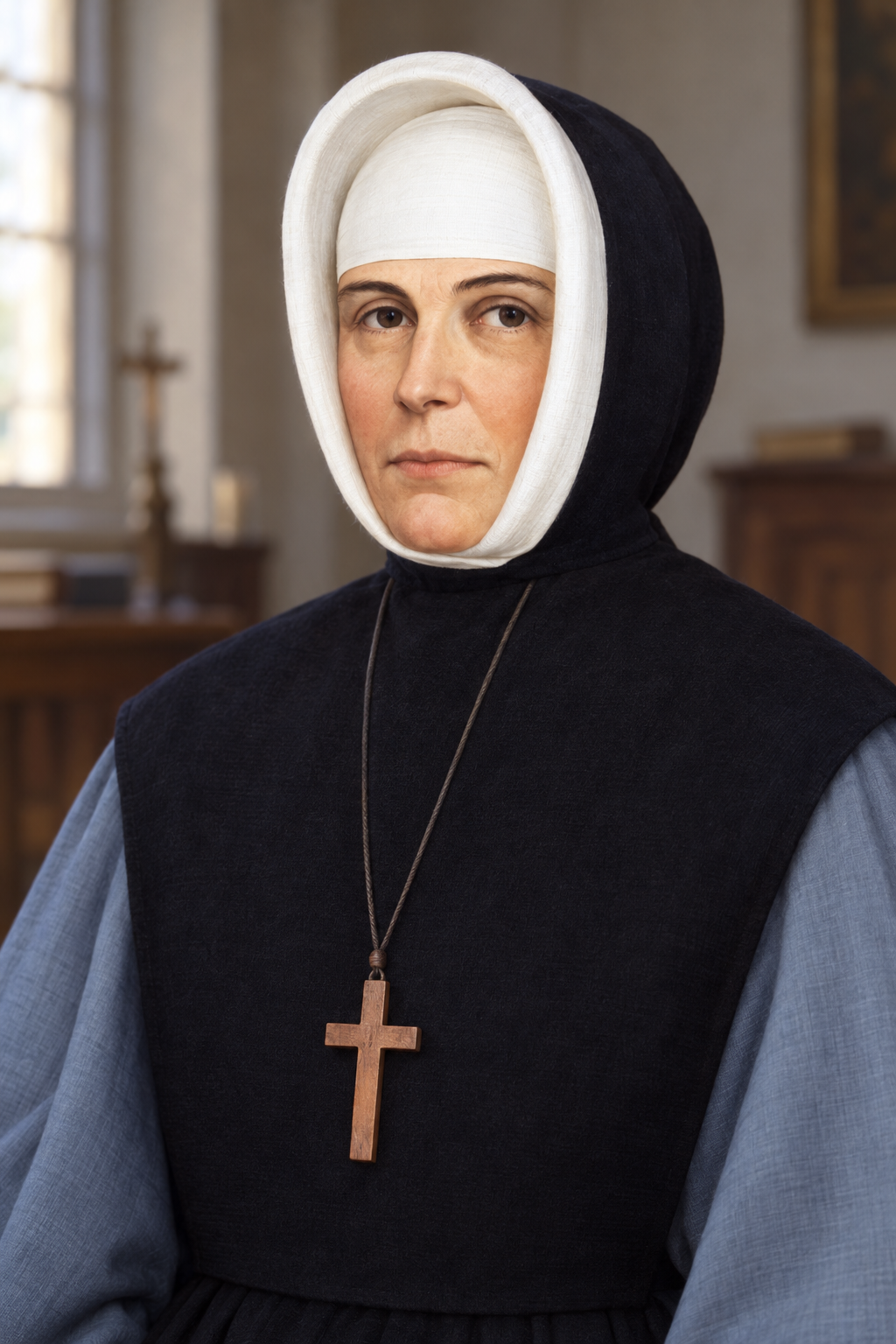
About Émilie Tavernier-Gamelin
Émilie Tavernier was born in Montréal on February 19, 1800. After losing her parents, she grew up with relatives and attended a school run by the Congregation of Notre-Dame. In 1823, she married Jean-Baptiste Gamelin, an apple merchant. Their three sons died young; her husband died in 1827. The last surviving child died after his father.
Charitable service was already part of her life before marriage. The Vatican biography recalls her insistence that hungry visitors be welcomed when she kept house for her widowed brother. Her husband shared her concern for people in need. After his death, she devoted the resources he left her to care for others. The biography connects this work with her prayer before an image of Our Lady of Sorrows.
Gamelin joined charitable associations and developed skills in organizing relief. In 1830, she opened a refuge for elderly women who lacked support. She moved to larger premises as the work grew. During the rebellions of 1837–1838, she visited imprisoned Patriotes and helped them communicate with their families.
The societies she joined helped unemployed people find work and assisted households through visits and the distribution of donations. She also began selling her property to provide funds for the people she supported.
Her work depended on help from friends as well as her own resources. In 1841, it gained civil incorporation. A charitable undertaking begun by a widow was developing a more formal organization before the religious community existed.
Bishop Ignace Bourget sought a religious community to continue her work. He invited the Daughters of Saint Vincent de Paul from France, but they were unable to come. He then recruited women locally, and the Sisters of Providence took shape in Montréal.
Gamelin made a private vow to serve the poor in February 1842. The new community began in March 1843.
Before entering the novitiate, Gamelin traveled to the United States to learn from the Sisters of Charity. Bishop Bourget asked her to observe their ministries and religious life, and to obtain their rules. She left Montréal with three companions in September 1843 and visited sisters in New York and Boston. Their work offered practical examples of caring for sick people, supporting orphans and educating young people. Archivist Loretta Greene explains that Emmitsburg, Maryland, was added to the journey after the sisters encouraged Gamelin to visit their motherhouse. There she borrowed a copy of the rules of Saint Vincent de Paul. She presented it to Bourget when she returned to Montréal in October. His secretary copied the text for use in forming the new community. The visit connected Gamelin’s existing experience of charitable service with an established pattern of communal religious life.
She entered the novitiate in October 1843. She professed religious vows on March 29, 1844, and became its first superior. The congregation served older people, orphans, prisoners, people with disabilities and those who were ill. Its work developed from the charitable efforts she had begun as a widow.
In 1847, she helped during a typhus epidemic and took responsibility for a hospital sheltering children whose Irish immigrant parents had died. She later opened a facility for cholera patients.
Gamelin’s retreat notes offer a more personal view of the responsibilities she carried. The notes for March 1850, preserved in a later published translation, begin with her concern for household affairs and her desire to renew both her own life and the community’s. She recalled the grief of losing her husband and child, and the consolation she had sought in prayer before an image of Our Lady of Sorrows. She also remembered seeing a statue of Mary under that title at the Sisters of Charity’s motherhouse in the United States and seeking a similar one for her community.
Elsewhere in the same retreat, she examined her conduct as superior. She worried about correcting breaches of the rule, being too hasty or too hesitant, and neglecting responsibilities. These concerns, she wrote, disturbed her prayer and sleep. Her closing resolution was to begin reform with herself and then guide others with prudence. These are her recorded spiritual reflections, transmitted through the community’s biography and its English translator; they do not establish a medical diagnosis or justify every criticism directed at her.
She died of cholera in Montréal on September 23, 1851.
The Church’s 1993 decree on her virtues placed her practical service within a life of prayer. It described her devotion to the Eucharist, the Passion of Christ and Our Lady of Sorrows. It also acknowledged serious difficulties within and outside the congregation. The decree recognized her perseverance in caring for people in distress and her formation of a religious community dedicated to that work.
Pope John Paul II beatified Émilie Tavernier-Gamelin on October 7, 2001. His homily remembered both her family life and her work as a religious founder. He emphasized her attention to particular people and circumstances, which led her to develop new forms of assistance. He presented her trust in Providence as inseparable from practical charity.
Wondering how to weigh the stories and sources? Learn how to read a saint biography.