Biography
Ephraim of Antioch
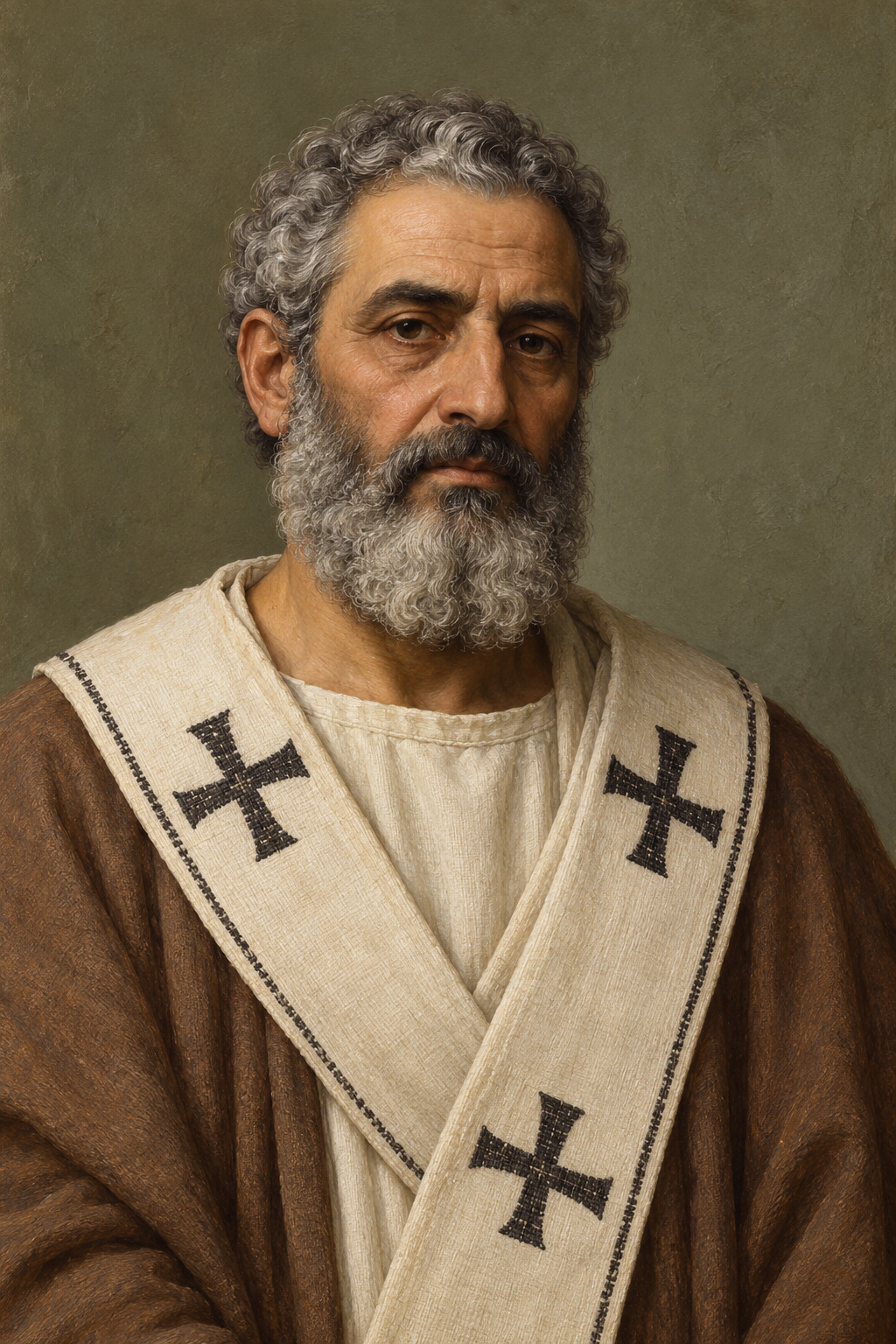
About Ephraim of Antioch
Ephraim of Antioch was a sixth-century patriarch and theological writer from Amida in Mesopotamia. Before becoming patriarch in 527, he held the civil office of Count of the East. He defended the teaching of the Council of Chalcedon, and his writings drew especially on Cyril of Alexandria. Most of those writings have been lost. Later authors preserve fragments and descriptions of sermons, letters, arguments against Severus of Antioch and answers to questions about Genesis.
His civil career is not known solely through later saints’ lives. Glanville Downey points to an inscription found near Seleucia Pieria that names him during his tenure as Count of the East. Its date places him in office in 524. Downey also compares the chronicles when discussing his election as patriarch, preferring 527 to an earlier proposed date. Such evidence helps distinguish the official’s career from the devotional stories later attached to his appointment. It also shows why similar names and differing chronological notices need to be handled carefully.
Downey identifies one such confusion in a Greek chronicle, where Ephraim’s name appears in place of his predecessor’s during a fire; another version preserves the earlier patriarch’s name.
The church historian Evagrius connects Ephraim’s elevation with his care for Antioch after a devastating earthquake and fire. The disaster killed Patriarch Euphrasius and left the city in urgent need of help. Ephraim was then governing the eastern provinces. Evagrius praises the assistance he provided and says that the people chose him as their bishop because of it. In this account, practical responsibility for a damaged city preceded responsibility for its church. Evagrius writes admiringly and understands the succession as divine care for Antioch; his narrative is a favorable witness, not a neutral civic report.
His appointment brought an experienced administrator into one of the empire’s major churches. Pauline Allen describes him as bilingual, a native Syriac speaker who also knew Greek. She suggests that his eastern Syrian background may have made him attractive to rulers seeking to strengthen acceptance of Chalcedon in that region. This proposed motive remains an interpretation, not a recorded explanation by the emperor. Allen also stresses the unusually rapid movement from civil authority to episcopal office. The practical ability admired in accounts of the earthquake mattered greatly in the choice. Yet the demands of his patriarchate went well beyond rebuilding: plague, invasion and further disaster also affected Antioch during these years. His administrative experience did not spare him the difficult choices faced by a religious leader in an endangered city.
His patriarchate also has a troubling place in the history of religious coercion. Historian Susan Ashbrook Harvey describes sharply divided testimony: Chalcedonian writers praised a persuasive and caring leader, while opponents remembered persecution backed by military force. Her study discusses Ephraim’s use of troops and his association with Abraham bar Kaili, bishop of Amida. Accounts from the persecuted communities describe severe violence, with the worst acts attributed to Abraham. These testimonies cannot be replaced by a picture of universally peaceful persuasion. They also require care in distinguishing Ephraim’s responsibility from particular actions attributed to his subordinate.
One such crisis appears in Procopius’s account of the Persian advance. Antioch’s defenses had a vulnerable point, and promised reinforcements had not arrived. The inhabitants considered a payment to secure the city’s safety and sent Megas, bishop of Beroea, to negotiate. When he returned with terms, an imperial envoy named Julian opposed paying the enemy. Procopius reports that Julian also accused Ephraim of wanting to hand over the city. That allegation belongs to a dispute over how to respond to the invasion; it should not be repeated as an established verdict of treachery. The negotiations failed, and Ephraim left for Cilicia, fearing the Persian attack. Germanus, the emperor’s nephew, followed later. This episode presents a markedly different setting from the favorable account of his earlier relief work. It places the patriarch among civic and imperial officials who disagreed over the means of survival, with decisions about money, defense and departure all urgently at stake.
The fragments of his writings reveal another side of his work. His answers to questions on Genesis were addressed to a monk named Anatolius. Other surviving material comes through authors and compilations that selected passages for their own purposes, including Anastasius of Sinai and the Sacra Parallela. Photius’s descriptions are especially important for recovering the range of works that later disappeared. The surviving record therefore gives only part of a much larger literary activity.
The Greek Orthodox Archdiocese of Canada commemorates him on June 8. Its account, drawn from the Prologue of Ohrid, preserves stories of a hidden bishop predicting his elevation and of a pallium remaining unharmed in a fire. These are hagiographic traditions rather than independently established events. They show how his defense of Orthodox belief came to be remembered in devotional narrative.
Wondering how to weigh the stories and sources? Learn how to read a saint biography.