Biography
Epiphanius of Salamis
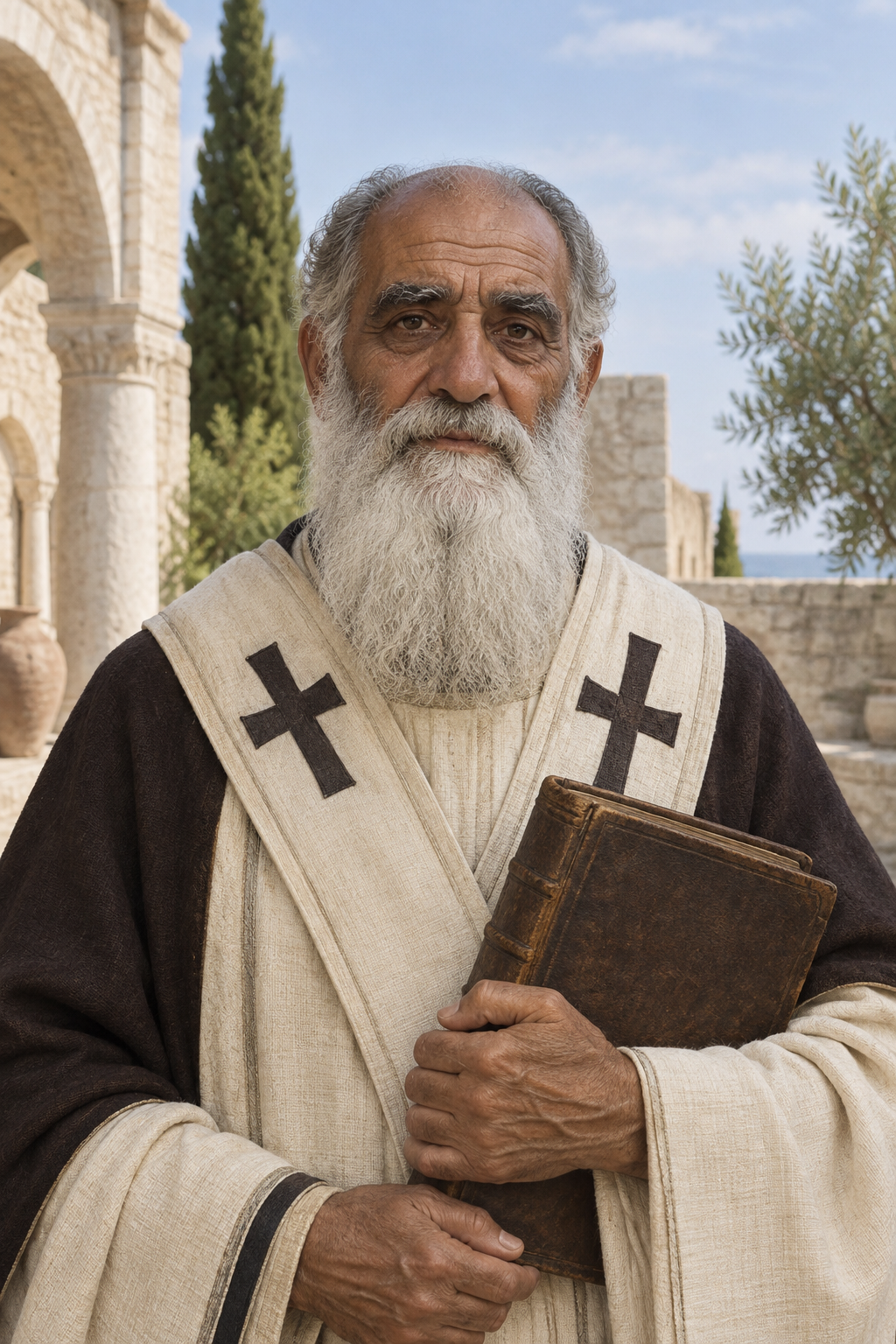
About Epiphanius of Salamis
Epiphanius grew up in Palestine and entered monastic life while still young. He spent time among the monks of Egypt before returning to establish a monastery near his birthplace, Besanduk. He later became a priest and, in 367, bishop of Salamis on Cyprus.
His birth is generally placed around 315, although no exact date is known. He brought the habits of a monk to his new responsibilities, encouraging monastic communities as well as leading a church.
People beyond Cyprus also sought his help. His Ancoratus took the form of a letter to Christians in southern Anatolia, answering questions about the Son, the Holy Spirit and the incarnation of Christ. He wanted to explain the faith he believed the church must preserve. He also addressed the reading of Scripture and challenged teachings he associated with Origen. These questions connected his work as a writer with the concerns of Christians asking for guidance.
Epiphanius then undertook the Panarion, whose title means Medicine Chest, to describe and answer religious teachings he considered dangerous. His treatment of the Nicene faith includes the shared divinity of Father, Son and Holy Spirit. When opponents objected that Nicaea had said too little about the Spirit, he explained that the council had answered the particular dispute before it. He also defended a common celebration of Easter, arguing that agreement served the unity of the church rather than the convenience of an emperor.
His books found readers outside learned circles. Jerome remembered that educated people valued their subject matter, while ordinary readers appreciated their language. Even in old age, Epiphanius continued composing shorter works. Teaching through writing remained an active part of his life.
On a visit to Rome, Epiphanius stayed with Paula, a Christian widow. Later, when her journey brought her to Cyprus, he received her for ten days, hoping she would recover her strength. She used the stay to visit monasteries and help their communities. Jerome also recalls asking him to persuade Paula to take a little wine during recovery from a dangerous fever. Epiphanius tried, but she recognized the plan and resisted his advice. He came away joking that she had nearly persuaded him to give up wine himself.
Epiphanius also worked on a handbook now known as Weights and Measures. He invited readers who wanted to understand unfamiliar biblical terms to study it. Alongside measurements, he explained signs used by scribes and the different kinds of writing found in Scripture. He distinguished prayers and laments from narrative and instruction, helping readers notice the different purposes of biblical passages. His explanation of the asterisk showed how readers could recognize words present in Hebrew but absent from a Greek translation. The work offered practical help with the details of a book central to Christian prayer and teaching.
His readiness to intervene could also wound relationships. In a letter to John of Jerusalem, he defended ordaining Jerome's brother Paulinian without John's consent. He described having deacons restrain the reluctant candidate. Epiphanius believed he was providing a monastery with necessary ministry; John regarded the action as an intrusion. The same letter shows another side of his administration: he asked neighboring bishops to ordain clergy for distant churches in his own large territory. He accepted their help because reaching those communities himself was difficult.
He defended salvation as involving the whole person, body and soul, and resisted teachings he believed weakened that unity. His insistence on discipline did not mean expecting every Christian to follow precisely the same ascetic practice. Modern scholarship draws attention to the different demands he allowed within the church, alongside the severity of his disputes.
Late in his life, his opposition to Origen drew him into the conflict surrounding John Chrysostom. Encouraged by Theophilus of Alexandria, he gathered the Cypriot bishops and prohibited reading Origen's works. He later traveled to Constantinople carrying the decision and sought other bishops' support. Some signed, but Theotimus refused to condemn writings he believed contained sound teaching. Epiphanius also ordained a deacon outside his own territory. He declined John's invitation to stay with him, insisting that John first condemn Origen's books and dismiss the monks whose presence had become a focus of the quarrel.
Sozomen describes a meeting in which those monks challenged Epiphanius directly. Ammonius asked whether he had read their writings before judging them. According to the account, Epiphanius admitted that he had relied on reports. Ammonius replied that they had read and defended Epiphanius's own books, and asked why he had not treated them with the same care. Epiphanius listened and was partly persuaded. He eventually left Constantinople without taking part in the final proceedings against John. His return voyage ended in death before he reached Cyprus.
He died in 403. The Orthodox Church in America commemorates him on May 12, remembering a bishop whose devotion to Christian teaching coexisted with serious conflicts.
Wondering how to weigh the stories and sources? Learn how to read a saint biography.
Explore similar vocations
Prayers for Epiphanius of Salamis
Epiphanius of Salamis: sourced prayer excerpt
Increase our faith.