Biography
Erhard of Regensburg
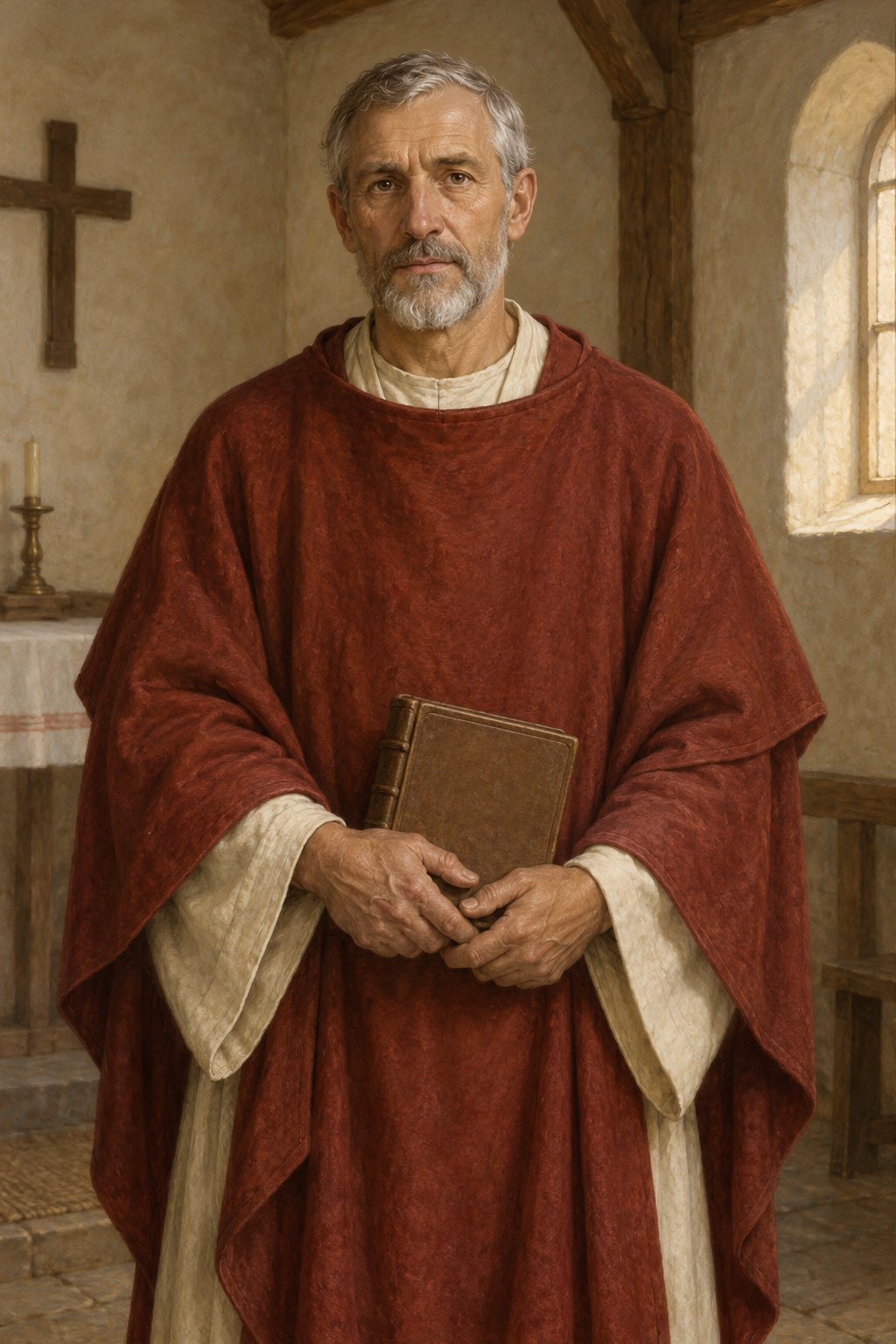
About Erhard of Regensburg
Erhard of Regensburg was a bishop associated with the city before its diocese was formally established in 739. The earliest written notice identified by Roman Deutinger is his name among deceased bishops in the Salzburg confraternity book of 784. It does not name his episcopal seat. Archaeology places the grave associated with him at Niedermünster in the early eighth century, providing a different kind of evidence from the later stories about his life.
His origins remain unknown. Claims that he came from Narbonne, Nevers or Ireland appear in a much later Life and do not establish his birthplace. Deutinger considers an earlier connection with the Burgundian and Alsatian region plausible, but the details cannot be securely reconstructed. His burial in what was probably a ducal chapel also suggests service at the ruler’s court, rather than an ordinary succession of diocesan bishops.
The surviving Life was written by Paulus Iudaeus in the eleventh century, perhaps around 1055, for Abbess Heilica of Niedermünster. The scholarly repertory Geschichtsquellen describes two books: one concerning Erhard’s life and another concerning miracles at his tomb. Most of those miracle accounts belong to the tenth and eleventh centuries. The work is therefore evidence for the development of devotion to him, while its distance from his lifetime limits its value as a personal biography.
Among the best-known traditions is his connection with Odilia. The diocesan account relates that he baptized the blind princess and restored her sight. This is a healing legend, not an independently verified event. It helps explain the later artistic attribute of a Gospel book bearing two eyes. Such images express the religious meaning attached to Erhard’s memory rather than documenting his appearance or possessions.
Pope Leo IX elevated his remains in 1052, an act understood as his canonization. His grave at Niedermünster remained a centre of devotion, and the diocese honours him as a secondary patron. His local feast falls on January 8.
That remembrance remains active. A diocesan report describes the January 2026 celebration at Niedermünster, followed by individual blessings with the reliquary of his head. The bishop’s homily presented Erhard’s missionary memory as a call to lead others toward faith. The report records a continuing devotional practice; it does not resolve the uncertainties surrounding the early medieval bishop’s life.
Wondering how to weigh the stories and sources? Learn how to read a saint biography.