Biography
Erlembald
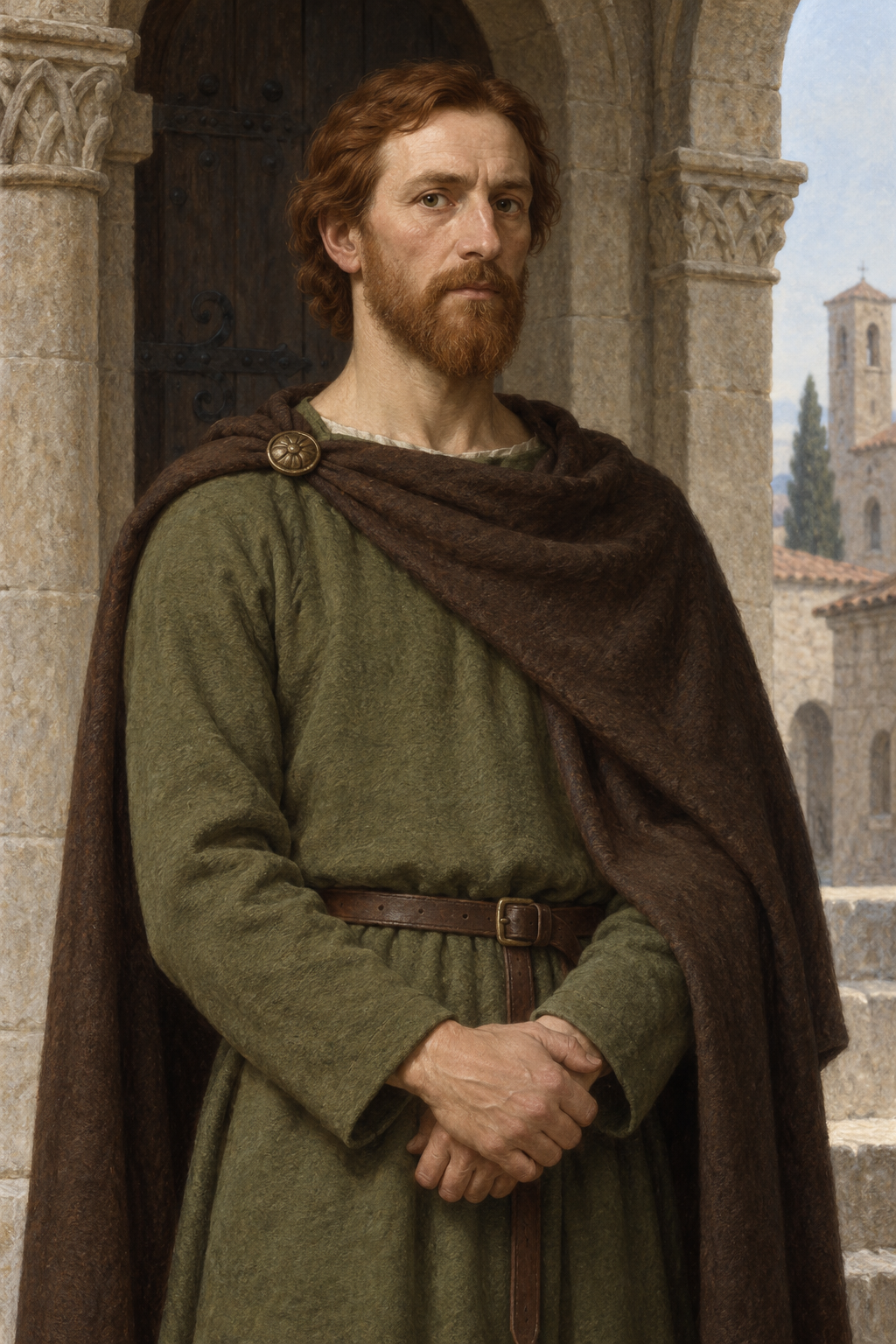
About Erlembald
Erlembald was a lay leader of the Pataria, the movement for church reform in eleventh-century Milan. His birth date is unknown. Contemporary accounts place his family among the city’s leading aristocratic retainers of the archbishop. The familiar surname Cotta comes from later accounts and conflicts with evidence about his family’s social standing. His brother Landulf had been one of the movement’s leaders. The surviving narratives include both supporters and declared enemies, whose accounts must be read with attention to their purposes.
According to the New Catholic Encyclopedia, Erlembald considered becoming a monk after returning from a pilgrimage to Jerusalem. Instead, he took up leadership after his brother’s death. He remained a layman and soldier. His campaign confronted Archbishop Guido da Velate and the opponents of reform within the Milanese Church.
In 1064 he travelled to Rome and received a banner of Saint Peter from Pope Alexander II. Papal backing strengthened his position, but also changed the movement. The scholarly biography by Busch and Keller describes a shift from persuasion and public assemblies toward an organization prepared to impose its demands by force. Citizens who valued Milan’s ecclesiastical autonomy did not necessarily accept that claim to authority.
Antonio Rimoldi describes Erlembald’s return to Milan in 1066 with sentences of excommunication against Guido. The archbishop rallied opposition by presenting the reformers as a threat to Milan’s independence from Rome. Arialdo, the movement’s spiritual leader, was subsequently killed. The conflict was therefore both religious and civic: disputes about clerical conduct became struggles over who could govern the city’s Church.
Arialdo’s death intensified the campaign. Levine describes Erlembald’s subsequent leadership as increasingly militant, with Milan becoming a battleground. The local struggle helped bring the wider conflict over ecclesiastical appointments into the open. This is an essential part of his biography, rather than a detail to conceal behind his later recognition as a saint. The same account notes that his death weakened and dispersed the movement, although some supporters remained.
The reformers attempted to install their own archbishop, Atto, in January 1072, but opponents drove him out. James Norrie places these confrontations within the city’s ceremonial life. Processions, baptism and public worship helped express the archbishop’s authority, so interrupting them was also a political act. Erlembald’s followers did more than argue about doctrine: they challenged the rituals through which the city represented its religious and social order.
A surviving letter from Gregory VII offers a more direct view of the relationship with Rome. Writing to Erlembald on October 9, 1073, the pope welcomed his zeal but urged leniency toward people returning from the opposing party. He left some decisions to Erlembald’s judgment and promised a gracious reception to those seeking absolution in Rome. Support for reform did not mean refusing reconciliation to every former opponent. The pope distinguished repentance from political convenience and acknowledged the practical questions facing his ally, including how to receive people previously attached to the excommunicated Godfrey.
The letter also discussed efforts by Beatrice and Matilda of Tuscany to reconcile the pope and Henry IV. Gregory said that he did not hate the king and hoped for agreement over the Milanese dispute. He asked Erlembald to win the cooperation of the bishop of Vercelli and concluded with an appeal to prayer, almsgiving and purity of heart. These instructions show diplomatic negotiation alongside confrontation, rather than an uncomplicated command for relentless warfare. It was advice addressed to a trusted lay ally.
Nevertheless, the struggle became physically destructive. Norrie recounts how, at Easter in 1074, Erlembald and his followers assaulted clergy, seized consecrated oil and poured it onto the ground. They rejected its use because they considered the bishops responsible for it impure. Their alternative baptismal arrangements challenged both the established calendar and those who controlled the rite. Such actions provoked outrage beyond Milan as well as within it. For the reformers, disputed clerical conduct threatened the sacraments themselves; for their opponents, these interventions attacked the order sustaining their community.
Erlembald was killed in fighting in 1075. Busch and Keller identify April 15 from the early Vallombrosa necrology, correcting later dates attached to his commemoration.
His subsequent veneration developed through the treatment of his remains. Rimoldi describes their solemn elevation by Urban II and Archbishop Arnulf III in May 1095 as equivalent to canonization. He also records their later transfer to Milan Cathedral and Cardinal Schuster’s announcement in 1940 that relics of Erlembald and Arialdo had been found there. The cult preserves the memory of a reformer honoured as a martyr, while the historical record also preserves the violence and divided loyalties of his campaign. Rimoldi also distinguishes Erlembald’s remembrance from Arialdo’s, noting that the two did not enjoy the same official place in Milan’s liturgical observance. Recognition as a saint therefore should not be confused with proof of an identical local feast.
Wondering how to weigh the stories and sources? Learn how to read a saint biography.