Biography
Ermenild of Ely
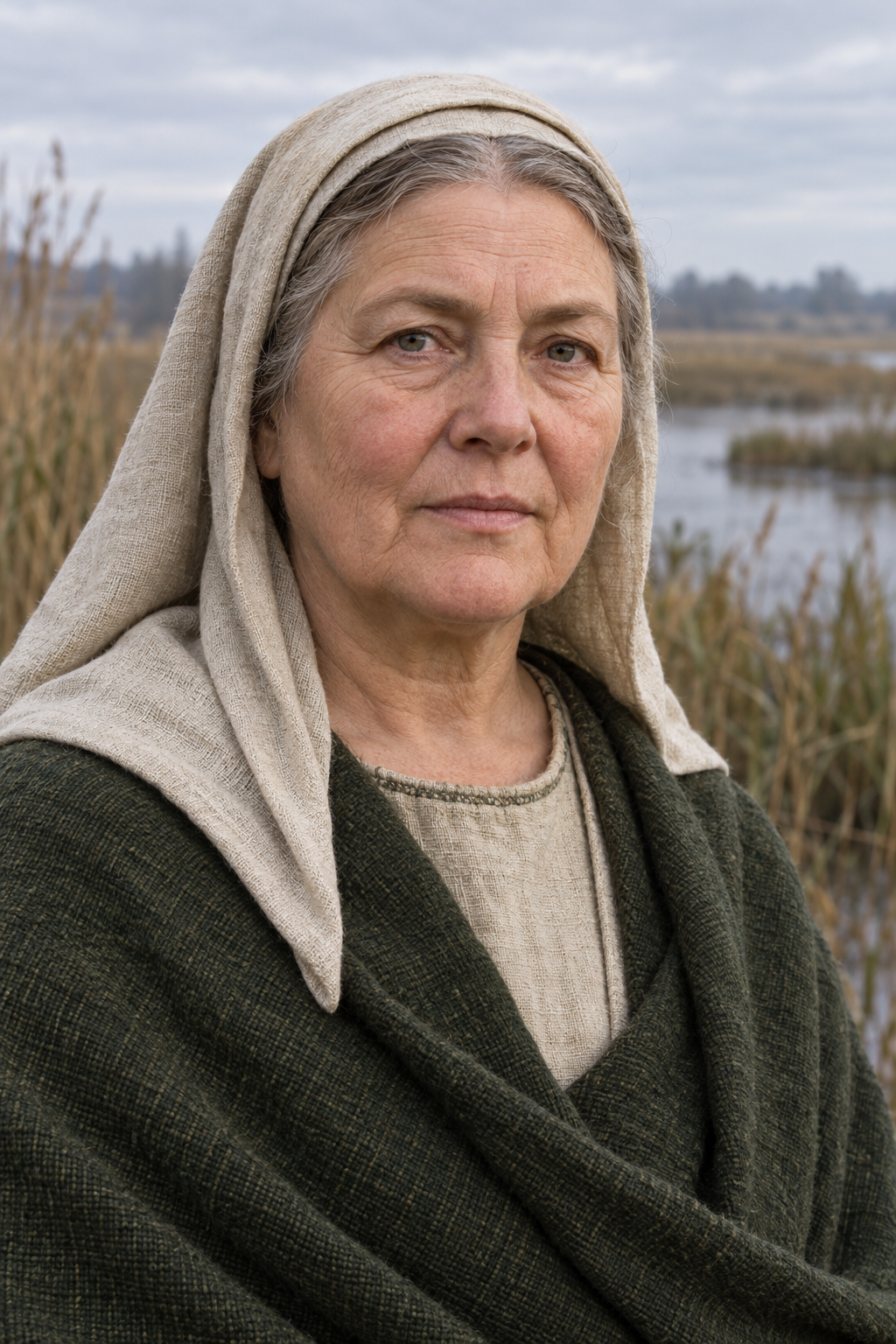
About Ermenild of Ely
Ermenild, also known as Eormenhild, is remembered as a queen of Mercia who entered religious life after the death of her husband, Wulfhere. The Catholic calendar preserves this outline of her life and names her as an abbess of Ely.
The received family history makes her the daughter of Seaxburh and the mother of Werburh and Coenred. The Cambridge handbook of Anglo-Saxon history summarizes her religious career as beginning at Minster-in-Sheppey, where she became an abbess, before she became the third abbess of Ely. These connections place her within a remembered family of royal women associated with religious communities.
That outline rests on later evidence. Rosalind Love notes that Bede never names Ermenild, although he discusses Wulfhere’s reign and other members of the family. Her introduction reports Christine Fell’s argument that Ermenild and Werburh might have been introduced into Ely’s remembered history in the tenth century. This is a scholarly challenge to the tradition, not proof that every element of it is invented.
Love also states that no surviving record establishes Ermenild’s death date. Evidence for her veneration is firmer: medieval calendars commemorate her on February 13, and the entry in the Bosworth Psalter may be among the earliest surviving references to her. Her place in worship can therefore be traced more securely than the sequence of her seventh-century life.
Her memory also appears in Ely’s heraldic tradition. The diocese explains that the three gold crowns on its shield are sometimes understood as those of Etheldreda, Seaxburh and Ermenilda, three royal women remembered as successive abbesses. The same account gives another interpretation connecting the crowns with East Anglian kings, so the saintly explanation is a tradition rather than a settled origin of the arms.
Ely Cathedral continues to name Ermenilda among the Saints of Ely. Its notice for an October 2023 service identifies her as Seaxburh’s daughter and Werburga’s mother, alongside the other women honored in the local feast. This continuing commemoration preserves her place in the community’s religious memory without resolving the gaps in her biography.
Wondering how to weigh the stories and sources? Learn how to read a saint biography.