Biography
Estêvão Machado de Miranda
About Estêvão Machado de Miranda
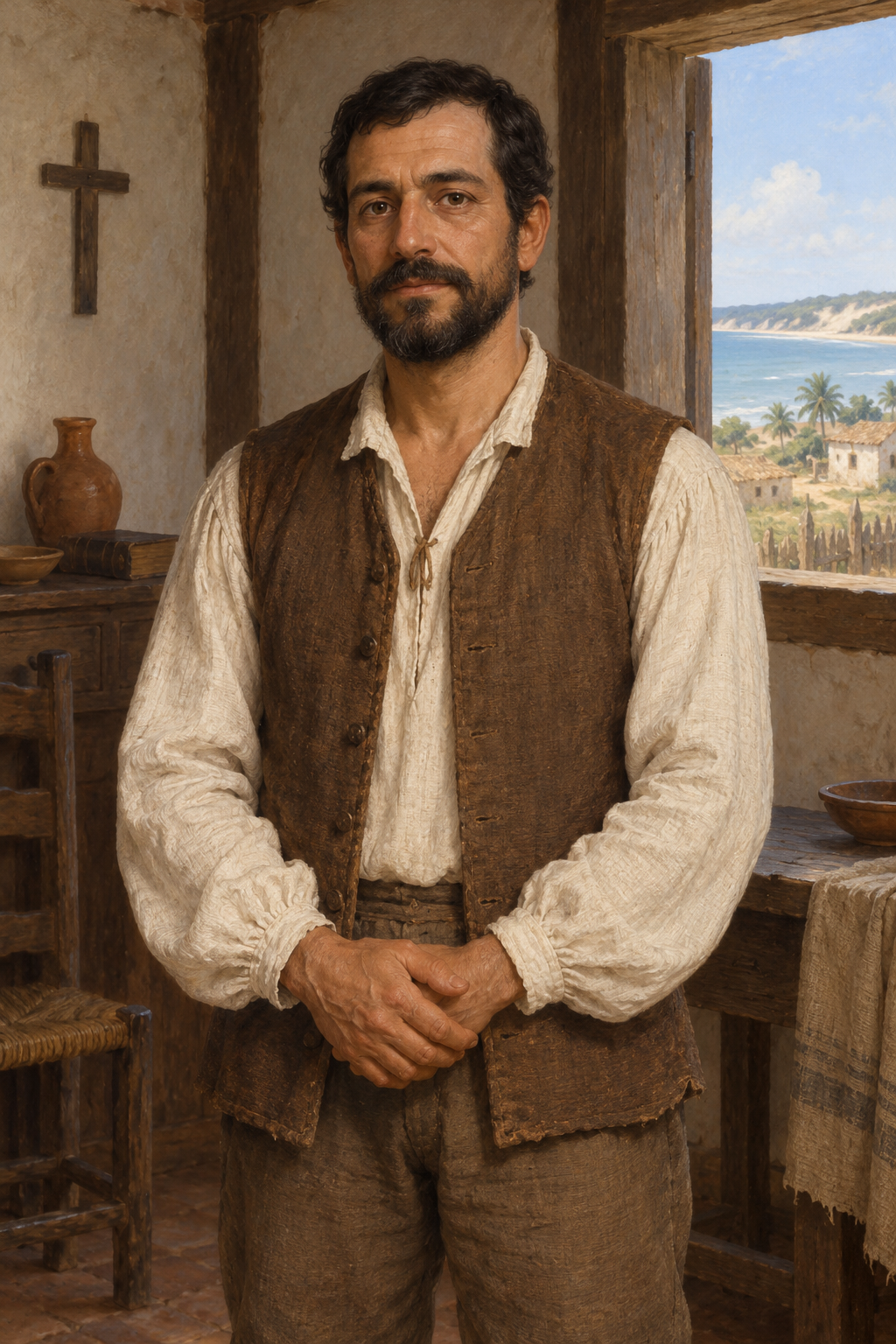
Estêvão Machado de Miranda was a lay Catholic among the people killed at Uruaçu in colonial Brazil on 3 October 1645. The Vatican’s booklet for their canonization names him with two daughters among the victims. It provides no birth year, birthplace, age, occupation or personal testimony for him. Their shared recognition should therefore be recorded without adding a private story that the surviving official account does not tell.
The violence belonged to a wider conflict in the Dutch occupied northeast of Brazil. The Vatican account describes restrictions on Catholic worship under Dutch Calvinist rule. On 16 July 1645, a group attacked worshippers at the chapel in Cunhaú during Mass. The Uruaçu killings came in October, after Catholics around Natal had tried to find safety in improvised shelters. Those episodes are linked in the canonization history, though they occurred at different sites and on different dates.
At Uruaçu, the account says that captives, including their parish priest Ambrósio Francisco Ferro, were taken to a place where armed Dutch soldiers and Indigenous allies awaited them. The captives were tortured and killed. The booklet identifies Estêvão and two daughters in that group, but it does not give their daughters’ names. The record does not establish where each family member was seized, the order of their deaths or words spoken at the scene.
The official enumeration is narrower than the full number of people said to have died in the two attacks. The Vatican booklet lists thirty people identified for the cause, including the priest André de Soveral and Domingos Carvalho at Cunhaú and the larger group at Uruaçu. Estêvão’s name belongs to that latter group. The distinction matters because an account of the wider slaughter should not silently turn every victim into a separately documented person in the canonization cause.
The Diocese of Roraima recounts the later investigation of the martyrs’ cause. It identifies a report written by Lopo Curado Garro about twenty days after the Uruaçu killings as the earliest account. The cause progressed through diocesan inquiry and historical and theological review before John Paul II beatified the thirty on 5 March 2000. Francis canonized them on 15 October 2017. These later church proceedings establish their public recognition while leaving the details of Estêvão’s own earlier life largely unknown.
Estêvão’s commemoration thus rests on a named place in a community’s history of suffering and faith. The church remembers a father together with two daughters, but their individual lives are not described in the sources used here. His story is best told at that scale: a family named in the official list, an October killing near Natal and a later recognition shared with the other martyrs of Cunhaú and Uruaçu.
Wondering how to weigh the stories and sources? Learn how to read a saint biography.