Biography
Ethelhard of Canterbury
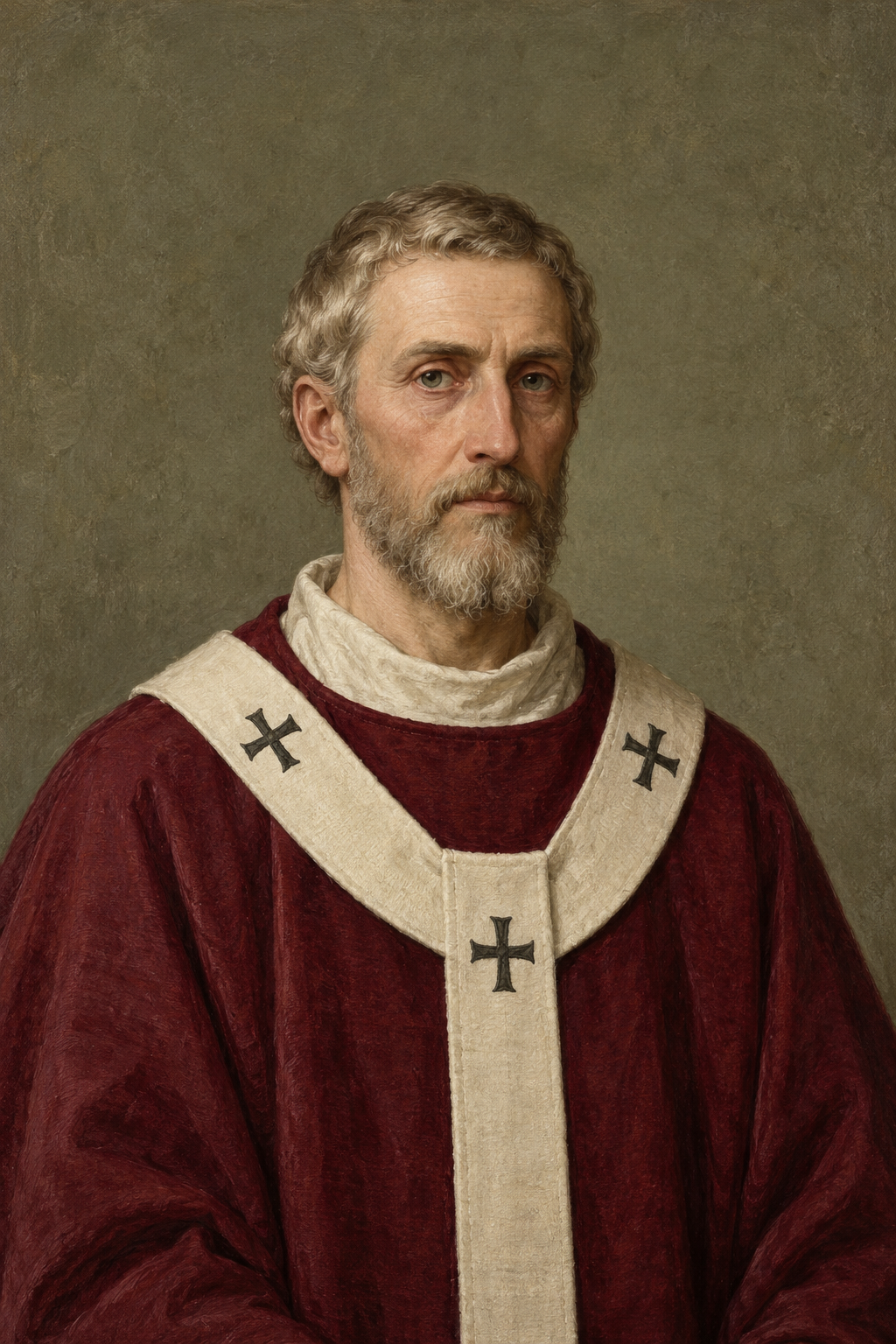
About Ethelhard of Canterbury
Ethelhard became archbishop of Canterbury during a struggle over the relationship between royal power and the English Church. Before his election he had been an abbot, but the monastery named in the sources cannot be identified with certainty. Louth in Lincolnshire is a likely possibility. His birth date and childhood are unknown.
King Offa of Mercia had supported the creation of an archbishopric at Lichfield, reducing Canterbury’s authority in southern England. Ethelhard was chosen for Canterbury after Jaenbert’s death in 791, under Mercian influence. Opposition in Kent delayed his consecration until July 21, 793.
The political conflict soon became dangerous. A Kentish revolt led by Eadbert Praen challenged Mercian rule, and Ethelhard fled despite Alcuin’s appeal that he remain with his church. When he returned, Alcuin urged him to do penance for having left. The surviving account therefore includes criticism of his conduct, alongside the story of his later achievements.
Ethelhard and Offa’s successor Cenwulf worked together against the revolt. Their correspondence with Pope Leo III helped secure the restoration of Canterbury’s authority. Ethelhard travelled to Rome, where he received papal confirmation of his see’s rights in 802.
Alcuin supported the journey in practical ways. He arranged for a servant to meet Ethelhard on the French coast with a horse and saddle, and wrote to Charlemagne on his behalf. After the archbishop’s return, Alcuin congratulated him and urged him to remain firm and active in his responsibilities.
A surviving decree from the council at Clovesho in 803 records the outcome. Ethelhard and the assembled bishops reaffirmed Canterbury’s metropolitan authority and ended Lichfield’s status as an archbishopric. The document presents Offa’s earlier division as an injustice and invokes papal authority against future interference. It is evidence of how the council defended Canterbury’s position, as well as of the decision itself.
Another decree from the same council addressed the government of monasteries. Ethelhard instructed communities that had been dedicated to religious freedom not to choose lay or secular lords over themselves, but to preserve their monastic discipline and rights. The witness list includes Hygebert as an abbot, while Aldwulf signs as bishop of Lichfield.
Alcuin had advised Ethelhard to spare Hygebert the humiliation of losing his pallium. The later historical account leaves open whether Hygebert voluntarily relinquished his dignity or was removed. Ethelhard died on May 12, 805, and was buried in his cathedral church.
His name is preserved by St Aethelheard’s Orthodox Church in Louth, a parish that began among converts in the late 1990s and belongs to the Antiochian Orthodox Archdiocese of the British Isles and Ireland.
Wondering how to weigh the stories and sources? Learn how to read a saint biography.