Biography
Ethelnoth of Canterbury
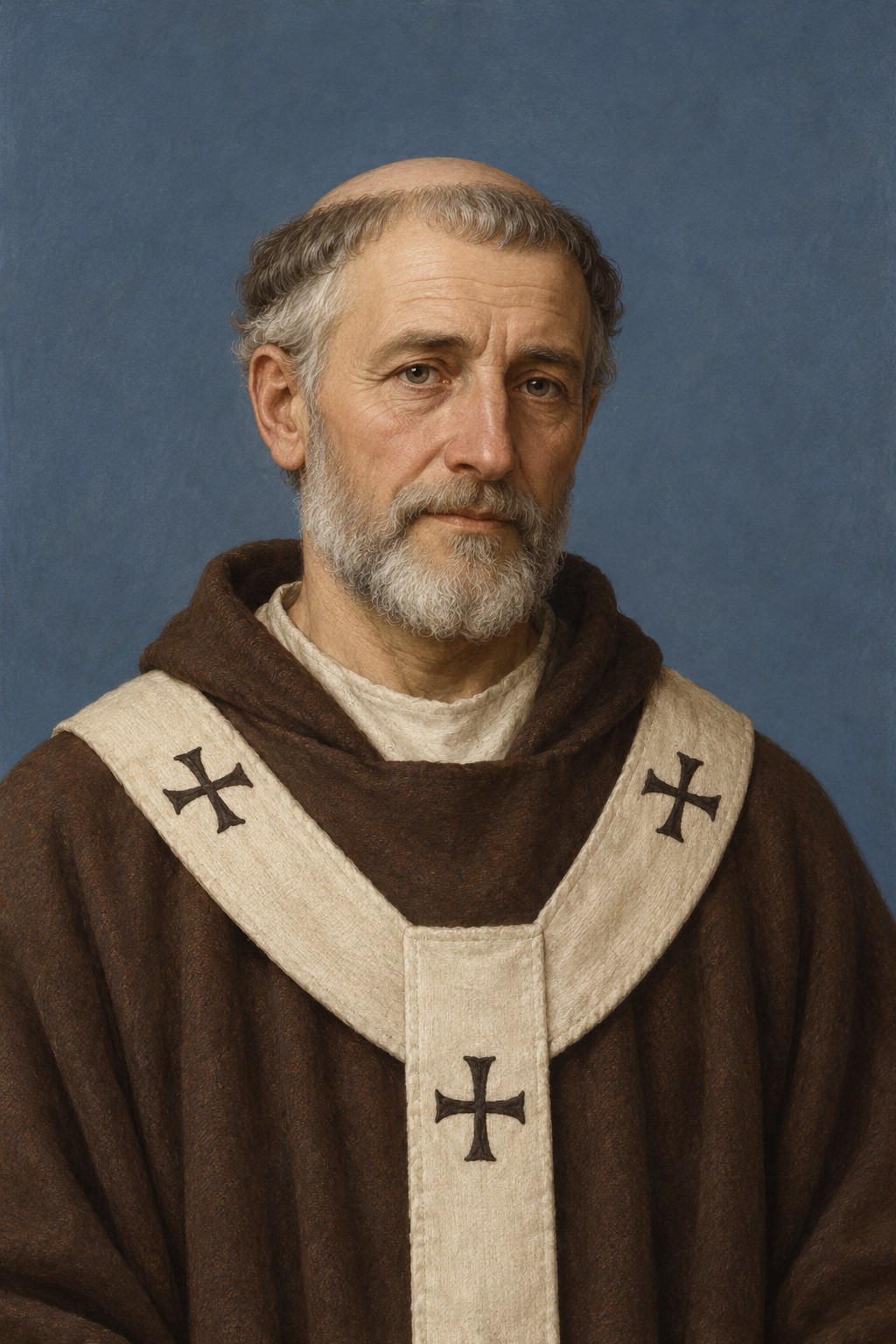
About Ethelnoth of Canterbury
Ethelnoth of Canterbury moved from monastic life into an office closely connected with royal government. A monk of Glastonbury, he became dean of the community at Christ Church, Canterbury, and chaplain to King Cnut. Wulfstan of York consecrated him archbishop on November 13, 1020. He was remembered as Ethelnoth the Good.
In 1022 he traveled to Rome, where Pope Benedict VIII gave him the pallium. The New Catholic Encyclopedia describes him as a chief adviser to Cnut and notes the king’s grant of judicial and financial authority. His responsibility extended beyond the cathedral’s worship into the administration of the English church.
Ethelnoth restored the cathedral after the damage of the Danish invasions. In June 1023 he brought the remains of his murdered predecessor, Alphege, from London to Canterbury. King Cnut, Queen Emma and Harthacnut were present when the body was received at Christ Church. The ceremony placed the remembrance of an earlier archbishop at the center of the cathedral’s renewed life.
His work also reached Denmark. He consecrated Gerbrand for Roskilde in 1022, although that see belonged to the province of Hamburg-Bremen. The resulting dispute exposed the limits of an English archbishop’s authority within Cnut’s wider realm. According to the Norwegian Catholic account, Cnut subsequently agreed to consult the metropolitan before making appointments in that province.
A later story says that Ethelnoth refused to crown Harold Harefoot because he would recognize only a son of Queen Emma. William Hunt treats this dramatic account as doubtful. It should not be used as secure evidence of a confrontation at the altar.
Ethelnoth died in 1038 and was buried at Canterbury. The precise day is uncertain: sources give several dates in late October and early November. Per Einar Odden also notes the absence of evidence for a formal medieval cult, despite his inclusion in later Benedictine and Bollandist collections of saints.
He is nevertheless remembered as a saint in present Orthodox devotion. The Romanian Orthodox Archdiocese of Great Britain and Northern Ireland commemorates him on October 30 and recalls his wisdom and simplicity. That remembrance preserves the name by which he was known: the Good.
Wondering how to weigh the stories and sources? Learn how to read a saint biography.