Biography
Euphrasia Eluvathingal
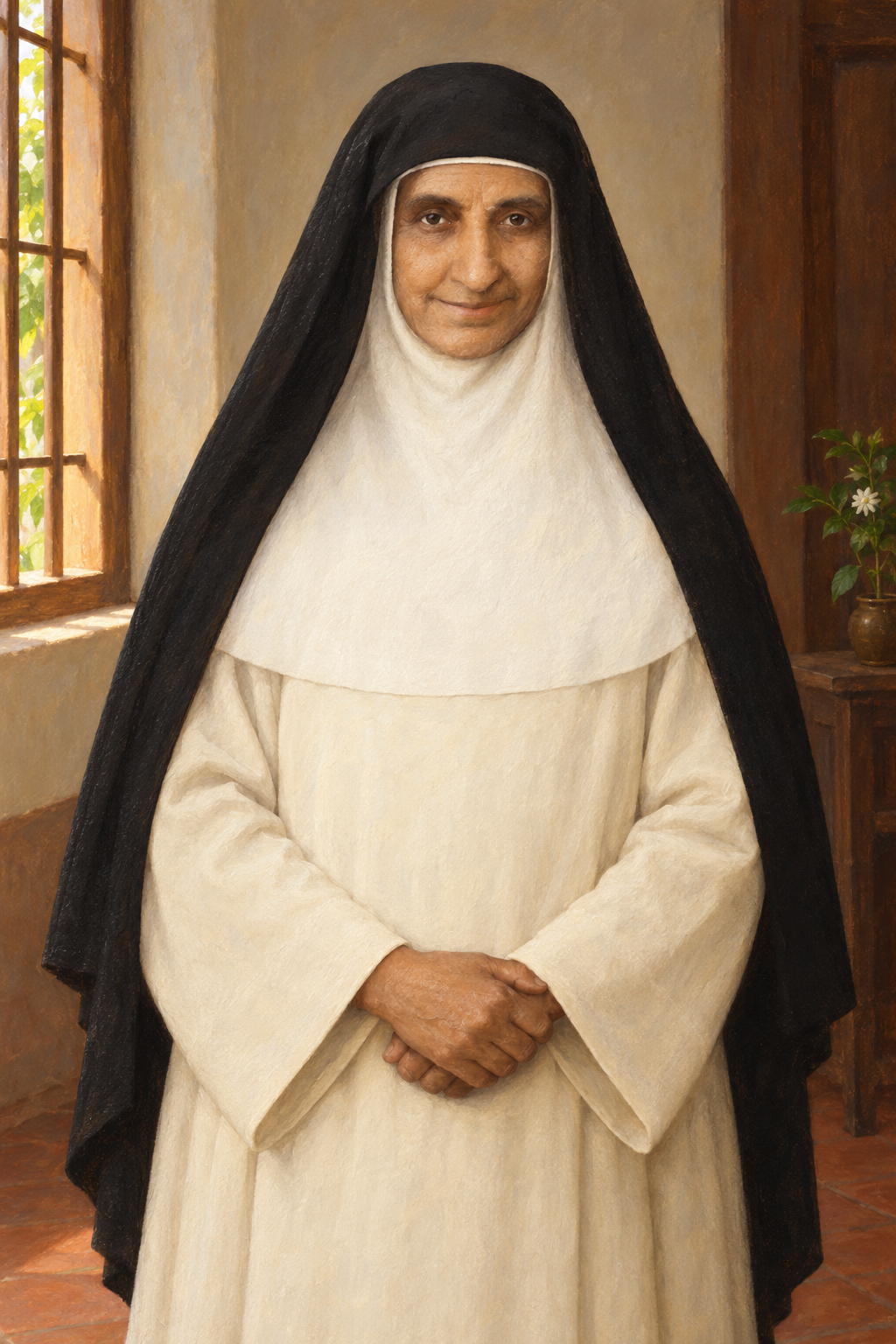
About Euphrasia Eluvathingal
Euphrasia Eluvathingal was a religious sister of the Congregation of the Mother of Carmel, remembered for prayer and care within her community. Born at Kattoor on 17 October 1877, she received the baptismal name Rose. The Vatican biography names her parents as Anthony and Kunjethy and describes her mother’s devotion as an important influence on her childhood. Her desire for religious life faced opposition from her father, who wanted her to marry. He eventually accompanied her to the convent at Koonammavu.
The setting included education as well as preparation for religious life. The Syro-Malabar community’s account describes the boarding establishment at Koonammavu as a place where girls learned orderly community life, religious practice and handicrafts. Changes in ecclesiastical boundaries later led Bishop John Menachery to bring sisters and aspirants belonging to Trichur to the new convent at Ambazhakkad. Rose’s religious formation therefore developed within institutions that were themselves changing.
The parish account connects the move to Ambazhakkad with the reorganization of the Trichur, Ernakulam and Changanassery vicariates. The sisters’ place of residence followed these changing ecclesiastical arrangements. Bishop Menachery’s involvement continued beyond the transfer itself, through his spiritual guidance of Euphrasia. Her story therefore includes both a personal religious vocation and the institutional history of the Syro-Malabar communities that educated and received her.
On 10 May 1897 she became a postulant and received the name Euphrasia of the Sacred Heart of Jesus. She received the religious habit on 10 January 1898. Her perpetual profession followed on 24 May 1900, the day Saint Mary’s Convent at Ollur was founded. The Vatican account places her work as novice mistress from 1904 to 1913 and her service as superior from 1913 to 1916. These responsibilities brought a woman who desired a quiet life into the formation and leadership of others.
Sister Chrisologa’s biography records that Euphrasia helped with novice formation and was also entrusted with the infirmary. It describes compassion for sick sisters as an important part of her work. Her prayer and care developed within the same community, where religious responsibilities included attention to people who were weak or unwell.
Her letters are especially important to that remembrance. Bishop Menachery required her to disclose her spiritual experiences, either in conversation or in writing. The canonization account says that he preserved her letters despite her requests that they be destroyed. Their survival gives access to her reported interior life; it also means that writings she intended for a spiritual director became material for later readers. Accounts of visions should be read as reported religious experiences, rather than independently demonstrated events.
In a letter dated 15 September 1901, reproduced in her published biography, she describes obedience to her spiritual director and a growing awareness of God’s presence. She also expresses greater desire to receive Communion and strength to endure difficulties through it. This is her account of her spiritual condition, expressed in the language of humility and devotion. The passage preserves a relationship of guidance, not an impersonal catalogue of achievements.
The same biography portrays her as consulting Menachery when difficult situations required discernment. It emphasizes correction alongside continuing support for novices. Its author identifies the book as a devotional account drawing on earlier biographies and published letters; its religious interpretations should be read within that perspective.
In 2014, Pope Francis connected her life with the Syro-Malabar Church from which she came. Addressing pilgrims after her canonization, he recalled the local name by which she was known: a mother devoted to prayer. He presented her union with God as an encouragement to the people around her. His address linked holiness with love of neighbour, and called religious women to preserve the same spirit of prayer. This was a public interpretation of her witness for the wider Church.
That address also placed her beside Kuriakose Elias Chavara, associated with the foundation of her institute. Francis thanked the Church in Kerala for its religious vocations and witness, while encouraging devotion to the Eucharist and love of the Church. Euphrasia’s recognition thus brought a largely local religious life before an international gathering without changing the community setting in which she had lived.
She died on 29 August 1952. The Vatican records the transfer of her remains to the convent chapel in 1990 and her beatification on 3 December 2006. The Causes of Saints registry gives her canonization by Pope Francis on 23 November 2014 in Saint Peter’s Square. At that ceremony, the pope described the six newly canonized saints through their devotion to God and service of others, especially those in need. Her continuing remembrance holds together contemplation and the attention she gave to people within reach.
The canonization homily stressed closeness to others through works of mercy. Francis spoke of feeding, welcoming and visiting people in need, presenting the saints’ example as a call to concrete service alongside religious devotion.
Wondering how to weigh the stories and sources? Learn how to read a saint biography.